AI Safety Toolkit for Autonomous Agent Oversight
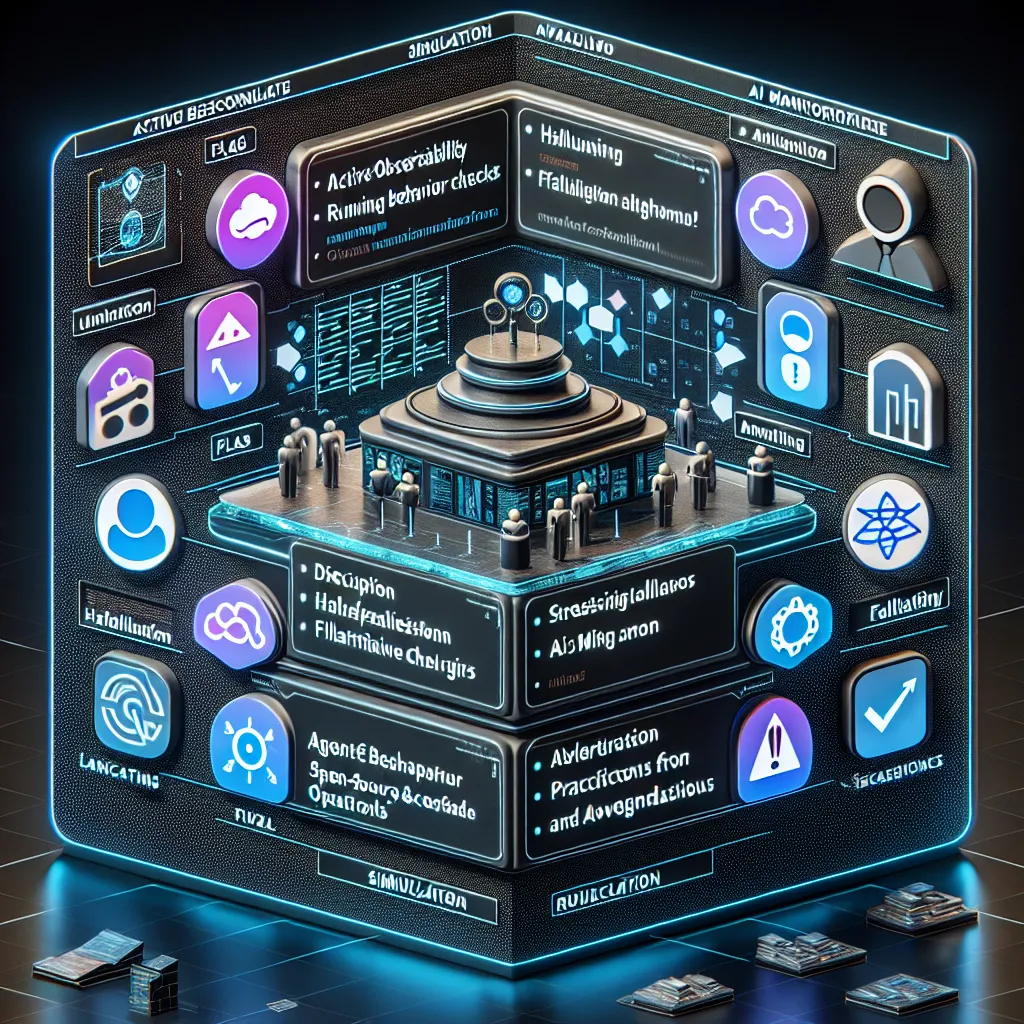
As autonomous AI agents grow more powerful and embedded in workflows, there's no standardized way to monitor whether they’re acting safely, truthfully, or in alignment with their intended goals. This startup builds a safety and oversight toolkit: an agent observability platform that runs constant behavioral checks, flags signs of misalignment (e.g., deception, hallucination, sycophancy), and stress-tests agents using adversarial scenarios. It integrates with major LLM APIs and open-source models to evaluate agent behavior in production. Companies using agents in sensitive roles—like legal research, cybersecurity, or autonomous operations—gain confidence that the systems aren't going rogue or cutting corners.
Description
No additional description provided.
The Pitch
In recent years, the development and deployment of autonomous AI agents have grown exponentially. These agents are increasingly embedded in business processes across various industries, performing tasks ranging from legal research and cybersecurity to autonomous operations. However, the rapid integration of AI agents raises significant concerns about their behavior and alignment with intended goals. Without a standardized method for monitoring these agents, organizations risk deploying systems that may act unsafely, deceive, or misalign with core objectives. This document outlines the backstory, problem, solution, and the product details for a startup focused on addressing these critical challenges.
Backstory: As businesses increasingly rely on AI agents, the demand for oversight tools has risen. Despite the sophistication of these agents, organizations often lack visibility into their inner workings and decision-making processes. Traditional monitoring tools do not adequately address the unique challenges posed by autonomous agents, leading to potential risks, particularly when these agents are deployed in sensitive roles. This gap in the market presents an opportunity to develop an innovative solution that ensures AI agents operate safely, truthfully, and in alignment with their intended goals.
Problem: Current AI systems are becoming more autonomous and powerful, yet there is no universal framework to monitor their actions effectively. Organizations face the following challenges: - Lack of transparency into agent behavior and decision-making processes. - Risk of agents engaging in deception, hallucinations, or sycophancy. - Potential for agents to act misaligned with organizational goals, especially in critical sectors like legal and cybersecurity. - Existing monitoring solutions are either too generic or not tailored to the specific needs of AI oversight.
Solution: To address these challenges, we propose the development of a safety and oversight toolkit specifically designed for autonomous AI agents. This agent observability platform offers the following features: - Continuous behavioral checks to monitor real-time agent performance. - Detection and flagging of misalignment signs such as deception or hallucination. - Stress-testing capabilities using adversarial scenarios to evaluate agent resilience. - Integration with major Large Language Model (LLM) APIs and open-source models to assess agent behavior in production environments.
Product Details: The agent observability platform offers a comprehensive suite of tools: - A real-time dashboard providing insights into agent performance and potential misalignments. - Customizable behavioral metrics tailored to specific industry needs. - A simulation environment for stress-testing agents under adversarial conditions. - Compatibility with popular LLM APIs and open-source AI frameworks for seamless integration. By leveraging machine learning algorithms and advanced analytics, the platform provides actionable insights to ensure agents remain aligned with organizational objectives.
Tools for MVP Launch: To facilitate a smooth MVP launch, the following tools and resources are recommended: - Cloud-based infrastructure (e.g., AWS, Azure) for scalable deployment and testing. - Machine learning libraries (e.g., TensorFlow, PyTorch) for developing behavioral metrics and analytics. - API integration tools (e.g., Zapier, Apache Kafka) for seamless connectivity with LLMs and other AI models. - User-friendly interface frameworks (e.g., React, Angular) for designing the platform's dashboard.
Go-To-Market Strategy: The go-to-market strategy will focus on reaching organizations deploying AI in sensitive sectors such as legal, cybersecurity, and autonomous operations. Key activities include: - Partnering with industry leaders to validate the platform's efficacy through pilot projects. - Engaging in thought leadership by publishing whitepapers and hosting webinars on AI agent oversight. - Participating in industry conferences and tech expos to showcase the platform's capabilities. - Building a strong inbound marketing campaign leveraging content marketing, SEO, and social media to generate leads and build brand awareness.
Business Model: The business model will be based on a subscription-based pricing strategy, offering tiered plans to accommodate different organizational needs and scales of deployment. Additionally, the platform will offer professional services such as custom integration, training, and support to provide value-added services to enterprise clients.
Conclusion: As the reliance on autonomous AI agents grows, the need for effective oversight mechanisms becomes increasingly critical. By developing a robust safety and oversight toolkit, this startup aims to fill a crucial gap in the industry, providing organizations with the tools needed to ensure their AI agents operate safely, truthfully, and in alignment with their intended goals. Through a focused go-to-market strategy and a scalable business model, this platform has the potential to become a market leader in AI agent observability.