AI Robotics Revolutionizes Infrastructure Maintenance System
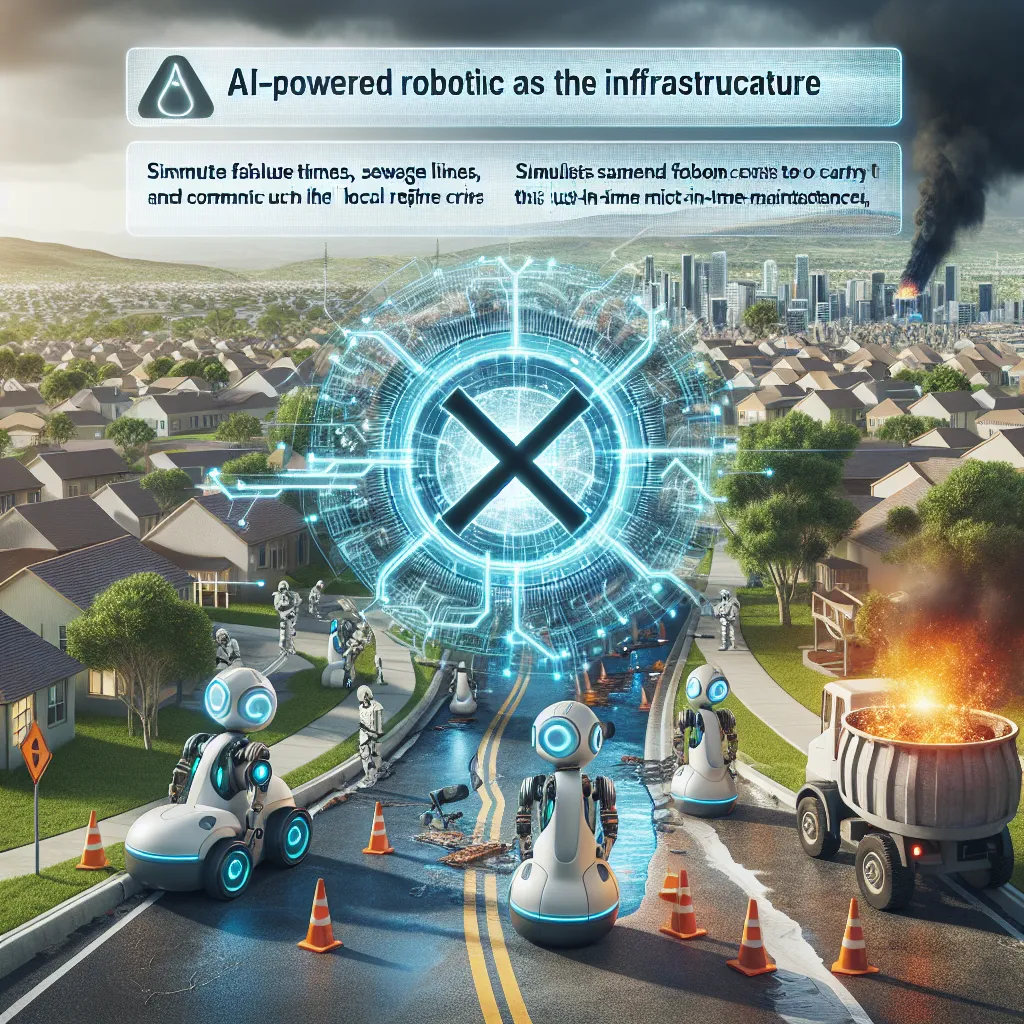
We live inside aging systems — roads, sewage, bridges — that no one understands well enough to maintain proactively. Hot Swap America deploys AI robotic inspectors that continuously map physical infrastructure, simulate failure timelines, and auto-trigger local repair crews with just-in-time micro-maintenance tasks. This matters now because U.S. infrastructure failure risk is compounding alongside climate intensity. A suburban county avoids a $200M sewer crisis because micro-robots patched 1,400 feet of pipeline months before collapse — saving taxes and avoiding disaster headlines.
Description
No additional description provided.
The Pitch
In a world increasingly reliant on complex infrastructure systems, the challenge of maintaining these aging structures has grown exponentially. Despite their critical role in daily life, many infrastructure components, such as roads, sewage systems, and bridges, are poorly understood and inadequately maintained. This lack of proactive upkeep can lead to catastrophic failures, especially as the intensity of climate-related events increases, further exacerbating the risk of infrastructure collapse.
In response to this pressing issue, there emerges an innovative solution titled Hot Swap America. By deploying advanced AI-driven robotic inspectors, Hot Swap America provides continuous monitoring and mapping of physical infrastructure. These robots are not only adept at identifying existing weaknesses but can also simulate failure timelines, predicting potential breaches long before they occur. This foresight allows for the automation of just-in-time micro-maintenance tasks, directly triggering local repair crews to address problems before they escalate into serious crises.
To envision how this solution operates in practice, consider a suburban county that narrowly avoids a $200 million sewer crisis. By utilizing micro-robots to inspect and patch 1,400 feet of pipeline, Hot Swap America prevents a catastrophic failure, ultimately saving tax dollars and avoiding disastrous news coverage. This proactive maintenance model is not just beneficial but essential, significantly reducing the risk of infrastructure failure and improving overall public safety.
To bring this concept to life, a well-structured Minimum Viable Product (MVP) is crucial. Essential tools for launching this venture include AI software for predictive modeling, robotic hardware for inspection, and integration systems for connecting with local repair teams. Cloud-based platforms can be utilized for data storage and processing, while machine learning algorithms publish actionable insights.
The Go-To-Market (GTM) strategy would focus on partnerships with municipal governments, transportation departments, and private infrastructure management firms. By offering pilot programs to demonstrate effectiveness and cost savings, Hot Swap America can secure contracts and expand its footprint. Marketing efforts should target areas with aging infrastructure and frequent climate-related challenges, emphasizing economic and safety benefits.
The business model could include a subscription-based service with tiered pricing depending on the scale of infrastructure under monitoring. This model ensures recurring revenue streams and allows for scalability as additional services or systems are integrated. Additionally, performance-based incentives could be offered, rewarding communities for adopting these preventative measures.
By addressing infrastructure maintenance through AI-enhanced solutions, Hot Swap America not only mitigates risks associated with aging systems but also pioneers a future where infrastructure management is proactive, data-driven, and seamlessly integrated into everyday life. This innovative approach is vital for adapting to environmental changes and ensuring the longevity and safety of our essential infrastructure networks.