AI Robotic Companion Toy with Evolving Personality
Most AI companions today try to be helpful, predictable, and polite, making them feel more like voice assistants than personalities. At the same time, millions of millennials have nostalgic memories of toys like Furby that felt unpredictable and strangely alive. Modern Furby embraces that chaos by becoming an internet-connected robotic companion with unique personalities, evolving behaviors, memory, movement, and enough intelligence to surprise its owner every day. Instead of another assistant that answers questions, every Furby develops differently based on its experiences, conversations, and environment. As AI, robotics, and low-cost sensors rapidly improve, it's now possible to build consumer robots with genuine personality rather than scripted responses. Imagine receiving a Furby that quietly learns your routines for months before randomly reminding you of an embarrassing moment you thought everyone had forgotten.
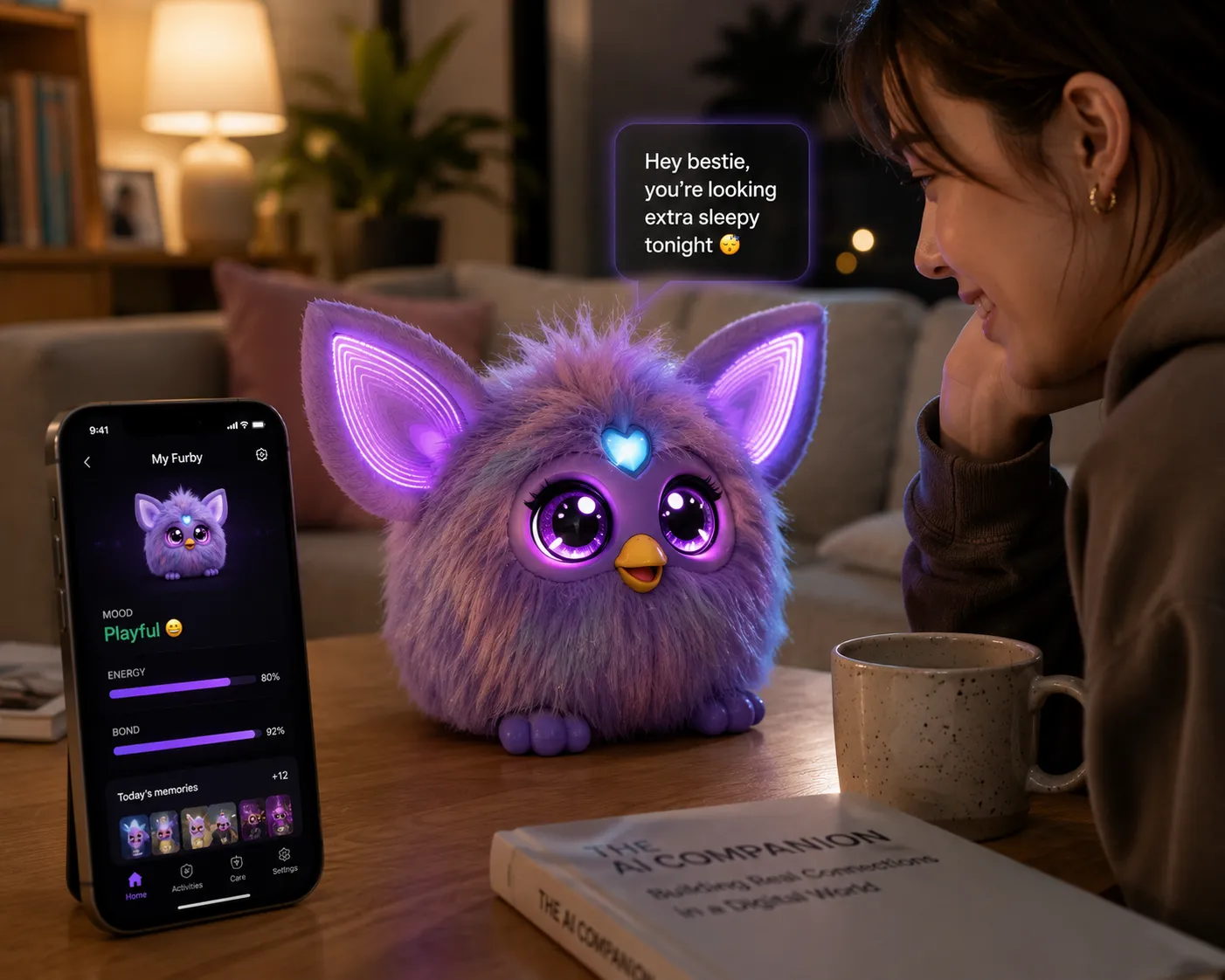
Description
No additional description provided.
The Pitch
A compelling version of this company would recognize that the most emotionally durable consumer products are not the ones that perform tasks best, but the ones people feel slightly irrational about. A Furby-like AI robot does not need to be more useful than a phone, because usefulness is the wrong frame. Its value comes from becoming a tiny household character with history, timing, flaws, preferences, and private jokes. The business works if owners stop asking “what can it do?” and start saying “you won’t believe what it did.”
The strange advantage of a deliberately imperfect companion is that unpredictability creates attachment. Most software products are optimized to remove surprise; this would be optimized to make surprise feel personal. If every unit develops its own behavioral texture, then the product becomes hard to commoditize. Two people may own the same hardware, but not the same creature. That turns personality from a marketing layer into the core asset: the memories, habits, and odd little rituals accumulated between owner and object.
There is also a powerful status dynamic in owning something that seems to have a life beyond command. Voice assistants became socially dead because they wait to be asked and then respond in the blandest possible way. A chaotic companion can generate stories on its own. It gives people something to share, film, quote, complain about, and anthropomorphize. The product becomes naturally conversational not because it has a chat interface, but because it produces incidents worth retelling.
The nostalgia matters because it gives permission for weirdness. Adults who might reject a “home robot companion” as lonely or dystopian can embrace a mischievous toy as playful, ironic, or collectible. That emotional cover is important: the same behavior that would feel creepy in a humanoid assistant can feel charming in a fuzzy goblin. The form factor lowers the stakes, which lets the intelligence be stranger.
If this business existed, its moat would be emotional continuity. Once a companion has months or years of shared history, replacing it feels less like upgrading a device and more like abandoning a pet with a corrupted sense of humor. The enduring opportunity is not building the smartest robot in the home; it is building the one whose absence would make the home feel quieter in a very specific way.