AI Revolutionizes Crop Insurance with Rapid Assessments
When storms hit, crop insurance adjusters must visit thousands of acres to assess damage — a job that’s seasonal, slow, and impossible to scale. An AI crop adjuster uses drone footage, satellite data, soil history, and weather severity to auto-draft claims, estimate losses, and flag fraud. Why now? Multimodal AI can finally interpret fields, not just forms. Imagine a regional insurer cutting assessment time from 12 days to 12 hours.
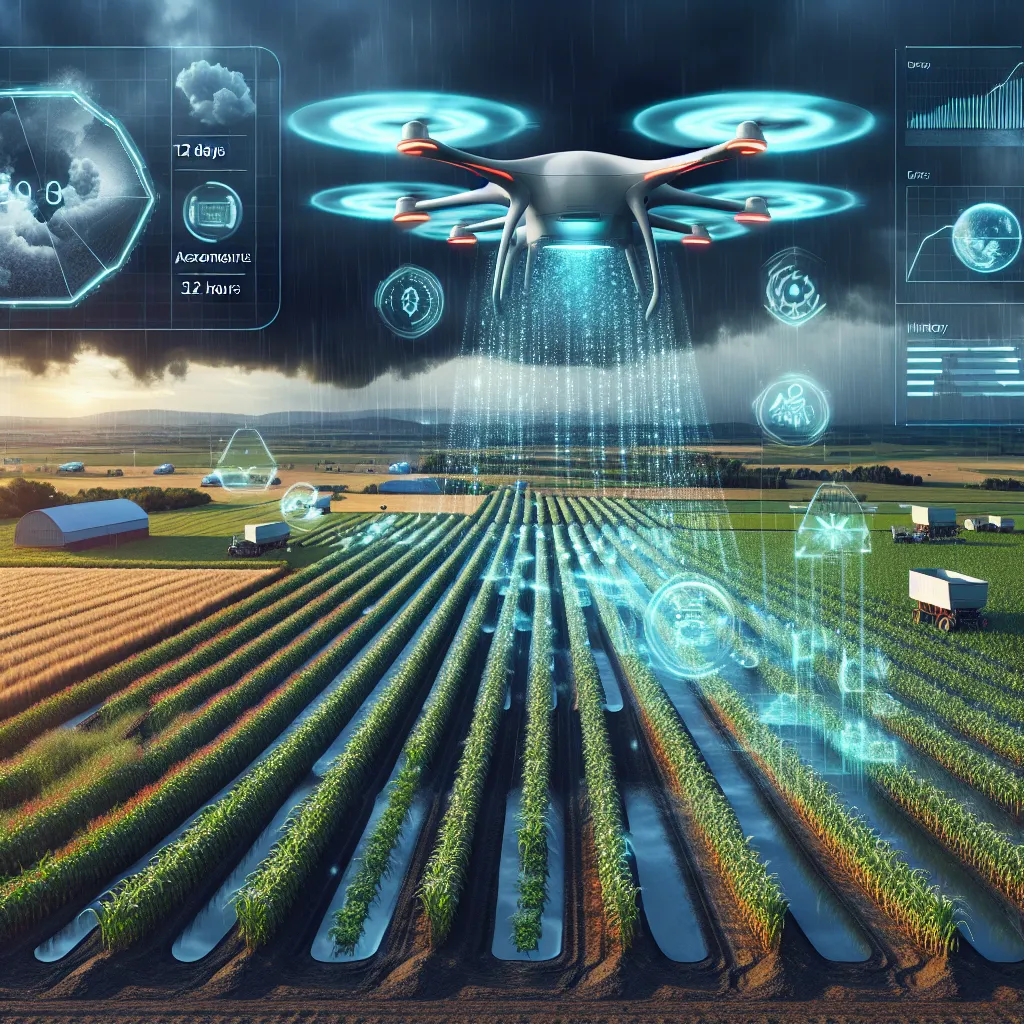
Description
No additional description provided.
The Pitch
Agriculture remains the backbone of numerous economies worldwide, yet it is highly susceptible to climate-induced risks. One of the pressing challenges faced by the agricultural insurance sector is the timely and accurate assessment of crop damage post-disasters. Traditional methods incur delays, require substantial manpower, and can be inconsistent. The introduction of an AI crop adjuster seeks to address these inefficiencies, bringing a novel solution to the table.
**Backstory**
In recent years, the agricultural industry has witnessed an uptick in unpredictable weather patterns, from unprecedented droughts to severe storms. Insurance companies, which play a critical role in securing farmers' livelihoods, are continually grappling with the challenges of efficiently assessing and processing claims. Currently, insurance adjusters need to manually inspect vast expanses of farmland, often extending assessment durations from days to weeks. This cumbersome process not only burdens the insurers but also leaves farmers in prolonged uncertainty. The confluence of advances in drone technology, satellite imaging, and multimodal AI presents an opportunity to revolutionize this process.
**Problem**
1. Slow and labor-intensive assessment process, sometimes taking up to two weeks. 2. High operational costs due to the need for a large workforce. 3. Inconsistencies in assessments due to human error. 4. Difficulty in scaling operations to cover larger geographical areas. 5. Potential for fraudulent claims adds further complications.
**Solution**
An AI-powered system that leverages technology to autonomously assess crop damage:
- Utilizes drone footage to capture high-resolution images of affected areas. - Employs satellite data for broader spatial context and historical comparisons. - Integrates soil history and weather severity data to enhance claim accuracy. - Utilizes AI to auto-draft claims, estimate losses, and identify potential fraud while significantly reducing human bias and error.
**Product Details**
- **Drone Integration**: High-definition cameras capture current ground conditions. - **Satellite Connectivity**: Provides expansive coverage and historical data access. - **Data Aggregation**: Soil history, weather patterns, and other agronomic data synthesized for precise assessments. - **AI-Powered Analytics**: Advanced algorithms interpret data and produce detailed claims reports. - **Real-Time Reporting**: Immediate insights and assessments accessible via a user-friendly dashboard. - **Fraud Detection**: Sophisticated techniques to flag anomalies and inconsistencies in claims.
**Tools for MVP Launch**
1. Drone hardware with compatible high-resolution imaging capability. 2. Satellite data access APIs (e.g., from providers like NASA or commercial entities). 3. AI platforms specialized in image and data analytics, such as TensorFlow or PyTorch. 4. Cloud services for data storage and processing, such as AWS or Google Cloud. 5. A simple, intuitive user interface for report generation and data visualization. 6. A team of agronomists and data scientists to fine-tune algorithms and validate models.
**Go-to-Market Strategy**
1. **Pilot Projects**: Collaborate with regional insurers to run pilot programs demonstrating efficiency and accuracy. 2. **Education & Outreach**: Conduct workshops and webinars to showcase technology benefits to stakeholders. 3. **Partnerships**: Form strategic alliances with established agricultural technology firms and insurance providers. 4. **Digital Marketing**: Leverage online platforms for targeted advertising aimed at the agricultural sector. 5. **Feedback Loop**: Gather user feedback to iteratively refine and optimize product offerings.
**Business Model**
1. **Subscription-Based**: Offer tiered subscription plans based on the size of the insurer's clientele and the amount of land covered. 2. **Per Assessment Fee**: Charge a fixed fee per assessment conducted, offering a pay-per-use flexibility for smaller insurers. 3. **Freemium Model**: Provide basic features free, with premium options unlocked through subscription. 4. **Data Licensing**: License aggregate data to governments and research institutions for insights into climate and crop health trends.
In essence, the adoption of an AI-driven crop damage assessment tool promises to transform the agricultural insurance industry by speeding up claim processes, reducing costs, and improving overall accuracy. The synergy of advanced technologies not only empowers insurers but also brings much-needed relief and certainty to farmers globally.