AI-Powered Stroke Response Coordination System
Stroke logistics are chaotic — ambulances, CT scans, specialist availability, and transport decisions often don’t talk to each other. A central AI “air-traffic controller” could integrate hospital data, imaging uploads, and specialist schedules to optimize every second of the workflow. Using live data from EMS and hospital systems, it predicts outcomes and automatically assigns the right facility or remote surgeon. Now possible thanks to interoperable EMR APIs and real-time AI inference on edge servers. In practice, it means an ambulance uploads a CT scan, the AI detects a large-vessel occlusion, dispatches the nearest mobile hub, alerts a remote surgeon, and clears bandwidth for the procedure — all before the patient even arrives.
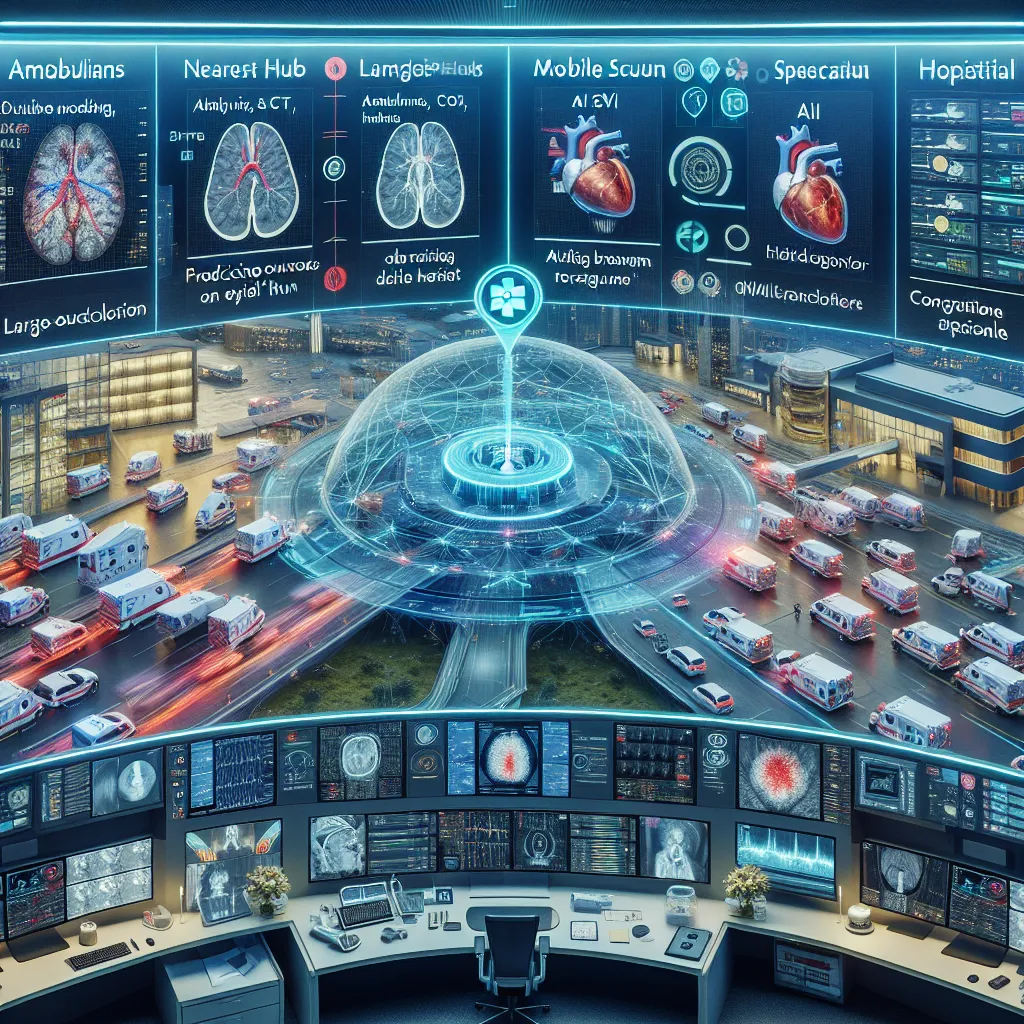
Description
No additional description provided.
The Pitch
Stroke logistics often resemble a chaotic puzzle with pieces scattered across various points in the healthcare system. From the initial 911 call to the administration of treatment, the path is fraught with delays caused by disconnected systems: ambulances, imaging systems, specialist availability, and hospital transport decisions rarely communicate seamlessly. Inefficiencies in this crucial care continuum can be the difference between full recovery and long-term disability or death.
Problem
The current stroke care process is hindered by miscommunication and slow decision-making, largely due to fragmented data systems. Ambulance teams, emergency departments, radiologists, neurologists, and surgeons work in silos. This disjointed approach leads to precious time lost, which is especially critical because the efficacy of stroke treatment is highly time-dependent. The need is dire for a solution that unifies these disparate points to facilitate swift, informed, and effective actions during stroke emergencies.
Solution
Envision a central artificial intelligence (AI) system functioning as an air-traffic controller for stroke logistics. This AI would integrate data from hospital systems, imaging tools, and specialist schedules to enhance the efficiency of stroke care workflows. By leveraging live data from emergency medical services (EMS) and hospital management systems, the AI could predict patient outcomes and automatically determine the most suitable facility or available specialist. In essence, it would optimize the entire process from the moment a stroke is suspected to the initiation of treatment.
Product Details
1. **Central AI Platform**: Integrates with electronic medical records (EMR) and imaging systems via APIs, enabling real-time data sharing and decision-making.
2. **Edge Computing**: Deployed on edge servers to allow real-time AI inference, ensuring fast response times without over-reliance on cloud processing.
3. **Interoperability**: Designed to work with a range of existing hospital systems and imaging devices, making it adaptable to various healthcare environments.
4. **Automated Communication System**: Facilitates seamless communication between EMS, hospitals, and specialists, ensuring all stakeholders are informed instantly.
5. **Real-Time Decision-Making**: Using live data to predict the most effective intervention route, enabling dispatch of mobile units, notification of remote surgeons, and preparation of hospital equipment before patient arrival.
Tools for MVP Development
- **API Integration Tools**: Use platforms such as Redox or Health Gorilla for seamless EMR integration. - **AI Frameworks**: Utilize TensorFlow or PyTorch for developing real-time predictive models. - **Cloud and Edge Computing Services**: AWS Greengrass or Azure IoT Edge for deploying AI on edge devices. - **Communication APIs**: Use Twilio for real-time messaging and alerting systems.
Go-To-Market Strategy
1. **Pilot Programs**: Initiate collaborations with a network of hospitals to pilot the system, gather feedback, and refine the product. 2. **Partnerships**: Collaborate with EMS providers and healthcare IT companies to expand reach and ensure seamless integration. 3. **Marketing Campaigns**: Develop targeted outreach leveraging case studies and success stories from pilot programs to highlight the life-saving potential of the AI system. 4. **Conferences and Workshops**: Present the solution at healthcare industry events to build awareness and generate interest.
Business Model
1. **Subscription-Based**: Hospitals and EMS services pay a monthly or annual subscription fee for access and continued support. 2. **Tiered Pricing**: Offer varied pricing tiers based on the size of the institution or the level of functionality required. 3. **License Agreements**: For integration with hospital systems and third-party software. 4. **Consultation Services**: Provide initial setup, training, and customization as a paid service to ensure a smooth implementation.
By integrating AI to manage stroke logistics proactively, this solution aims to optimize every critical second in stroke emergencies, potentially saving lives and reducing recovery times. The technology exists, the need is apparent, and with the right strategic approach, this innovation has the potential to transform stroke care delivery on a global scale.