AI-Powered Personalized Employee Wellness Concierge
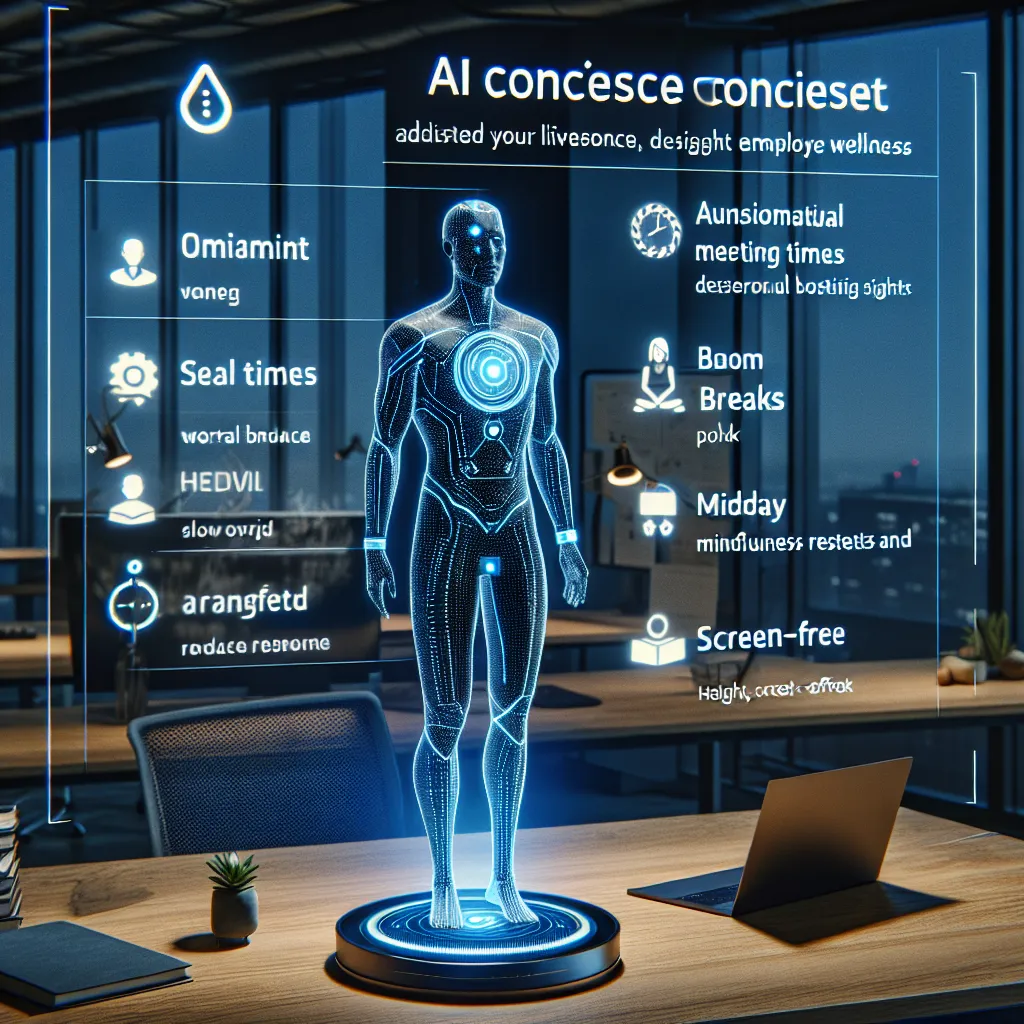
Most wellness perks are unused because they’re generic. A yoga class won’t help someone craving social interaction or cognitive rest. The problem is that well-being isn’t one-size-fits-all—and HR teams can’t possibly personalize at scale. Our solution is an AI concierge assigned to each employee that adapts to their lifestyle, biometric signals (via wearable APIs), and real work calendar. It suggests energy-aligned meeting times, meal/snack reminders, midday mindfulness resets, and even screen-free blocks. The trend is clear: from Whoop to Apple Health, employees are producing wellness data, but no one is turning it into day-to-day productivity flow. For example, a sales rep who sleeps poorly and has a packed Zoom day might get an automated 15-min block placed for stretching, plus a low-caffeine food recommendation and a Slack DND. It’s personalized, proactive, and invisible—until it’s needed.
Description
No additional description provided.
The Pitch
In today's fast-paced world, employee wellness initiatives are often generic and underutilized. Traditional offerings like yoga classes or gym memberships frequently don't align with the unique needs of each individual. The fundamental issue is that well-being cannot be effectively addressed with a one-size-fits-all strategy, and HR teams lack the capacity to personalize wellness solutions at scale.
To address this challenge, we propose an AI-powered concierge service that is personalized for each employee. By integrating with wearable technology APIs and utilizing data from employees' real work calendars, this AI concierge is designed to adapt to individual lifestyles and biometric indicators. It aims to improve well-being and productivity by offering personalized recommendations. These can include proposing the best times for meetings based on energy levels, sending reminders for meals or snacks, scheduling midday mindfulness breaks, and even creating blocks of time away from screens to encourage rest.
As the demand for personalized wellness solutions grows, driven by the popularity of platforms like Whoop and Apple Health, there is an abundance of wellness data being collected. Yet, few solutions transform this data into actionable insights that enhance day-to-day productivity. Our AI concierge aims to execute this transformation effectively.
For instance, consider a scenario involving a sales representative. If their wearable data indicates poor sleep quality, combined with a day filled with back-to-back Zoom meetings, the AI concierge might automatically schedule a 15-minute break for stretching exercises, recommend low-caffeine food options, and set their Slack status to Do Not Disturb mode. This approach not only addresses immediate wellness needs but does so in a manner that fits seamlessly into their routine—a solution that is personalized, proactive, and out-of-sight until needed.
To make the development and deployment of this solution feasible, several tools and platforms can be leveraged:
1. **Wearable API Integration**: Tools like Fitbit, Apple Health, and Google Fit offer comprehensive APIs for accessing health and wellness data.
2. **AI and Machine Learning**: Platforms such as TensorFlow and PyTorch can help build the predictive models necessary for personalized recommendations.
3. **Calendar and Communication Sync**: APIs from platforms like Google Calendar, Microsoft Outlook, Slack, and Microsoft Teams can automate scheduling and communications adjustments.
4. **App Development Frameworks**: React Native or Flutter can be used to create a mobile application that serves as the user interface for this solution.
For a successful launch of a minimum viable product (MVP) and to go-to-market (GTM) expediently, the following strategy can be utilized:
1. **Pilot Programs**: Begin with small to medium-sized companies to refine the product based on real user feedback.
2. **Partnerships with HR Tech Platforms**: Collaborate with existing HR solutions providers to expand reach and build credibility.
3. **Direct B2B Marketing**: Target HR departments of larger corporations with a direct approach, emphasizing cost savings through improved employee productivity.
4. **Content Marketing**: Create insightful content around the benefits of personalized wellness for employee engagement, drawing in leads through organic search.
The business model for this solution could involve a subscription-based pricing structure. Fees would be tiered based on the number of employees within a company, ensuring scalability and affordability. Offering monthly or annual plans will provide flexibility and create consistent revenue streams.
Ultimately, by addressing the gap between wellness data and actionable insights, this AI-powered concierge can not only improve employee health and satisfaction but also drive significant productivity gains for organizations.