AI-Powered Payment Reconciliation for Healthcare Practices
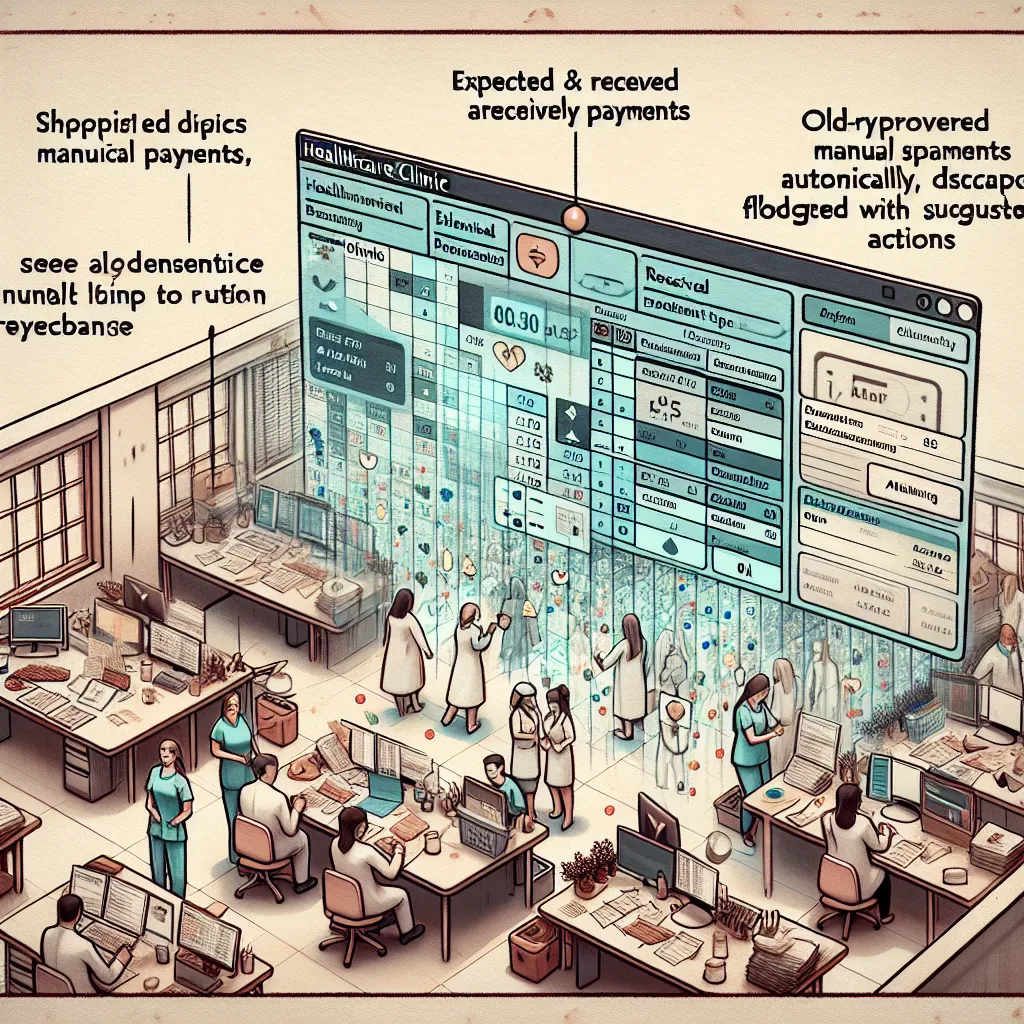
Most healthcare clinics and independent providers still rely on manual spreadsheets or bulky enterprise software to track incoming insurance and patient payments, often resulting in errors and cash flow issues. Our startup builds an AI-powered “micro-reconciliation” layer designed for small- to mid-sized practices. It plugs into existing bank feeds, EMRs, and insurance portals to auto-match expected vs. received payments in real-time—flagging discrepancies instantly and suggesting actions. It’s like QuickBooks meets Stripe Radar but purpose-built for medical practices. A small dermatology office using the tool could reduce its monthly reconciliation time by 90%, freeing staff to focus on patients instead of spreadsheets.
Description
No additional description provided.
The Pitch
The healthcare industry is rapidly evolving, yet many small to mid-sized practices find themselves tethered to outdated methods for managing financial operations. These practices often depend on manual spreadsheets or cumbersome enterprise software to reconcile insurance and patient payments. This traditional approach is time-consuming and prone to errors, which can lead to significant cash flow issues.
Backstory: As healthcare practices strive to provide top-notch patient care, administrative and financial tasks can become burdensome. While large healthcare providers have resources to invest in advanced financial management systems, smaller practices often struggle with inefficient tools. This gap presents an opportunity to leverage technology to alleviate financial management challenges for these small- to mid-sized practices.
The Problem: Manual reconciliation of payments is fraught with inefficiencies. Busy staff members are tasked with labor-intensive processes that are susceptible to human error. These errors can result in lost revenue, delayed payments, and increased administrative costs. Small practices, like a dermatology office, may find that these inefficiencies divert valuable resources away from patient care.
The Solution: Our startup introduces an innovative solution - an AI-powered micro-reconciliation layer specifically designed for small- to mid-sized healthcare practices. This tool seamlessly integrates with existing bank feeds, electronic medical records (EMRs), and insurance portals. By automatically matching expected versus received payments in real-time, it instantly flags discrepancies and suggests corrective actions. Essentially, it combines the functionalities of QuickBooks and Stripe Radar but is purpose-built for medical practices.
Product Details: - Integration: The tool easily connects with a practice's current systems such as EMRs, insurance portals, and bank accounts. - Real-Time Reconciliation: Automatically matches payments against expected figures, providing instant updates. - Discrepancy Alerts: Flags anomalies and inconsistencies, allowing staff to address issues proactively. - Action Suggestions: Provides actionable insights and recommended steps to resolve discrepancies efficiently. - User-Friendly Interface: Designed with non-technical users in mind, ensuring ease of use for all staff members.
Tools for MVP Launch: To expedite the development of a Minimum Viable Product (MVP), leveraging the following tools would be beneficial: - API platforms for seamless integration with existing systems - AI and machine learning libraries for building the reconciliation engine - Cloud hosting services to ensure scalability and security - User experience design tools to craft an intuitive interface
Go-to-Market Strategy: - Target Audience: Focus on small- to mid-sized healthcare practices, starting with specialties that frequently handle multiple insurance claims like dermatology. - Direct Outreach: Engage with decision-makers through webinars, industry conferences, and direct sales efforts. - Partnerships: Collaborate with EMR providers, financial software companies, and healthcare associations to reach a broader audience. - Content Marketing: Produce educational content emphasizing the benefits of automated reconciliation for healthcare providers.
Business Model: - Subscription-Based: Offer tiered subscription plans based on practice size and transaction volume, allowing for predictable and recurring revenue. - Freemium Version: Provide a limited free version to attract users, with the option to upgrade for additional features. - Implementation Services: Offer setup and training services for an additional fee to facilitate a smooth transition for new users.
In conclusion, our AI-powered micro-reconciliation tool simplifies financial operations for healthcare practices, reducing manual work and enhancing accuracy. By focusing on ease of use and intelligent automation, we empower practices to allocate more resources to patient care, ultimately driving improved outcomes for both providers and patients.