AI-Powered Micro-Product Launcher for Targeted Success
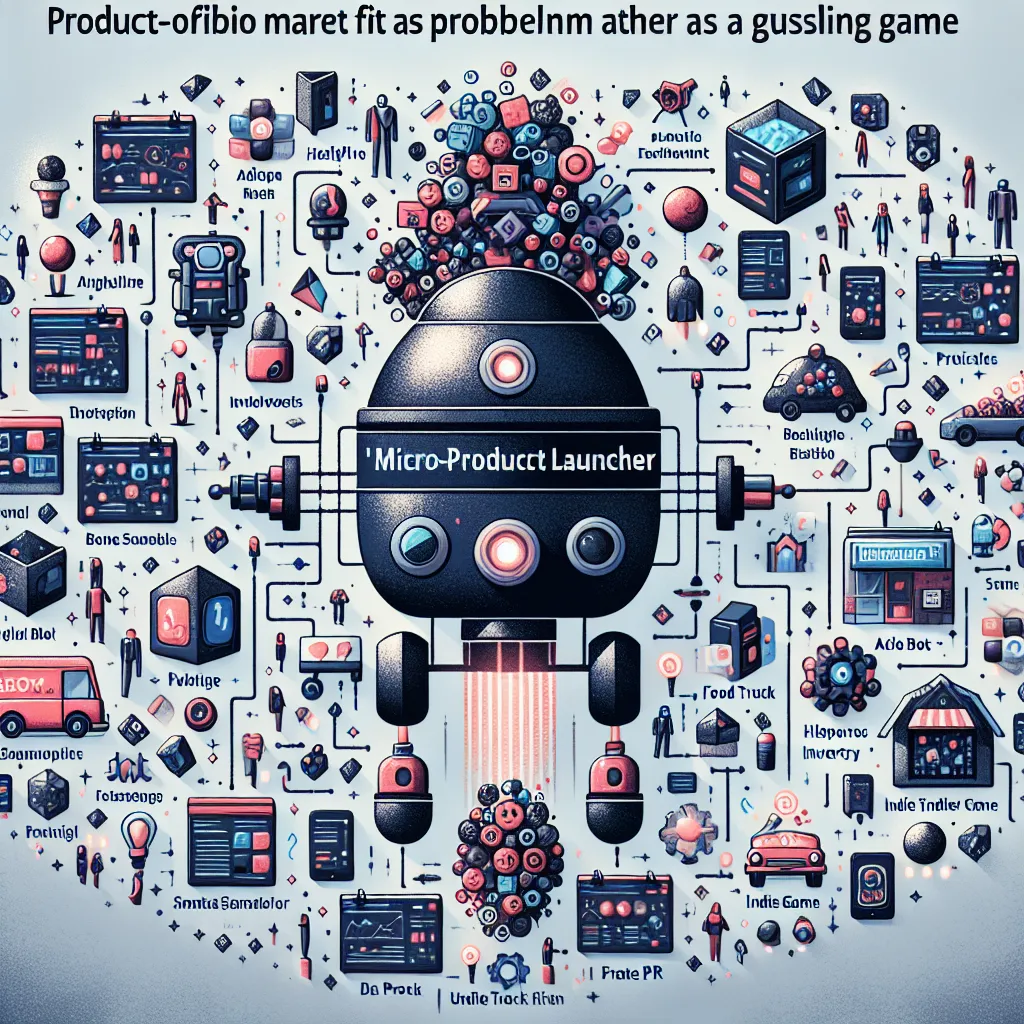
Traditionally, founders build a product, then hunt for an audience—but AI flips this. Now you can build 100 micro-products instantly, but there’s no system to test and match them with ideal users. A “Micro-Product Launcher” solves this by generating lightweight AI-powered tools, then deploying them to targeted user clusters to see what sticks. It treats product-market fit as a data problem, not a guessing game. As AI drops the cost of building to near-zero, distribution becomes the real skill. For example, a creator launches 20 niche AI bots—one for food truck inventory, one for indie game PR—and discovers which ones get traction through usage signals, not hope.
Description
No additional description provided.
The Pitch
In the rapidly evolving landscape of technology and innovation, traditional methods of product development are being turned on their head. Historically, entrepreneurs strived to build a product first and then sought out their target audience. Today, with advancements in AI, the paradigm is shifting dramatically. Building a multitude of micro-products simultaneously is now possible, but the challenge remains: how can we efficiently identify the right audience for each product? This brings us to a novel solution—the Micro-Product Launcher.
### Understanding the Challenge
In the modern digital era, the cost of developing digital products has plummeted, thanks to AI and automation. However, this creates a new challenge: finding product-market fit in a sea of possibilities. Traditional methods of market research and user testing are time-consuming and often require significant resources.
### The Innovative Solution: Micro-Product Launcher
The Micro-Product Launcher is designed to address this challenge by transforming the approach to product-market fit into a data-driven process. It leverages AI to create lightweight, scalable tools and automatically matches them with targeted populations to evaluate interest and applicability. This concept allows entrepreneurs to pivot from guessing who might want a product to observing firsthand which audiences find value in what they’ve built.
### Product Details
1. **AI-Powered Generation**: Use AI to develop multiple micro-products efficiently, each tailored to a different niche or problem area.
2. **Automated Deployment**: Launch these products quickly to specific user groups based on predefined demographics, interests, or behaviors.
3. **Real-Time Analytics**: Continuously collect data on user engagement and behavior to identify which micro-products resonate with which audiences.
4. **Iterative Learning**: Use insights from user interactions to refine products or develop new iterations that better fit user needs.
### Tools to Simplify Launch
1. **AI Development Platforms**: Use platforms like OpenAI or TensorFlow to build and train your AI modules.
2. **Deployment Automation**: Utilize cloud services like AWS or Google Cloud for quick, scalable deployment.
3. **Analytics Software**: Implement tools like Google Analytics or Mixpanel for in-depth data tracking and analysis.
4. **Targeting and Segmentation**: Leverage platforms like Facebook Ads and Google Ads to reach specific user segments effectively.
### Go-To-Market Strategy
1. **Identify Early Adopters**: Start by identifying niche communities or forums that are likely to be interested in innovative solutions and use them for initial testing.
2. **Content Marketing**: Create value-driven content that addresses the pain points your micro-products resolve. This will draw in initial users who are already searching for solutions.
3. **Partnerships**: Form alliances with influencers or other businesses serving similar audiences to increase reach and credibility.
4. **Feedback Loops**: Encourage user feedback to foster community engagement and ensure that iterations of the product meet user needs.
### Business Model
1. **Freemium Model**: Offer basic functionality of the AI tools for free while providing premium features as a paid upgrade.
2. **Subscription Model**: Implement a tiered subscription service where users can pay for ongoing access to the micro-products that best serve their needs.
3. **Data-Powered Insights**: Another revenue stream could involve offering anonymized usage insights from your micro-products to businesses looking to understand market trends and consumer behavior.
In conclusion, the “Micro-Product Launcher” represents a transformative way to bridge the gap between product creation and market fit. As technology continues to reshape business landscapes, leaning into AI and data-driven decision-making empowers businesses to move away from speculation and embrace an era where product success is determined by real-world interactions and feedback.