AI-Powered Local Ordinance Translator
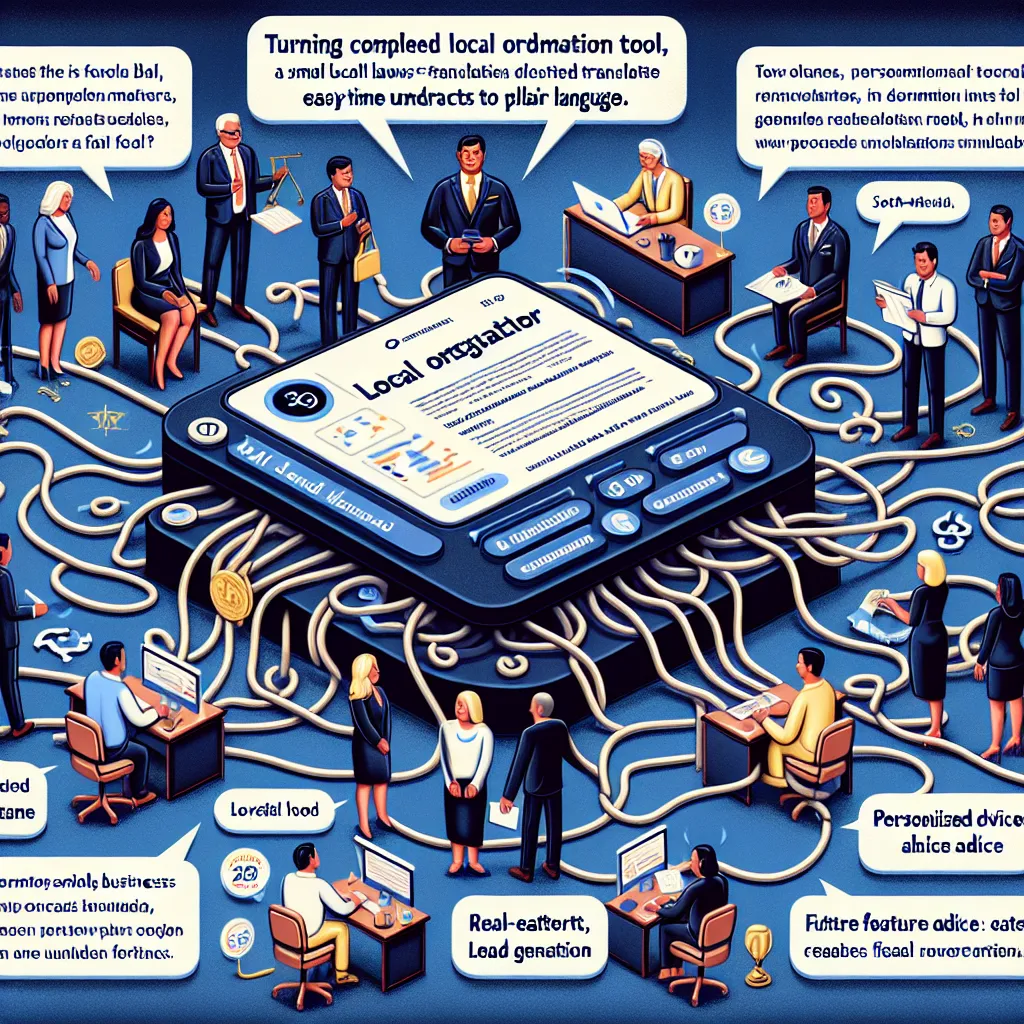
AI-powered Local Ordinance Translator: a tool designed to help small businesses easily understand complex local laws. This AI service translates legal jargon into plain, simple language, making it easier for business owners to stay compliant without the hassle or cost of hiring a lawyer. Priced at $29/month, it's an affordable solution with the potential to expand into personalized legal advice, real-time updates, and even generating leads for legal services. Lawyers can also benefit by using it to create straightforward, easy-to-understand contracts for their clients.
Description
No additional description provided.
The Pitch
Local laws and regulations can be a nightmare for small businesses. Whether it's zoning codes, licensing requirements, or compliance mandates, navigating through layers of legal jargon is time-consuming and confusing. Business owners either have to hire expensive legal help or risk non-compliance. Inspired by this pain point, the AI-Powered Local Ordinance Translator was created to make legal information accessible and easy to understand for small business owners, empowering them to stay compliant with minimal effort.
The Idea: The AI-powered tool translates complex local ordinances into plain, easy-to-understand English. Users simply input the legal text, and the AI generates a simplified summary. The tool is designed for small business owners who need quick, actionable insights but can also be expanded to serve legal professionals looking for a faster way to draft contracts and legal documents in plain language.
Go-to-Market (GTM) Strategy: The initial target market is small business owners who struggle with local compliance issues. The tool will be introduced via partnerships with small business associations, chambers of commerce, and online platforms like Yelp and Google My Business, where businesses search for compliance solutions.
Freemium Model: Offer a free trial that allows users to translate a limited number of documents per month. This will serve as a hook to introduce business owners to the service. Paid Subscription: $29/month for unlimited translations, customized notifications on legal updates in the user’s area, and access to a library of commonly encountered legal documents. Affiliate Partnerships: Partner with legal service providers, small business advisors, and local government offices to promote the product. Legal Professional Outreach: Target law firms and solo attorneys, offering them the ability to use the tool to simplify their own client communications and generate plain-English contracts. Business Model: The core revenue model revolves around a tiered subscription service:
Basic Plan ($29/month): Unlimited ordinance translations, real-time legal updates for the user’s city/county, and access to a simplified legal library. Pro Plan ($49/month): All Basic features plus personalized advice based on a user’s specific industry and integration with other legal services (e.g., drafting of legal documents). Enterprise Plan ($99/month): For law firms and legal professionals. This plan includes bulk document translations, API access for embedding into other legal systems, and client-specific ordinance alerts. Additional revenue streams can be developed through:
Partnerships with Legal Services: Integrate with online legal service providers, allowing them to upsell their legal services to small businesses when ordinance translation leads to the need for legal help. Custom Integrations: Offer API access to local governments or software platforms focused on compliance, creating a scalable B2B offering. Lead Generation for Law Firms: Offer premium listings for law firms that specialize in small business law, acting as a bridge between businesses and legal professionals. Expansion Potential: The service could evolve into a comprehensive compliance tool by adding features like personalized notifications when laws change, industry-specific legal advice, and even partnerships with law firms for more complex legal needs. As the user base grows, the AI could incorporate machine learning to provide increasingly tailored recommendations. Over time, it could expand to include federal and state laws, not just local ordinances, and support for other regions or countries.
In the long term, the AI-powered translator could become a central hub for small businesses navigating compliance, offering not just translations but full legal guidance in an affordable, scalable package.