AI-Powered Customer Journey Mapping for SMBs
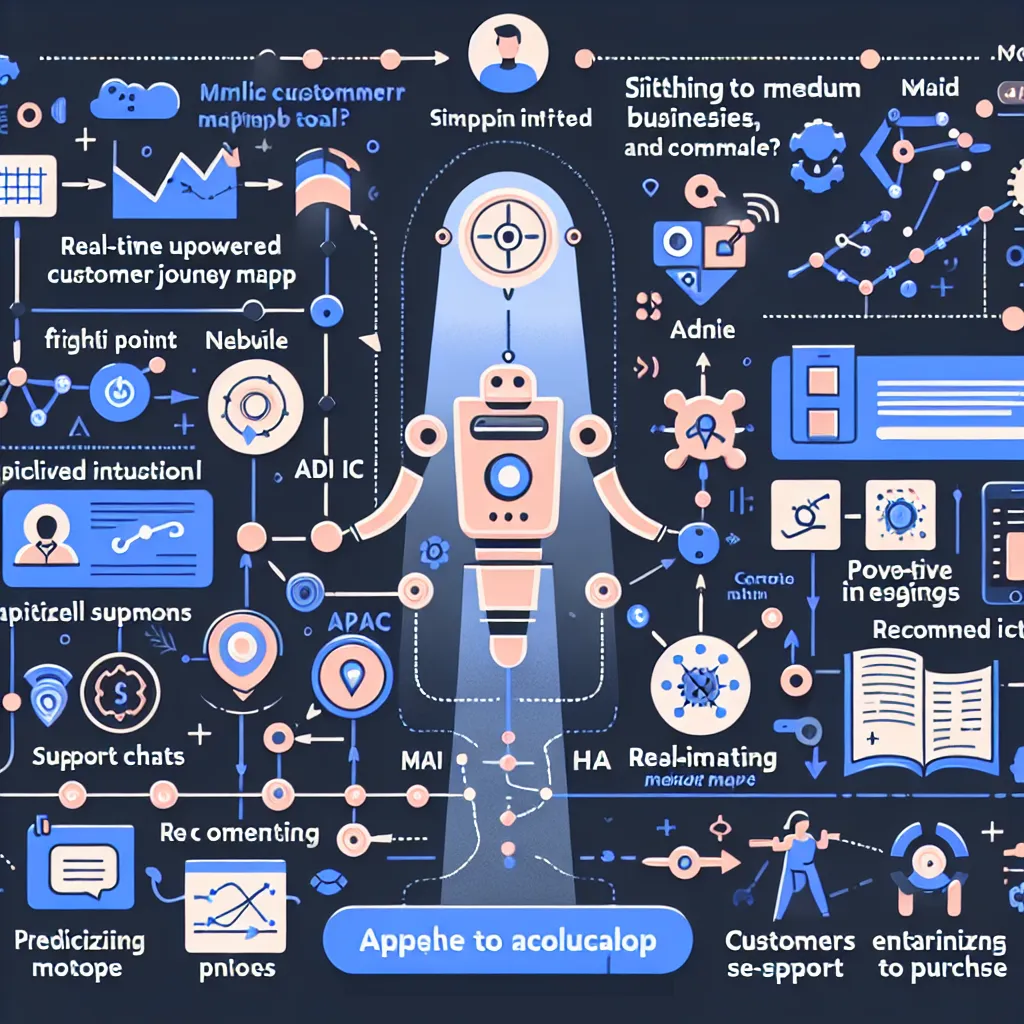
Most companies struggle to understand how customers actually move through their lifecycle. Traditional analytics tools give fragmented snapshots—clicks, email opens, page views—but don’t connect the dots into a clear journey. This leaves teams guessing where drop-offs happen or what touchpoints drive conversions. An AI-powered customer journey mapping tool would solve this by automatically stitching together user behavior across all channels—web, mobile, email, support chats, ads—and surfacing common paths, friction points, and high-impact moments. It would offer visual journey maps that update in real time, with predictive insights and recommended actions like optimized messaging or re-engagement flows. For example, a DTC brand could see that customers who chatted with support within 48 hours of their first visit were 2x more likely to purchase—and trigger a proactive message to replicate that behavior. While large enterprises like Adobe offer this at a complex level, there’s a huge opportunity for a lightweight, accessible version built for SMBs and growth-stage startups.
Description
No additional description provided.
The Pitch
In today's fast-paced digital environment, businesses of all sizes are increasingly challenged to understand the intricacies of their customer journeys. For small to medium-sized businesses (SMBs) and growth-stage startups, the ability to comprehend and optimize these journeys can be the difference between thriving and merely surviving. Traditionally, companies have relied on separate analytics tools to collect data on customer interactions, such as website clicks, email opens, and social media engagements. However, these tools often offer disjointed insights, leaving businesses grappling with fragmented data and struggling to form a coherent picture of the customer journey.
2. Identifying the Problem:
The crux of the problem lies in the inability of traditional analytics solutions to connect disparate data points into a unified journey. While large enterprises may have access to sophisticated tools, these are often complex and prohibitively expensive for smaller businesses. As a result, SMBs often find themselves guessing where customer drop-offs occur or which touchpoints are critical for conversions. Without a clear understanding, they miss out on opportunities to optimize interactions, leading to lost revenue and diminished customer satisfaction.
3. The Solution: An AI-Powered Customer Journey Mapping Tool
Imagine a solution that automatically stitches together user behavior across all channels—be it web, mobile, email, support chats, or advertising platforms. This tool would surface common paths, pinpoint friction areas, and highlight high-impact moments in the customer journey. With visual journey maps that update in real time, businesses can gain predictive insights and recommended actions to enhance customer experiences.
For instance, consider a direct-to-consumer (DTC) brand discovering that customers who interact with support chat within 48 hours of their first visit are twice as likely to make a purchase. With this insight, the brand could proactively initiate support interactions to replicate this successful behavior pattern.
4. Product Details:
- Core Features: - Multi-channel behavior tracking - Real-time, dynamic journey mapping - Predictive insights and recommendations - Customizable dashboards and reports - Easy integration with existing platforms
- User Experience: - Intuitive interface with drag-and-drop functionality - Seamless connection with existing customer data sources - Configurable alerts for pivotal changes in customer behavior
5. Tools for Developing the MVP:
- Backend: Use cloud services like AWS or Google Cloud for scalability - Frontend: Leverage React or Vue.js for an interactive user interface - Data Analytics: Employ platforms like Tableau or Power BI for data visualization - AI/ML Layer: Incorporate frameworks like TensorFlow or PyTorch to build predictive models - API Integrations: Connect with CRM systems and support chat tools via APIs
6. Go-To-Market Strategy (GTM):
- Target Audience: SMBs and growing startups across industries such as retail, SaaS, and e-commerce - Differentiation: Position as a cost-effective, easy-to-use alternative to complex enterprise solutions - Marketing Channels: Focus on content marketing, webinars, and collaborations with industry influencers - Sales Approach: Offer a freemium model with robust upsell opportunities to premium features
7. Business Model:
The business model could be subscription-based, with tiered offerings to cater to varying business sizes and needs. Another potential revenue stream could be targeted partnerships with digital agencies that manage marketing campaigns for SMB clients.
By addressing the current gaps in customer journey mapping, this tool can empower SMBs to take charge of their customer experiences. With streamlined data insights and actionable recommendations, businesses can optimize touchpoints, enhance conversion rates, and ultimately drive growth.