AI-Powered Consumer Segmentation for Dynamic Marketing
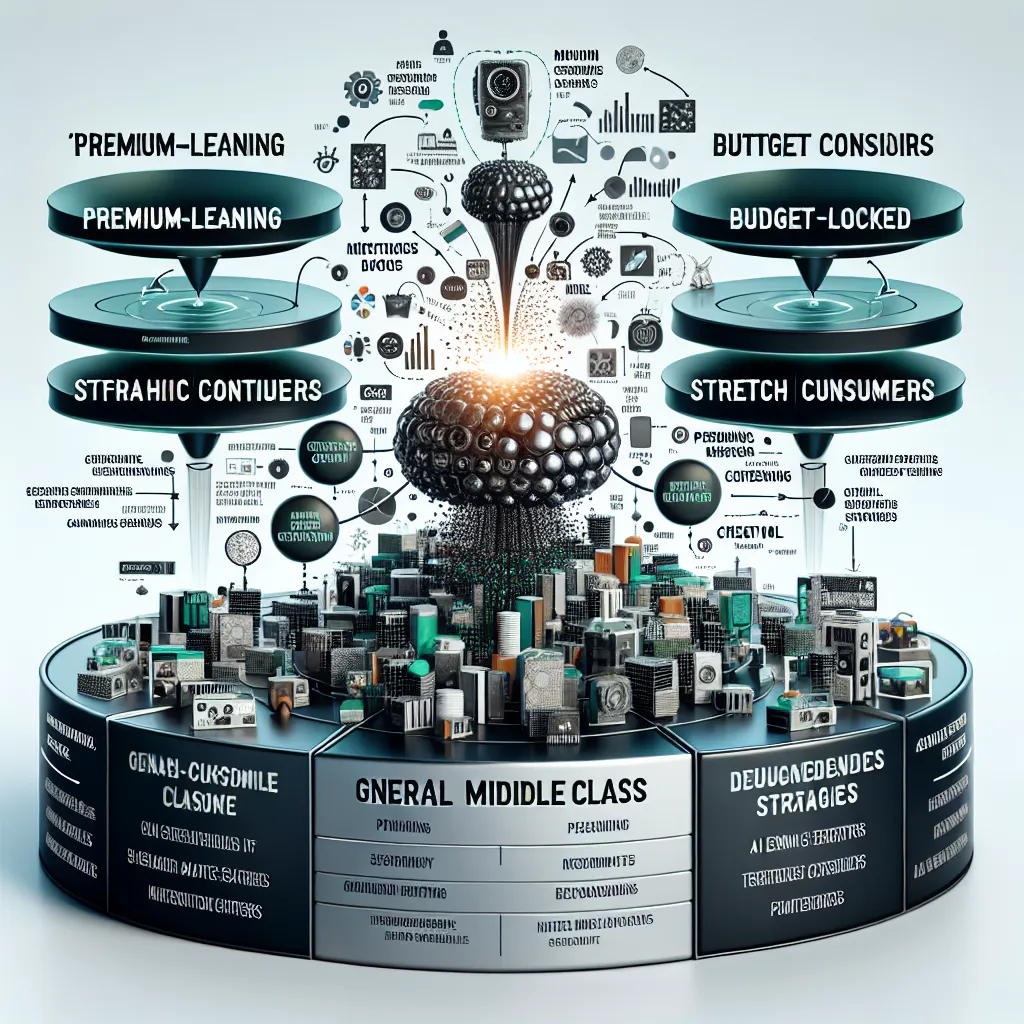
Marketers are waking up to a hard truth: the “middle class” no longer behaves like a single segment. With incomes polarizing and spending bifurcating, brands using traditional demographic targeting are wasting money and losing relevance. The solution is an AI engine that ingests purchase data, engagement patterns, and psychographic signals to cluster customers into “premium-leaning,” “budget-locked,” or “stretch consumers”—and then automatically recommends pricing, creative, and channel strategies for each. Why now? Because 73% of marketers say the term “middle class” is meaningless, and brands lack tools to reposition themselves in a world where messaging must split, adapt, and converge dynamically. Example: a mid-market apparel brand uploads anonymized CRM data and instantly sees it should stop targeting “middle income women 25–44,” and instead run two distinct campaigns: a premium sustainable line for high-intent clusters and a “durable essentials” line for budget-tight clusters, each with optimized pricing and copy variations. Every campaign becomes smarter, cheaper, and more precise.
Description
No additional description provided.
The Pitch
As the economic landscape evolves, marketers are confronted with an increasingly fragmented consumer base. The traditional notion of the middle class as a uniform segment is becoming obsolete. Income disparity and divergent spending habits are challenging brands to adapt their marketing strategies. Many companies, sticking to outdated demographic targeting practices, are finding themselves at a disadvantage—spending more and gaining less traction. The need for a more nuanced approach is imperative, and this is where an innovative AI-powered solution steps in.
The core of the issue lies in the shifts within consumer behavior and socioeconomic dynamics. The middle-income group, once thought to have homogeneous spending patterns, now displays varied purchasing behaviors. Some consumers lean toward premium products, others remain constrained by their budgets, and a third group makes occasional splurges. This diversity necessitates a marketing strategy that can dynamically adjust to these distinct behaviors and consumer traits.
Enter the AI-driven marketing engine designed to revolutionize customer segmentation and targeting. This technology utilizes comprehensive inputs such as purchase data, engagement metrics, and psychographic insights to categorize consumers into three primary groups: premium-leaning, budget-locked, and stretch consumers. Each of these clusters receives tailored recommendations on pricing strategies, creative content, and channel selection. This customization ensures that brand messaging resonates deeply with each audience.
The urgency for such a solution is underscored by the fact that 73% of marketers acknowledge the growing irrelevance of the term middle class in their campaigns. The AI engine empowers brands to pivot and realign their strategies in a rapidly changing market, enabling messaging that adapts seamlessly to consumer needs and preferences.
For example, consider a mid-level apparel brand grappling with stagnant sales due to outdated targeting practices. By uploading anonymized CRM data into the AI engine, the brand swiftly discovers the futility of targeting middle-income women aged 25–44 as a single group. Instead, it is advised to deploy two specialized campaigns: one promoting a premium sustainable line to affluent, high-intent consumers and another focusing on durable essentials for budget-conscious buyers. Each campaign offers tailored pricing and personalized content, enhancing its effectiveness and cost efficiency.
To build and launch this solution as a minimum viable product (MVP), several tools and platforms can be leveraged. Integrating customer data platforms (CDPs) for data aggregation, machine learning libraries such as TensorFlow or PyTorch for developing the AI models, and cloud services like AWS or Google Cloud for scalable compute resources will be crucial. Additionally, employing data visualization tools like Tableau can empower marketers to easily interpret insights and strategies suggested by the engine.
The go-to-market (GTM) strategy should focus on early partnerships with forward-thinking brands willing to pilot the solution. Demonstrating tangible ROI and enhancing customer acquisition rates will showcase the solution's efficacy. Educational webinars, case studies, and live demos can be instrumental in communicating the value proposition to potential clients.
Regarding the business model, a subscription-based offering with tiered pricing plans would provide flexibility for brands of varying sizes to adopt the technology. An initial free trial or a freemium model could encourage adoption and provide an opportunity for brands to experience the tool's impact without significant upfront investment.
By addressing the complexities of modern consumer behavior through intelligent segmentation and strategy personalization, this AI-powered engine positions brands to engage more effectively, optimize marketing expenditures, and drive meaningful growth.