AI-Powered Archaeology: Uncovering Lost Civilizations Efficiently
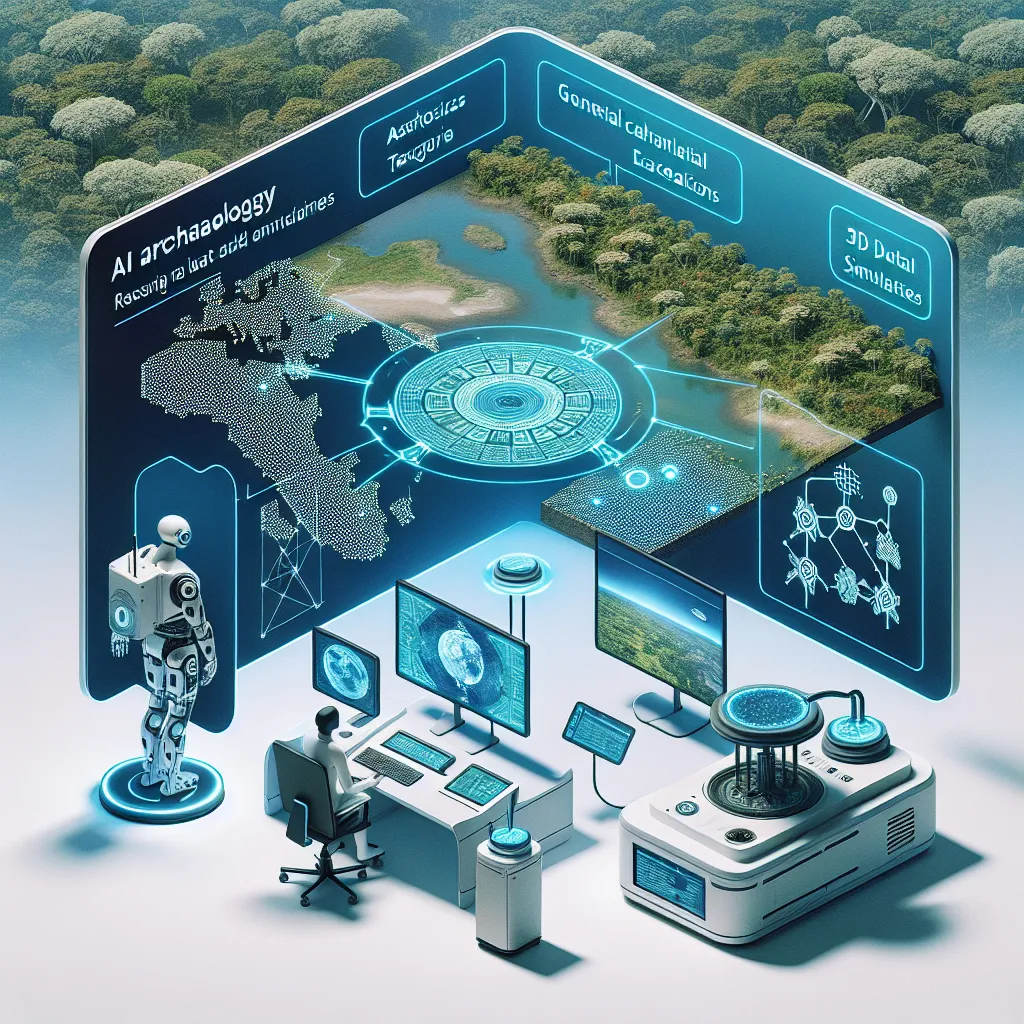
Human archaeologists take decades to analyze sites, decode languages, and reconstruct lost civilizations—but vast amounts of untapped data already exist in satellite imagery, historical texts, and museum archives. An “AI Archaeology Lab” solves this by combining computer vision, language models, and simulation engines to accelerate discovery. It can spot settlement patterns, translate forgotten scripts, and model ancient ecosystems. With AI now capable of superhuman pattern recognition, history becomes a data science problem. For example, the lab scans satellite photos of the Amazon and finds geometric anomalies—revealing a lost civilization hidden beneath the forest canopy.
Description
No additional description provided.
The Pitch
For centuries, the field of archaeology has relied on painstaking manual efforts to uncover the mysteries of past civilizations. Human archaeologists meticulously analyze ancient sites, interpret historical texts, and piece together fragmented artifacts to reconstruct the stories of our ancestors. This meticulous process often takes years or even decades, leaving vast amounts of potential data untapped. Despite these efforts, many questions remain unanswered due to the sheer volume of unexplored data sources, such as satellite imagery, historical texts, and museum archives.
**The Problem**
A significant challenge in archaeology is the inability to swiftly process the enormity of available data. Satellite images hold clues to lost civilizations hiding beneath dense canopies or buried under urban expansions, but analyzing these images manually is impractical. Similarly, numerous ancient scripts remain untranslated due to the complexity and time-consuming nature of linguistic analysis. The conventional methods of archaeology are insufficient to keep pace with the growing volume of data.
**The Solution: AI Archaeology Lab**
The AI Archaeology Lab emerges as a revolutionary solution to these challenges by harnessing the power of artificial intelligence. By integrating advanced technologies such as computer vision, natural language processing, and simulation engines, this lab aims to transform archaeology into a data-driven science.
Through computer vision, the lab scans satellite imagery to identify patterns and anomalies that might suggest ancient human activity. As a result, previously hidden settlements and structures can be discovered much faster. Language models are used to decode ancient scripts, rendering years of translation work into mere hours. Simulation engines create models of ancient ecosystems, providing insights into how civilizations interacted with their environments.
**Product Details**
1. **Automated Image Analysis**: By employing AI algorithms in computer vision, the lab analyzes satellite and aerial images to detect potential archaeological sites. Anomalies such as geometric patterns are highlighted, offering evidence of lost civilizations.
2. **Language Deciphering**: AI-driven natural language processing tools are used to translate forgotten languages. Language models trained on known scripts facilitate the quick translation and interpretation of ancient texts, expanding the understanding of historical narratives.
3. **Ecosystem Modeling**: Simulation engines reconstruct ancient environments, allowing archaeologists to understand resource management, agriculture, and climate interaction in historical contexts.
**Tools for Launching as an MVP**
To develop the AI Archaeology Lab as a Minimum Viable Product, the following tools and platforms can be utilized:
- Cloud computing platforms like AWS or Google Cloud for scalable data processing. - Pre-trained language models such as OpenAI's GPT or Google's BERT for rapid language translation. - Open-source computer vision libraries like OpenCV and TensorFlow for image analysis. - GIS platforms and data visualization tools to map and present findings.
**Go-To-Market Strategy**
The target market includes academic institutions, museums, and research organizations interested in archaeology. The following steps outline the go-to-market (GTM) strategy:
1. **Partnerships**: Collaborate with universities and research bodies for pilot projects and gain initial case studies. 2. **Publications and Conferences**: Share findings at academic conferences and in journals to build credibility and interest within the scientific community. 3. **Demo Workshops**: Conduct workshops and demonstrations for potential users to exhibit the lab's capabilities. 4. **Online Presence**: Build an informative website and maintain an active presence on social media platforms, focusing on sharing case studies and success stories.
**Business Model**
The business model could include:
- **Subscription-based Licensing**: Archaeological institutions and universities can subscribe to use the AI tools and platforms. - **Service Contracts**: Provide bespoke analysis services for specific projects or datasets. - **Partnership Grants**: Collaborate with government and private organizations to secure funding for joint ventures.
In conclusion, the AI Archaeology Lab proposes an innovative approach to accelerating historical discoveries. By transforming archaeological exploration into an AI-driven process, the lab has the potential to unlock new chapters of human history and redefine our understanding of past civilizations.