AI Platform for Resilient Supply Chain Simulation
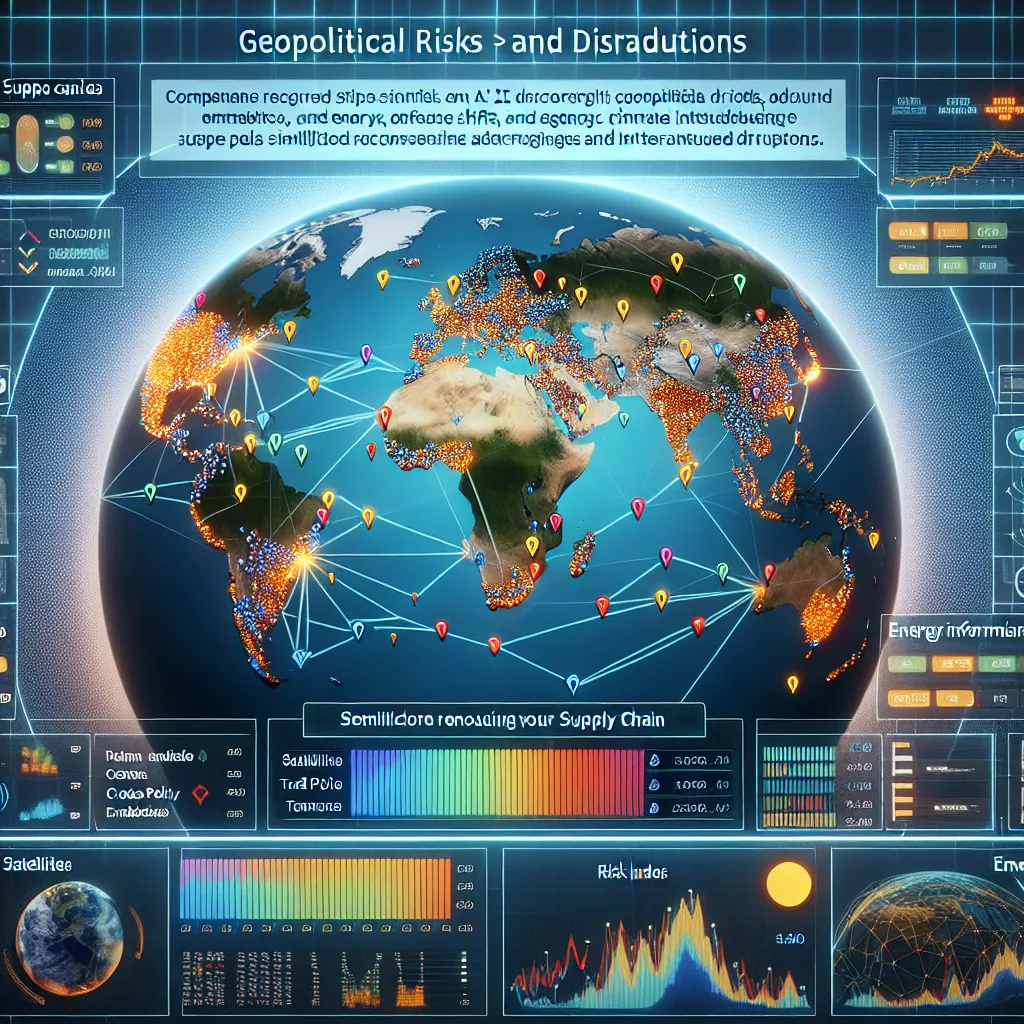
Global trade is being reshaped by political conflict, export restrictions, and climate-related disruptions. As 34% of companies report business model changes due to geopolitical tensions, existing logistics tools fail to predict the domino effects of future shocks. This startup provides a dynamic, AI-powered platform that simulates an organization’s supply chain under various stress scenarios—conflict, trade policy shifts, or energy crises—while recommending optimized sourcing strategies. It combines satellite data, customs delays, geopolitical risk indices, and input from economic databases to help procurement teams run “what if” drills and reconfigure suppliers. For instance, a semiconductor firm could simulate a conflict in Taiwan and instantly visualize ripple effects across its network, re-routing parts through Vietnam or Mexico. With growing offshoring and re-shoring trends, this system helps firms build antifragile supply chains in a fragmenting world.
Description
No additional description provided.
The Pitch
In today's rapidly evolving global trade environment, organizations face unprecedented challenges. Geopolitical conflicts, changing trade policies, and climate-related disruptions are reshaping how businesses operate. Recently, 34 percent of companies reported needing to modify their business models in response to these tensions. Despite the critical need to adapt, current logistics tools fall short, particularly in predicting and mitigating the cumulative impacts of future shocks.
This has led to the development of an innovative solution: a dynamic, AI-powered platform designed to simulate an organization's supply chain under various stress scenarios. Whether dealing with international conflict, shifts in trade policy, or energy crises, the goal is to provide organizations with data-driven insights that drive strategic sourcing decisions.
The solution leverages advanced technologies and vast datasets, including satellite imagery, customs data, geopolitical risk indices, and economic database inputs. These data streams allow procurement teams to conduct comprehensive what if drills, assessing potential risks and reorienting supplier strategies accordingly. For example, a semiconductor manufacturer could simulate the implications of a conflict in Taiwan, observing potential disruptions and visualizing alternative sourcing routes through countries like Vietnam or Mexico. This foresight ensures that companies can reconfigure their supply chains proactively, building resilient and antifragile networks suited for a fragmented global landscape.
For those interested in bringing this concept to life, the path from idea to a minimum viable product (MVP) can be navigated with the right tools and strategies:
1. Development Tools: - Utilize platforms like TensorFlow or PyTorch for building AI models. - Leverage cloud services such as AWS or Google Cloud for scalable storage and computing power. - Access APIs that provide real-time satellite imagery and economic data.
2. MVP Launch: - Start by developing a core feature set focused on simulating a single high-impact scenario. - Conduct pilot tests with a select group of companies that rely heavily on global supply chains for feedback and iteration.
3. Go-To-Market Strategy (GTM): - Target industries most affected by global supply chain disruptions, such as technology, automotive, and consumer goods. - Develop strategic partnerships with industry influencers and thought leaders to advocate for the platform’s benefits. - Use content marketing to publish case studies and thought leadership pieces, highlighting successful simulations and outcomes.
4. Business Model: - Implement a subscription-based model, offering tiered pricing based on features and scale of analysis. - Provide bespoke consulting services to enterprises seeking tailored simulations or unique insights. - Explore opportunities for data partnerships, which could supply the platform with exclusive or proprietary data streams enhancing its predictive capabilities.
By adopting this approach, businesses can dynamically adapt to the complexities of global trade and create supply chains that are robust, flexible, and ready to meet future challenges. This platform not only provides immediate tactical advantages but also positions organizations for long-term strategic resilience.