AI Personalized Learning Path Builder
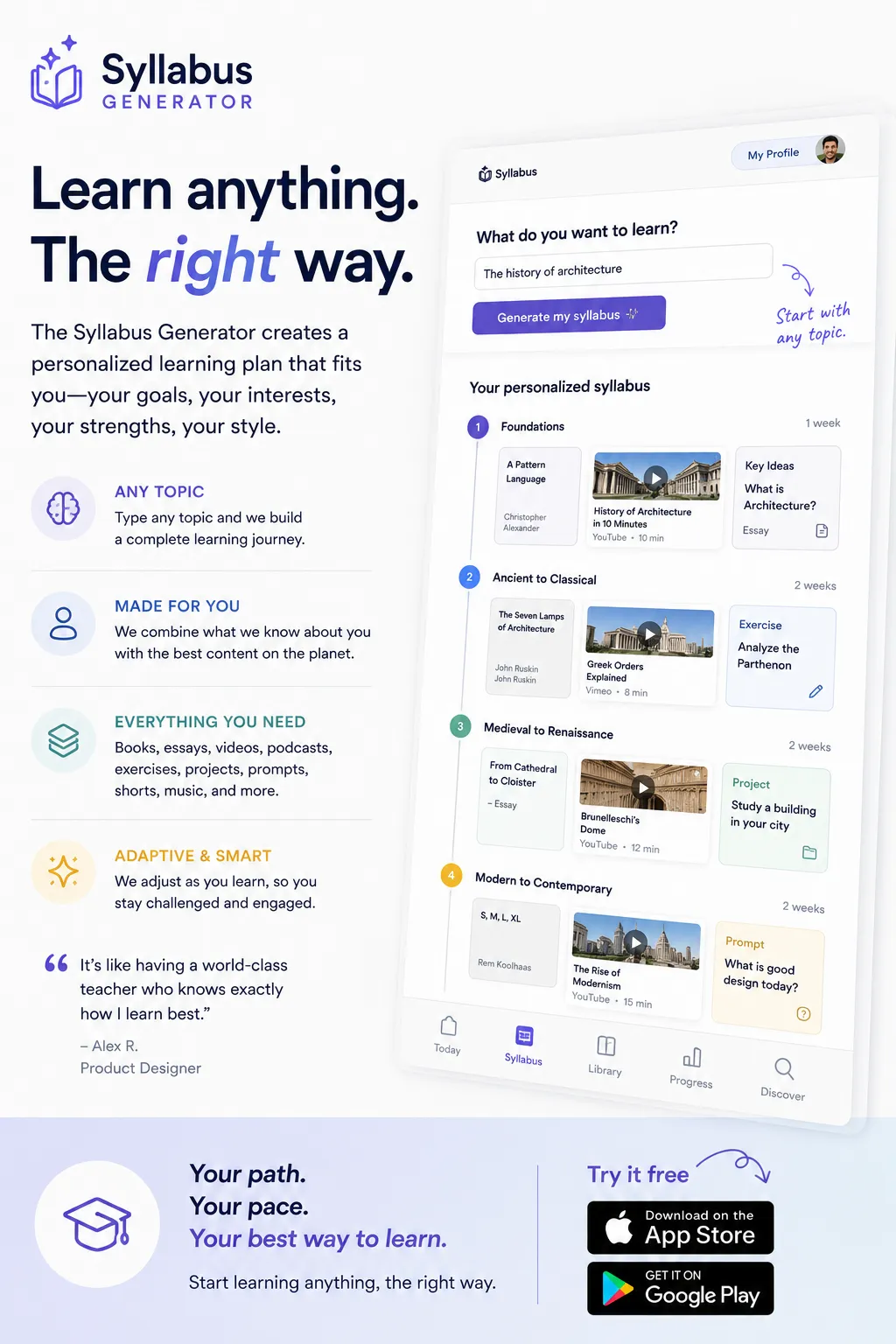
The internet contains almost everything you could ever want to learn and absolutely no syllabus for learning it. Tell an app, “I want to understand architecture,” “teach me behavioral economics,” or “I want to get really good at gardening.” It builds a personalized course using the best books, essays, videos, podcasts, exercises, projects, music, people to follow, places to visit, and questions to think about, arranged in the order you should encounter them. The interesting part is that it also knows *you*: what you already know, what keeps your attention, how much time you have, what you've loved before, and where you tend to give up. AI made personalized tutors possible. The bigger opportunity might be the personalized university.
Description
No additional description provided.
The Pitch
A personalized university is compelling because abundance has made self-education strangely harder, not easier. The scarce thing is no longer access to information, but sequence: what to read before what, which detours are worth taking, when to stop consuming and start making, and how to avoid mistaking familiarity for understanding. The internet is full of excellent fragments; the business is in turning fragments into an intellectual arc.
The most interesting part is that taste may be as important as accuracy. People rarely stay with a subject because the materials are objectively best; they stay because the doorway was right for them. One person enters architecture through cathedrals, another through Japanese houses, another through video game level design. A system that learns a person’s aesthetic and motivational patterns can make education feel less like compliance and more like discovery. That is a different product from a better search engine.
This could become valuable because serious learning is one of the few consumer behaviors where personalization compounds. If the system knows what you have tried, skipped, finished, misunderstood, loved, and abandoned, it becomes increasingly difficult to replace. A streaming service knows what you might watch tonight; this would know how your mind has been shaped over years. The longer it exists, the more it becomes a private map of your curiosity.
It also sits in the gap between school and media, where many adults now live. Traditional education is too rigid, expensive, and credential-oriented for people who simply want to become more capable, interesting, or alive to the world. Media is engaging but mostly unstructured and forgettable. A company that can make independent learning feel both serious and pleasurable would own a category that neither universities nor entertainment platforms are well designed to serve.
The deeper opportunity is that learning is becoming a form of identity. People already signal who they are through bookshelves, newsletters, podcasts, trips, and the experts they follow. But those signals are scattered and accidental. A personalized university could give people not just content, but a sense of intellectual direction: “this is the kind of mind I am trying to build.” That is a much more durable need than finishing a course.