AI Personal Memory and Decision Assistant
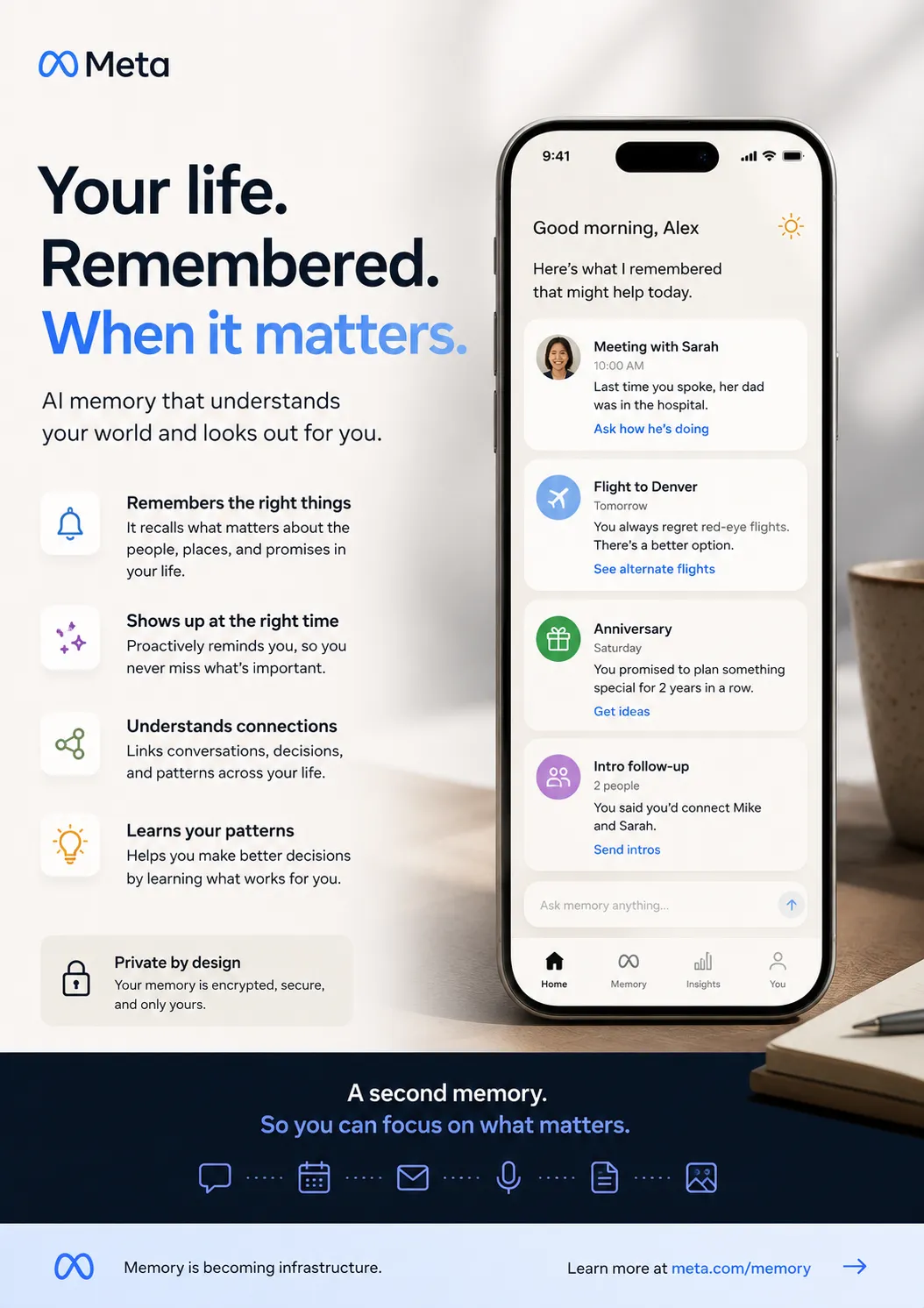
Every AI company wants to remember everything you’ve ever said. That’s useful, but it’s not transformative. The real opportunity is an AI that understands what matters. Imagine walking into a meeting and your phone quietly reminds you, “Last time you spoke with Sarah she mentioned her father was in the hospital. Ask how he’s doing.” Or before making a decision it says, “You’ve made this exact mistake three times before when you rushed.” AI no longer needs to be a searchable archive. Multimodal models can now connect conversations, emails, meetings, documents, and behavior across years. The winning product won’t remember your life better than you do. It’ll help you make better decisions because it understands the patterns you never noticed.
Description
No additional description provided.
The Pitch
Personal memory is not primarily a storage problem; it is a judgment problem. People already have too many searchable records: inboxes, calendars, notes, chats, call transcripts, photos, documents. The scarce asset is not recall, but relevance. A system that knows which detail to surface, when, and why would feel less like another productivity tool and more like an added layer of practical intelligence between a person and their own life.
The most valuable moments are not when someone asks a question, but when they would not have known to ask. Search rewards explicit curiosity; this product would reward blind spots. It could notice that a relationship is becoming transactional, that a promise is about to be forgotten, that a recurring decision pattern is reappearing under a different name. That kind of assistance has unusual emotional leverage because it does not merely save time. It helps people behave more like the version of themselves they intend to be.
The business also works because memory becomes more defensible as it becomes more contextual. Raw data can be imported, copied, or re-created. But the interpretation of a person’s history—their recurring anxieties, loyalties, mistakes, priorities, obligations, and social texture—compounds privately over time. The longer the system is used, the less replaceable it becomes, not because of lock-in in the crude sense, but because it has developed a map of significance that no new tool can instantly reproduce.
There is also a trust paradox that makes the category unusually interesting. People may not want an AI that “knows everything,” but they may deeply want one that helps them remember the right thing at the right moment. The winning company would not be the one that feels omniscient. It would be the one that feels discreet, restrained, and socially intelligent enough to stay quiet most of the time. In a world where software constantly demands attention, restraint could become the premium feature.
If built well, this would occupy a rare position: part memory, part conscience, part pattern recognizer. It would not compete with calendars, note apps, or email clients as much as sit above them, turning scattered traces of life into better timing, better judgment, and better relationships. That is a deeper promise than productivity. It is the possibility that technology could make people more attentive to what they already know but keep forgetting.