AI Optimizes Hospital Diagnostic Testing Efficiency
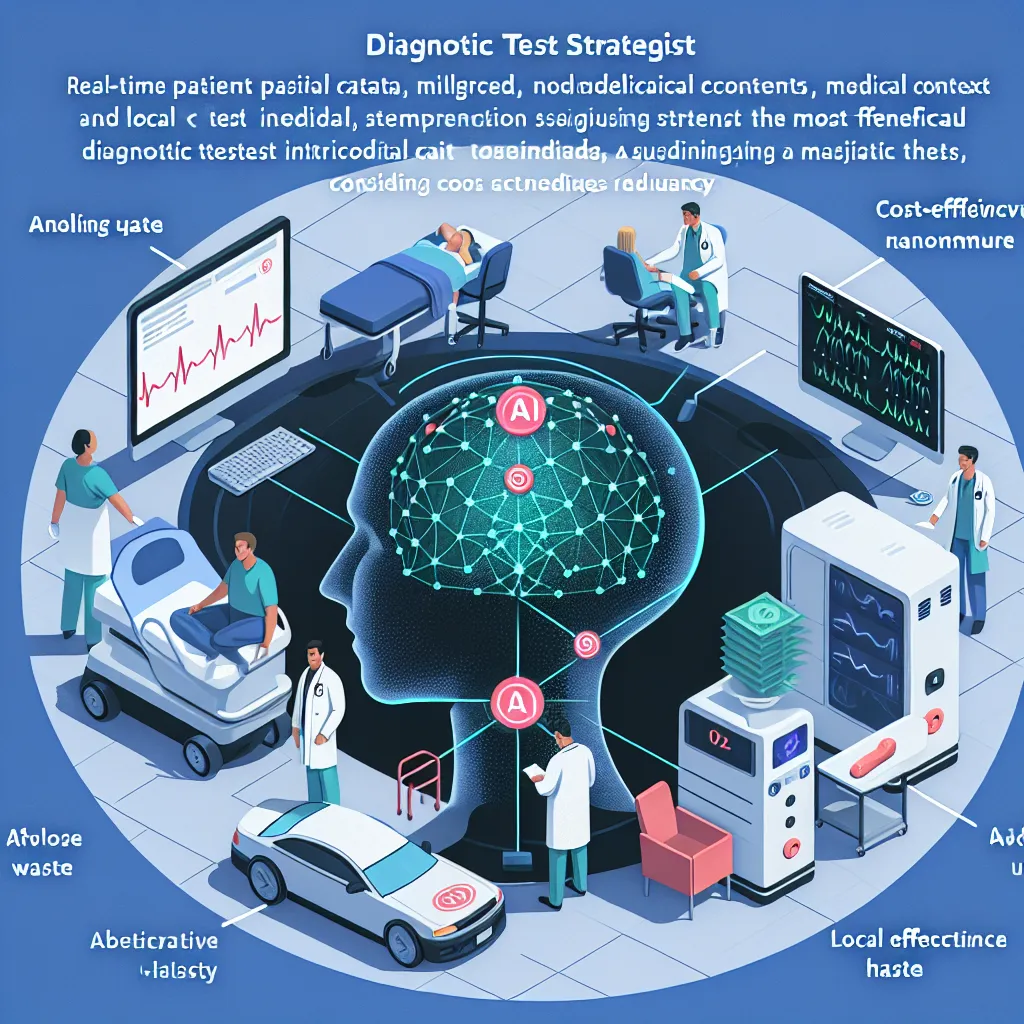
Hospitals waste billions on unnecessary or misordered diagnostic tests due to habits, fragmented data, or pressure to act fast. This creates patient delays, diagnostic errors, and lab backlogs. A novel AI “Diagnostic Test Strategist” could live inside EHRs and use real-time patient data, clinical context, and local pricing to suggest the next best test—balancing cost, accuracy, and speed. It would simulate multiple diagnostic paths to optimize for minimal waste and maximal insight. This is now feasible thanks to Microsoft’s MAI-DxO breakthroughs in orchestrated diagnostic reasoning. As an example, a patient with dizziness could skip redundant bloodwork when the system flags a 90% chance of benign positional vertigo and recommends a bedside maneuver instead of a CT scan—saving $1,200 and 4 hours.
Description
No additional description provided.
The Pitch
The healthcare industry faces significant challenges with the management and execution of diagnostic tests. Hospitals frequently conduct unnecessary or misordered tests due to ingrained habits, fragmented data systems, or the immediate pressure to act. This results in substantial financial waste, patient delays, potential diagnostic errors, and overcrowded laboratory workflows.
Backstory: In a rapidly evolving medical landscape, the integration of artificial intelligence into clinical workflows offers a promising solution to optimize healthcare delivery. With advances like Microsoft's MAI-DxO in orchestrated diagnostic reasoning, it becomes possible to leverage sophisticated AI systems to guide healthcare professionals in making better-informed decisions regarding diagnostic testing.
Problem: The current system leads to billions of dollars in wasted resources due to unnecessary diagnostic tests. This inefficiency is driven by various factors including:
1. Habitual ordering patterns by clinicians. 2. Fragmentation of patient data across different systems. 3. Time pressure to deliver quick results, often at the expense of accuracy and cost-effectiveness.
The repercussions of these practices are far-reaching, leading to longer patient waiting times, increased risk of diagnostic errors, and significant financial strain on healthcare institutions.
Solution: Introducing the AI Diagnostic Test Strategist—an innovative tool designed to live within electronic health records (EHRs). This system will utilize real-time patient data, clinical context, and local pricing information to recommend the most appropriate next test. By balancing factors such as cost, accuracy, and speed, it will revolutionize the current approach to diagnostic testing.
Key Features:
1. **Real-Time Analysis**: Incorporates real-time patient information to provide contextually relevant test recommendations. 2. **Optimized Decision-Making**: Utilizes AI to simulate various diagnostic paths to achieve minimal waste and maximal insight. 3. **Local Adaptability**: Adjusts recommendations based on local pricing and resource availability. 4. **Seamless EHR Integration**: Designed to integrate effortlessly within existing EHR systems. 5. **User-Friendly Interface**: Provides clear and actionable insights for clinicians, reducing cognitive load.
Example Scenario: For a patient presenting with dizziness, the Diagnostic Test Strategist could suggest skipping redundant blood tests if there is a 90% likelihood of benign positional vertigo. Instead, it would recommend a more appropriate bedside maneuver instead of an expensive CT scan, saving approximately $1,200 and four hours of processing time.
Tools for Launching MVP:
1. **Microsoft Azure**: Utilize cloud-based resources for scalability and integration. 2. **FHIR APIs**: Ensure seamless EHR connectivity using healthcare-specific APIs. 3. **AI Frameworks**: Leverage machine learning frameworks like TensorFlow or PyTorch to develop predictive models.
Go-to-Market Strategy:
1. **Early Adopter Program**: Collaborate with a select group of hospitals to refine the product through pilot programs. 2. **Educational Campaigns**: Conduct workshops and seminars to demonstrate the system's capabilities and benefits. 3. **Strategic Partnerships**: Form alliances with leading EHR providers for integrated solutions. 4. **Influencer Alliances**: Engage key opinion leaders in the medical field to advocate for the system's adoption.
Business Model: The business will operate on a subscription-based model, charging healthcare institutions a monthly fee for access to the Diagnostic Test Strategist. Tiered pricing will be available based on the size and diagnostic volume of the institution. Additionally, offer premium support and customization services for larger healthcare systems.
Conclusion: By implementing the AI Diagnostic Test Strategist, healthcare providers can significantly reduce waste, improve patient outcomes, and optimize resource utilization. This innovative solution presents a transformative opportunity for the healthcare industry, paving the way for more efficient and effective patient care.