AI-Optimized Fusion Microgrids for Hyperscale AI Campuses
Fusion energy has long been “30 years away,” but private companies are closing in on small, contained fusion reactors. Problem: AI campuses are growing bigger than entire cities, and even nuclear can’t always match the scale and stability needed. Solution: Develop AI-optimized fusion microgrids — compact, modular fusion reactors specifically built to power AI data centers directly, using AI to dynamically balance loads and reactor output. Why now? Fusion startups (e.g., Helion) predict commercial reactors this decade, and AI energy demands are exploding far beyond grid capacity. Example: Google builds a new $10B hyperscale AI campus in Texas, powered by an on-site fusion microgrid that delivers stable, emission-free, infinite power.
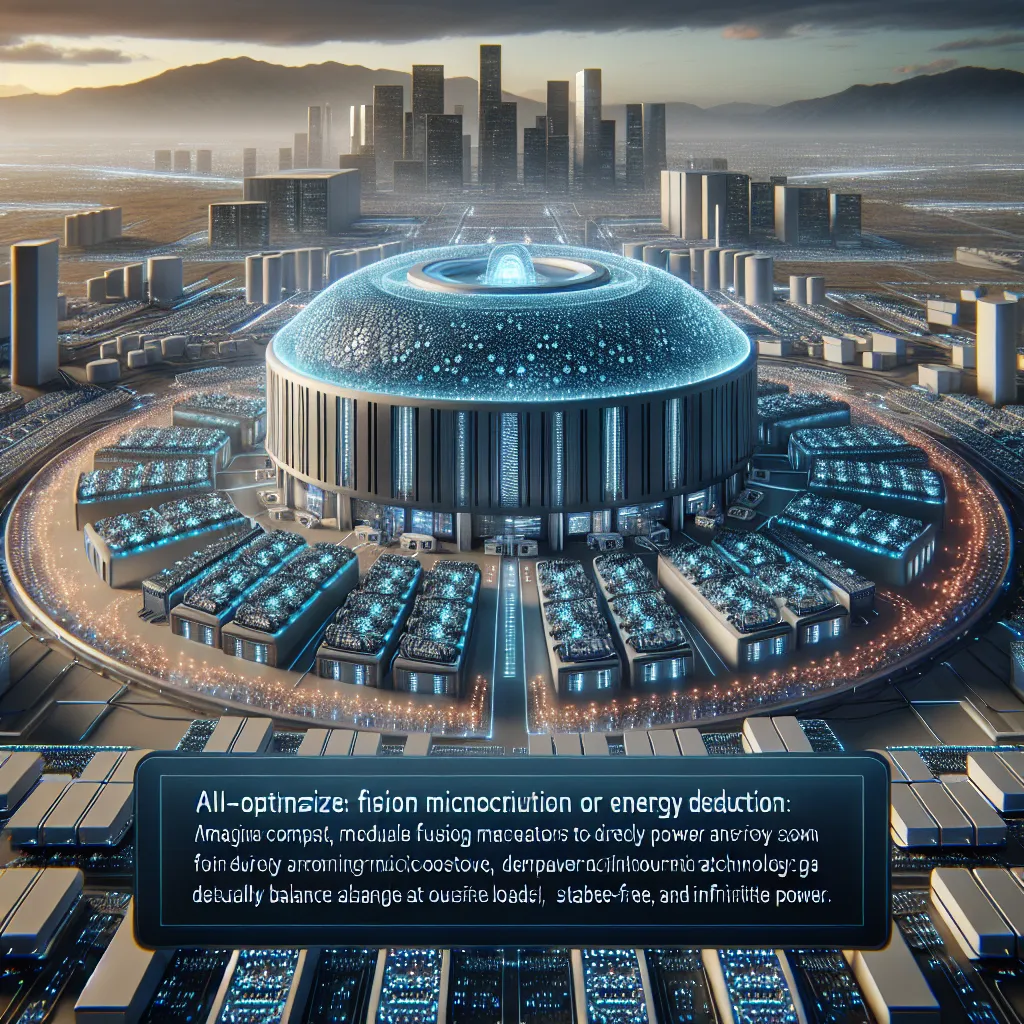
Description
No additional description provided.
The Pitch
As technological advancements accelerate, the demand for energy-efficient and sustainable solutions becomes increasingly important. One area witnessing exponential growth is Artificial Intelligence (AI) infrastructure, with campuses expanding to sizes comparable to cities. This rapid development poses significant energy challenges. Traditional energy sources, including nuclear, often fall short of meeting the consistent and vast energy needs of these facilities. However, the promising advancements in fusion energy technology present a viable and innovative solution.
Backstory
Fusion energy, often regarded as the holy grail of clean energy, has historically been deemed perpetually out of reach. Recently, a surge of private companies has rekindled hope by developing small, contained fusion reactors. With predictions suggesting commercial viability within this decade, the potential for fusion energy as a sustainable solution is closer than ever. Concurrently, AI campuses are expanding at unprecedented rates, driving the need for reliable and scalable energy solutions that traditional grids struggle to provide.
Problem
The rapid growth of AI campuses introduces a critical challenge: the demand for stable, emission-free energy that can scale with operations. Existing energy solutions, including nuclear, occasionally fail to provide the consistency and scalability required. The current grid limitations cannot accommodate the explosive energy needs of futuristic AI data centers, leading to inefficiencies and increasing carbon footprints.
Solution
The development of AI-optimized fusion microgrids offers a revolutionary approach. By creating compact, modular fusion reactors specifically designed to power AI data centers directly, this solution addresses both scale and stability requirements. Integrating AI technology allows for dynamic load balancing and precise reactor output regulation, ensuring optimal performance and sustainability.
Why Now?
The convergence of two significant trends underscores the urgency to act: the impending commercial viability of fusion technology and the rapidly increasing energy demands of AI infrastructure. Companies such as Helion are promising commercial reactors within this decade, coinciding perfectly with the expanding power needs of AI campuses. The industry stands at the threshold of a transformative opportunity.
Product Details
The core product is the AI-optimized fusion microgrid, a modular reactor unit tailored for direct integration into AI data centers. These microgrids are designed to provide:
1. Emission-free energy generation. 2. Compact and scalable modular design. 3. Integration of AI for real-time load balancing. 4. Stability and independence from conventional power grids. 5. Scalability to match the growth of AI infrastructure.
Tools for MVP Launch
1. AI Integration Software: Develop or partner with AI software providers to manage load balancing and energy optimization. 2. Prototype Fusion Reactor: Collaborate with existing fusion energy startups to create a working prototype. 3. Simulation Tools: Utilize advanced simulation software to model reactor performance and energy output scenarios. 4. Smart Grid Technology: Incorporate smart grid technology for enhanced connectivity and control.
GTM Strategy
1. Strategic Partnerships: Partner with leading AI companies and data center operators for pilot installations. 2. Industry Collaborations: Work with existing fusion energy enterprises to leverage technological expertise. 3. Showcase Pilot Projects: Implement pilot microgrids in high-profile AI campuses to demonstrate capabilities. 4. Education and Advocacy: Engage in campaigns to educate stakeholders on the benefits of fusion energy for AI infrastructure. 5. Networking and Conferences: Present at technology and energy conferences to build awareness and attract investment.
Business Model
1. Direct Sales: Offer AI-optimized fusion microgrids directly to large AI campuses and data centers. 2. Subscription Model: Provide energy-as-a-service contracts, delivering consistent power supply for a subscription fee. 3. Licensing: License the technology to other companies interested in building similar systems. 4. Maintenance and Support Services: Offer ongoing support and maintenance services for installed microgrids.
Conclusion
The confluence of burgeoning AI infrastructure and advancements in fusion energy technology presents a unique opportunity to revolutionize power solutions for AI campuses. By spearheading the integration of AI-optimized fusion microgrids, we can address critical energy challenges while paving the way for a sustainable and emission-free future. As the world stands on the brink of an energy transformation, embracing innovative solutions such as these will ensure that technological progress is supported by sustainable and reliable energy foundations.