AI Network Enhances Bank Fraud Detection
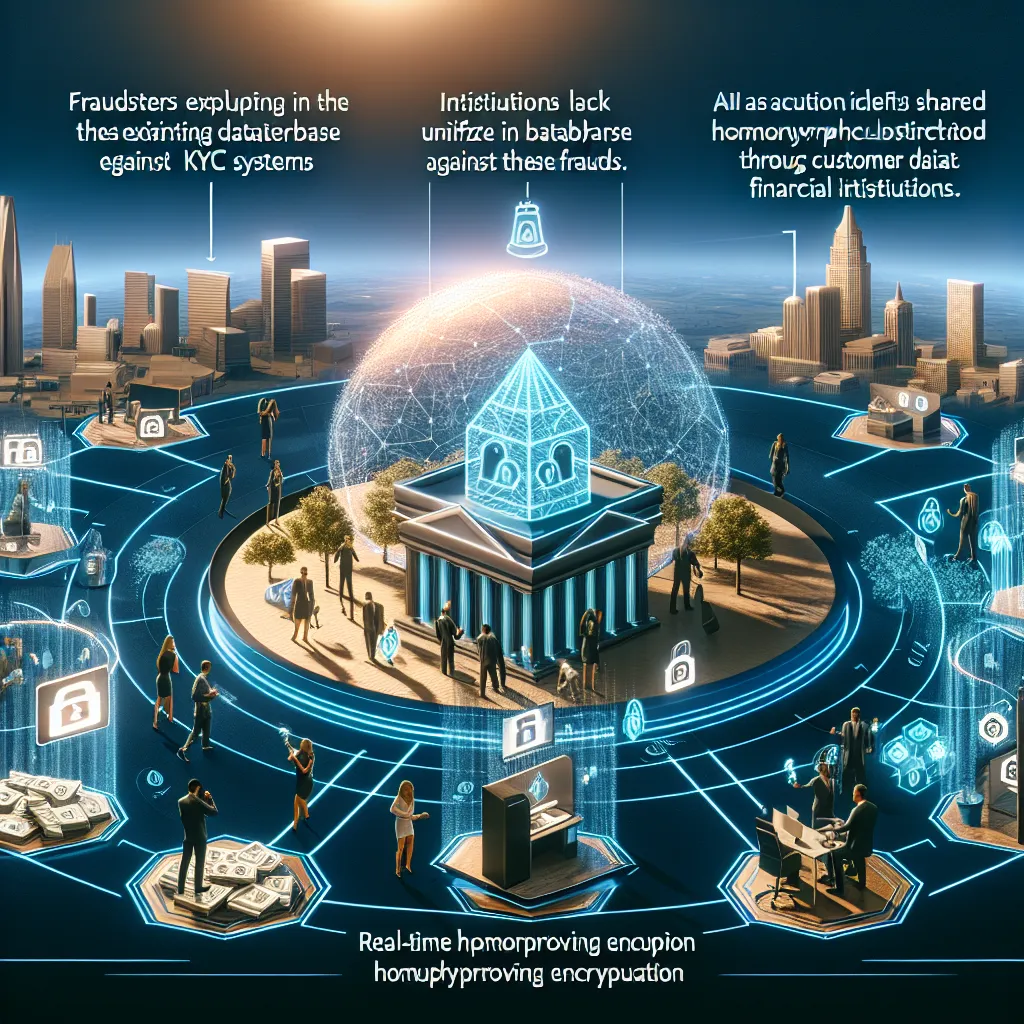
Fraudsters exploit weaknesses in KYC systems, repeatedly opening accounts after being flagged elsewhere. Banks lack a unified fraud database, allowing criminals to bypass detection by hopping between institutions. This solution introduces an AI-powered fraud detection system that connects financial institutions through a real-time, privacy-preserving fraud intelligence network. Using homomorphic encryption, banks can share fraud indicators without exposing customer data, enabling instant verification across institutions. When a flagged fraudster attempts to open a new account, the system alerts the bank without revealing sensitive information. Inspired by: "There's no good identity-information sharing to block a fraudster from getting past KYC once they've bypassed it at some other institution." Example: A fraudster who used fake IDs to open accounts at multiple banks is instantly flagged when attempting to open another, preventing further abuse.
Description
No additional description provided.
The Pitch
**Backstory and Contextual Framing**
The genesis of this innovative product traces back to the all-too-familiar pain points faced by urban dwellers looking to maneuver through their daily routes in congested cities. The founders, having experienced the inefficiencies of existing transit systems and the disconnected nature of urban mobility services, envisioned a platform that not only simplifies commuting but also enhances urban connectivity. This platform emerged from a blend of frustration and insight, recognizing that while urban centers grow denser, the tools to navigate them haven’t evolved at a comparable pace.
**Understanding the Problem**
Current urban mobility apps present several issues: a lack of real-time coordination between different modes of transport, inadequate route optimization, and a failure to offer truly personalized travel solutions based on user preferences and real-time environmental factors. These gaps not only cause inconvenience but also lead to increased time and economic costs for users, while exacerbating urban congestion and pollution.
This challenge directly impacts daily commuters, leisure travelers within cities, and anyone reliant on public and private transportation services. Existing solutions often operate in silos, focusing on specific transport modes without integrating others, thus providing fragmented and sometimes outdated information.
**Envisioning the Solution**
The proposed product, a comprehensive urban mobility platform, leverages advanced AI to integrate and optimize all modes of urban transportation into a single, user-friendly application. This platform will offer real-time route optimization, suggestions for the quickest and least crowded paths, and alternatives based on sudden changes in traffic or public transport schedules.
Unique because of its AI-driven predictive analysis, the platform will analyze historical data and user preferences to provide highly customized travel recommendations. Imagine an app that not only tells a user the fastest way to get from point A to B but also considers their preference for less crowded routes or their aversion to certain modes of transport due to environmental concerns.
For AI-driven developments, an example prompt for coding might be: Generate a Python script that uses machine learning to predict transportation mode efficiency based on historical data sets of urban mobility, integrating real-time traffic and weather API data.
**Execution Plan**
- **Technical Implementation** Begin with a Minimum Viable Product (MVP) that integrates public transport schedules and a basic route suggestion feature. Utilize programming languages like Python for backend development and React Native for a cross-platform mobile application. Leverage cloud services for scalability and data processing, and APIs for real-time data integration. Focus on clean, maintainable code and prioritize user privacy and data security.
- **Operational Considerations** Establish a robust customer support system to deal with inquiries and issues promptly. Implement continuous monitoring and regular updates based on user feedback and system performance data. Set up backend processes that ensure seamless data flow and uptime.
- **Marketing Strategy** The go-to-market approach should focus on user education through digital marketing, emphasizing the efficiency, personalization, and environmental benefits of using the platform. Collaborate with urban planners and local governments for endorsements and promotions. Utilize social media platforms and targeted ads to reach potential users.
- **Business Development & Partnerships** Partnerships with public transit authorities, biking sharing services, and e-scooter companies will be crucial. Explore affiliations with environmental organizations to enhance the platform's brand as a green solution. Develop a freemium model where basic features are free, but advanced features, like personalized commuting plans, are behind a subscription paywall.
- **Legal & Compliance** Compliance with local transportation regulations and data protection laws (like GDPR) is necessary. Consult with legal experts to address any potential issues around user data usage and storage.
In essence, the creation and implementation of this urban mobility solution present a significant opportunity to redefine urban transit, making it more connected, intuitive, and efficient for users. By addressing current inefficiencies with innovative AI-driven technology and a user-centric approach, the platform aims to transform daily commuting into a more pleasant and sustainable experience.