AI-Native Phone OS: Privacy-First, Offline Intelligence
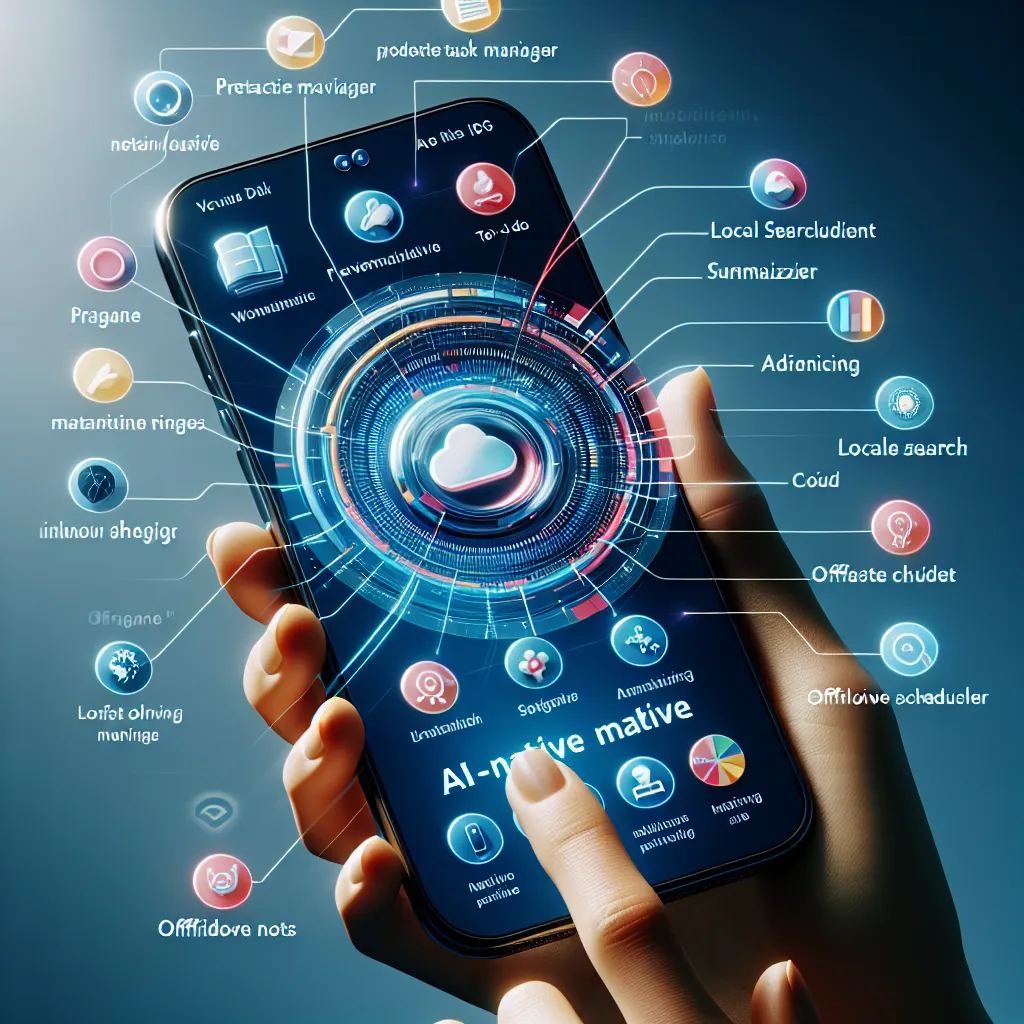
Mobile phones are still underserved by AI — most AI power today is cloud-based, dependent on constant internet, and data-hungry. An AI-Native Phone OS could reimagine smartphones as autonomous devices: a lightweight, offline-first LLM integrated into the core OS for predictive tasks, summarization, search, and scheduling without a network connection. Fully private, fully local. Why now? On-device models like Gemini Nano show it’s possible — but the phone OS hasn’t been rebuilt around native AI workflows. Imagine a phone where you can ask for your meeting notes, generate a to-do list, or rewrite an email — all instantly on-device, without sending a single byte of data to the cloud, creating an AI-native mobile experience with no privacy trade-offs.
Description
No additional description provided.
The Pitch
In recent years, artificial intelligence has profoundly reshaped many technologies, but mobile phones remain largely tethered to cloud-based AI solutions that require continuous internet connectivity and substantial data usage. The existing dependency on such models limits the potential for fully autonomous, intelligent mobile experiences. The time is ripe for evolution: introducing an AI-Native Phone Operating System that promises a new era of mobile phone capabilities.
**Backstory**
Mobile phones have become integral to our daily lives, serving as communication devices, personal assistants, and productivity tools. Despite their significance, the AI capabilities accessible through these devices are mostly reliant on internet connections and data-hungry applications. This model poses challenges in terms of accessibility, privacy, and seamless functionality, as users are constantly dependent on data plans and cloud services. The industry is ready for a transformation where AI can be harnessed directly on the device, optimizing the user experience by prioritizing privacy and offline functionality.
**Problem**
1. **Dependence on Cloud**: The AI capabilities of current smartphones largely depend on cloud-based models, which means a continuous internet connection is required. This can be problematic in low-connectivity areas or situations where users wish to minimize data consumption.
2. **Privacy Concerns**: Transmitting data to and from cloud services raises significant privacy issues. Users often have minimal control over their personal data and how it's managed or used by third-party services.
3. **Increased Latency**: Cloud-dependent AI leads to increased response times due to the necessity of sending requests and receiving data from remote servers, potentially hindering the immediacy users expect.
**Solution**
The solution proposes a groundbreaking AI-Native Phone Operating System. It places emphasis on embedding a lightweight, offline-first language model directly into the phone's core operating system. This system introduces a series of capabilities:
- **Predictive Tasks**: Anticipate user needs, such as calendar scheduling or task management, without external input. - **Summarization**: Enable instant summarization of lengthy texts and documents for quick decision-making. - **Search**: Provide rapid on-device search capabilities that do not require cloud indexing. - **Scheduling**: Offer intelligent suggestions and automatic scheduling based on context and history.
This AI-Native OS ensures full privacy by keeping all data processes and tasks on the device itself, eliminating the need for cloud-dependent services.
**Product Details**
- **Core Integration**: The AI functions are a fundamental part of the OS, allowing for seamless interaction and efficiency. - **Offline Functionality**: No internet connection is necessary for core AI functions, ensuring continuous usability even in offline scenarios. - **Local Data Management**: All data is processed and stored locally, significantly enhancing user privacy and reducing potential data breaches. - **User Experience**: A focus on intuitive, AI-driven interface designs that adapt to user preferences over time.
**Tools for MVP Launch**
To swiftly develop and launch a Minimum Viable Product, consider leveraging tools such as:
- **TensorFlow Lite**: For running lightweight AI models on mobile devices. - **Flutter**: An open-source UI software development kit for building applications that provide a native performance experience. - **On-Device Database Solutions**: Such as SQLite or Realm for efficient data storage and retrieval.
**Go-To-Market Strategy**
1. **Target Early Adopters**: Focus initial marketing efforts on tech enthusiasts and privacy-conscious consumers who value offline functionality. 2. **Partnerships**: Collaborate with smartphone manufacturers interested in innovation and differentiation in the crowded mobile market. 3. **Developer Community**: Build a strong developer community by providing comprehensive SDKs, documentation, and support forums to encourage the development of third-party applications.
**Business Model**
The business model could follow a dual strategy:
- **Licensing**: License the AI-Native OS to smartphone manufacturers, offering ongoing support and updates. - **Direct Consumer Sales**: Launch a range of phones specifically designed to optimize the AI-Native OS, targeting niche markets focused on privacy and offline capabilities.
In conclusion, the AI-Native Phone Operating System offers a revolutionary approach to mobile technology, fulfilling the potential for smarter, more efficient, and privacy-focused mobile experiences. By leveraging recent advancements in on-device AI models, it sets a new standard for what mobile phones can achieve independently of constant internet connectivity, ushering in a new era of genuinely intelligent mobile devices.