AI Mediator
Develop an AI mediator that streamlines the resolution of legal disputes by reviewing evidence and providing settlement recommendations, significantly reducing the time and cost involved in traditional legal processes.
Description
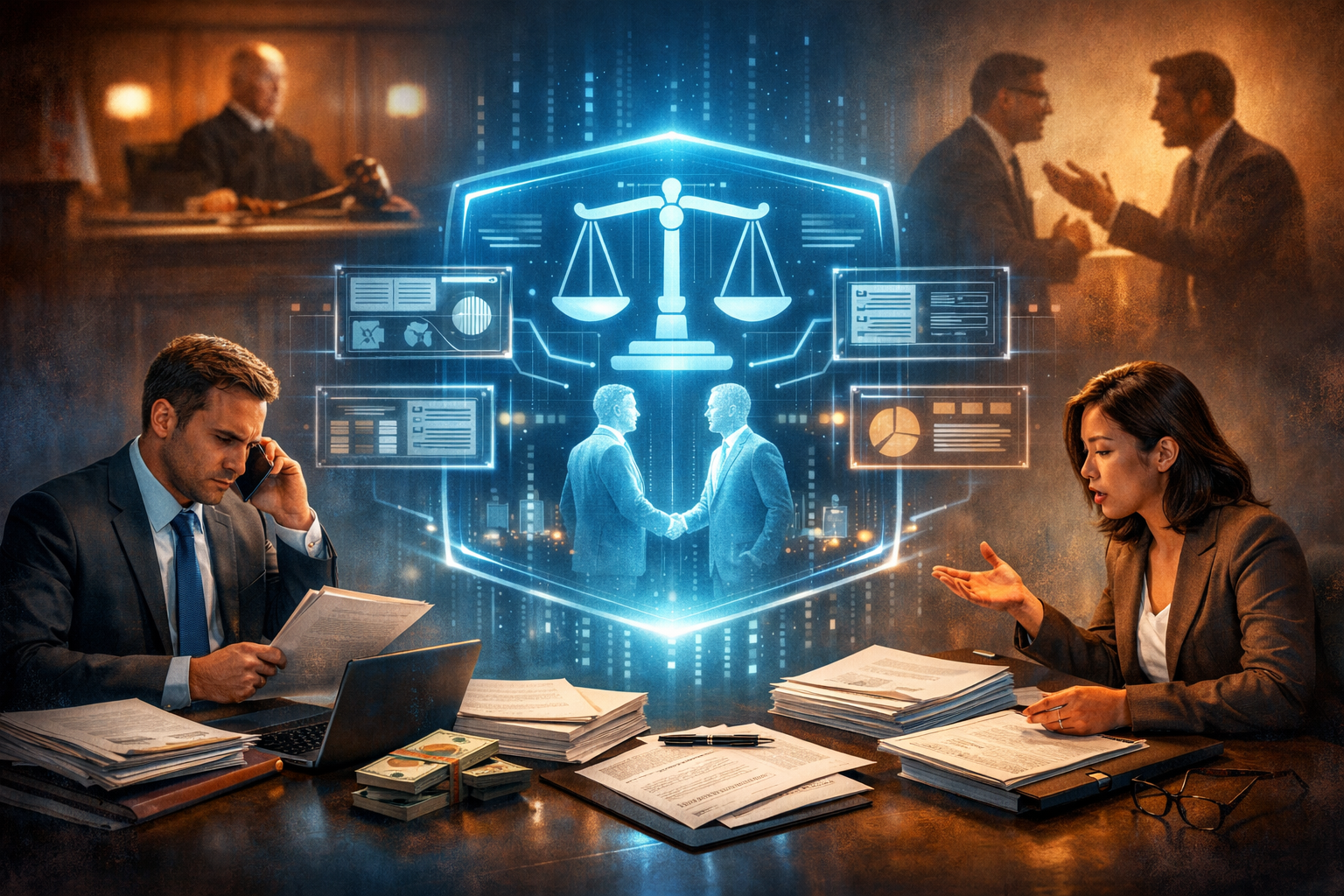
Legal disputes can take months or years to resolve, with both sides spending thousands on lawyers, negotiations, and court proceedings. AI could dramatically simplify this by acting as a neutral mediator that reviews evidence, evaluates legal arguments, estimates likely outcomes, and recommends settlements both parties can accept. Advances in AI reasoning and access to legal information make it increasingly possible to evaluate competing positions without requiring endless back-and-forth between attorneys. For example, two businesses disputing a $25,000 contract could submit their agreements, communications, and supporting evidence to an AI mediator that recommends a settlement within hours rather than months
The Pitch
The AI Mediator could fundamentally transform the landscape of conflict resolution by leveraging artificial intelligence to streamline and demystify the often convoluted legal process. One of the most significant insights driving this opportunity is the recognition that the legal system, traditionally slow and expensive, often exacerbates conflicts rather than resolving them. By offering a neutral third-party perspective equipped with the ability to analyze vast amounts of data instantaneously, this platform has the potential not only to reduce timelines but also to mitigate the adversarial nature of disputes, fostering a more collaborative environment.
Additionally, the growing reliance on technology across various sectors makes this solution particularly timely. As businesses increasingly engage in digital transactions, the complexity of contracts and the volume of supporting documentation are skyrocketing. AI’s capacity to dissect and interpret intricate details in contracts and communication, while proposing equitable solutions based on a multitude of factors, addresses a clear and urgent need within the market. The predictability and speed with which disputes can be resolved could be game-changing; it allows businesses to focus on growth rather than getting mired in protracted conflicts, thus enhancing overall productivity and satisfaction.
Moreover, the democratization of access to legal resources presents an opportunity to redefine who gets to benefit from legal mediation. Traditionally, high-quality legal support has been an expensive privilege. An AI Mediator can help level the playing field, offering small businesses and individual clients access to tools and insights that were previously the domain of affluent corporations. This democratization not only opens doors for underrepresented parties but also promotes a healthier, more competitive business environment.
Ultimately, the potential of the AI Mediator lies in its dual role as both an innovator in legal technology and a catalyst for systemic change within the legal industry. As the market continues to evolve, fostering a shift from billable hours to efficiency-focused solutions, the appeal of an AI-driven mediation system could be irresistible. It offers the promise of resolution that is not only faster but also more sensible and fair, addressing a profound disconnect between the needs of the people and the existing legal frameworks.