AI Knowledge Retention System for Companies
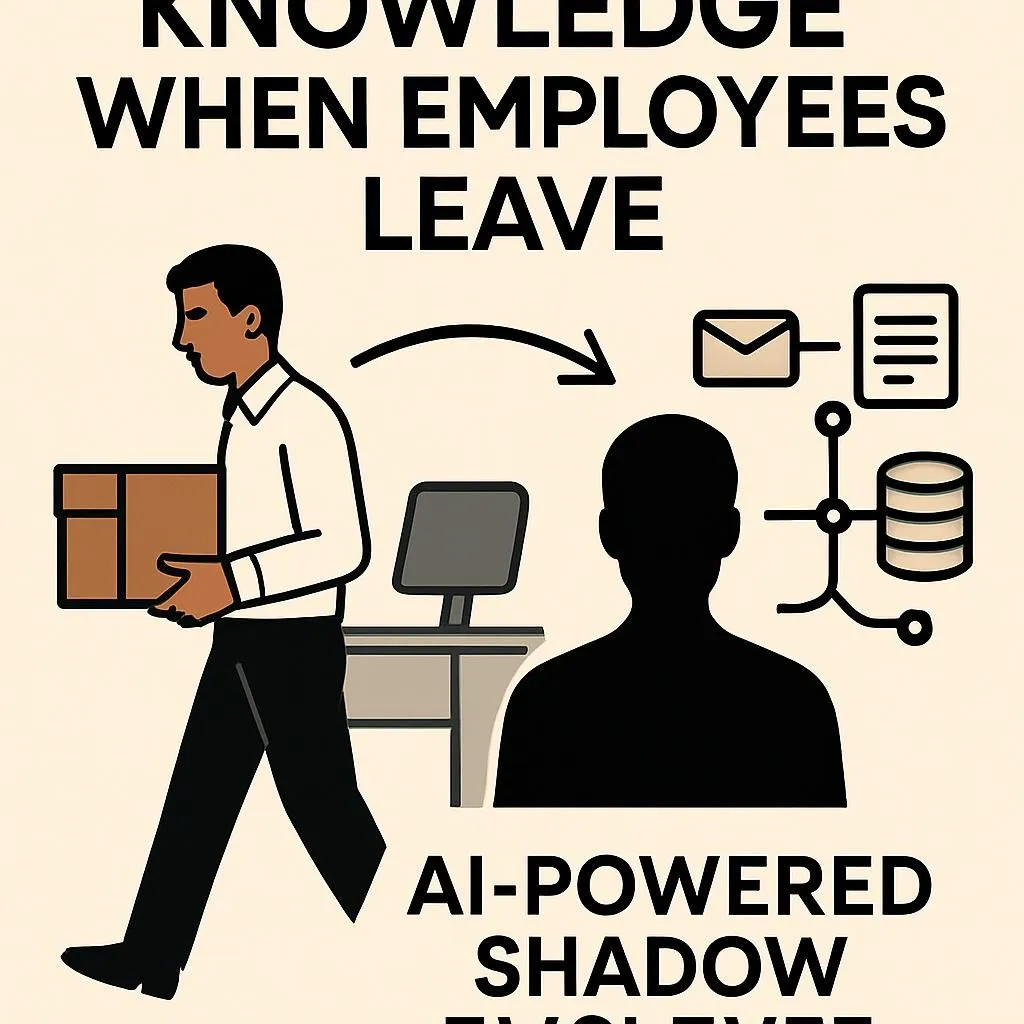
Organizations lose enormous amounts of institutional knowledge whenever employees leave. Important context, decisions, relationships, and processes often exist only in the minds of key team members. This startup creates an AI-powered shadow employee that continuously learns from emails, meetings, documents, project updates, and communications to build a living record of how work gets done. Over time, the system becomes capable of answering questions, explaining historical decisions, onboarding new hires, and preserving operational knowledge. As memory systems, AI agents, and workplace integrations mature, companies now have the ability to capture and retain expertise that previously disappeared the moment someone resigned.
Description
No additional description provided.
The Pitch
Most organizations do not actually know how they operate. They know their org chart, their official process documents, and their quarterly goals, but the real operating system lives in exceptions, workarounds, past arguments, vendor quirks, customer promises, and half-remembered decisions. The valuable knowledge is not “what is the policy?” but “why do we do it this strange way, who cares if we change it, and what broke the last time someone tried?” That layer is rarely written down because it feels too contextual to document and too mundane to prioritize.
The deeper opportunity is that employee turnover is only the most visible symptom. Even when people stay, organizations suffer from memory loss. Teams repeat debates because no one remembers the prior tradeoff. New managers reopen settled questions. Customer-facing employees inherit accounts without the invisible history that makes the relationship work. The cost is not just onboarding time; it is organizational déjà vu. A business that turns everyday work into durable memory would reduce the number of times a company pays to learn the same lesson.
What makes this especially powerful is that the best source of institutional knowledge is not a knowledge base. It is the exhaust of work itself. Emails reveal judgment. Meetings reveal disagreement. Documents reveal what became official, but conversations reveal what was considered and rejected. If captured well, this creates a kind of organizational biography: not just a record of outputs, but a map of reasoning. That is far more valuable than another searchable archive, because companies often need interpretation more than retrieval.
The business would also sit at an unusually important trust boundary. If it becomes the place employees ask, “How does this really work here?” it becomes part of the company’s nervous system. Unlike many workplace tools that are useful only when people remember to update them, this kind of system becomes more valuable precisely because people are too busy to document. Its promise is not perfect recall; it is continuity in places where companies have quietly accepted amnesia as normal.
The most interesting version is not a tool that replaces departing employees, but one that changes the meaning of departure. A resignation would no longer be a miniature data loss event. It would become what it should have been all along: a person leaving, not the organization forgetting.