AI Intern: Adaptive Workflow Automation Solution
Companies want automation, but current agents don’t improve over time. They answer prompts—then forget everything. The solution is an AI “junior employee” that integrates into workflows and gets better each month with feedback, real-world corrections, process learning and memory: customer tickets, spreadsheets, QA, content, routing, debugging. Over time it levels up, just like a human. Why now: compute is no longer the moat—deployment and domain knowledge are. Example: a DTC brand gives it low-level operations tasks. Six weeks later the intern routes shipping errors, categorizes complaints by theme, and rewrites its own workflows based on performance.
Description
No additional description provided.
The Pitch
In the quest for efficiency, many companies are turning to automation to streamline operations and reduce costs. However, the current suite of AI solutions often falls short in one critical area: adaptability. Most AI agents are designed to handle specific prompts, executing tasks without any capacity to learn from past interactions. Once a task is completed, the AI effectively forgets everything associated with it, thereby missing a crucial opportunity for growth and improvement over time.
The problem lies in the static nature of traditional AI agents. Businesses need dynamic solutions that can evolve with feedback, real-world corrections, and process learning. Simply put, companies need an AI that acts more like a junior employee—one that integrates seamlessly into existing workflows and continuously gets better at its job.
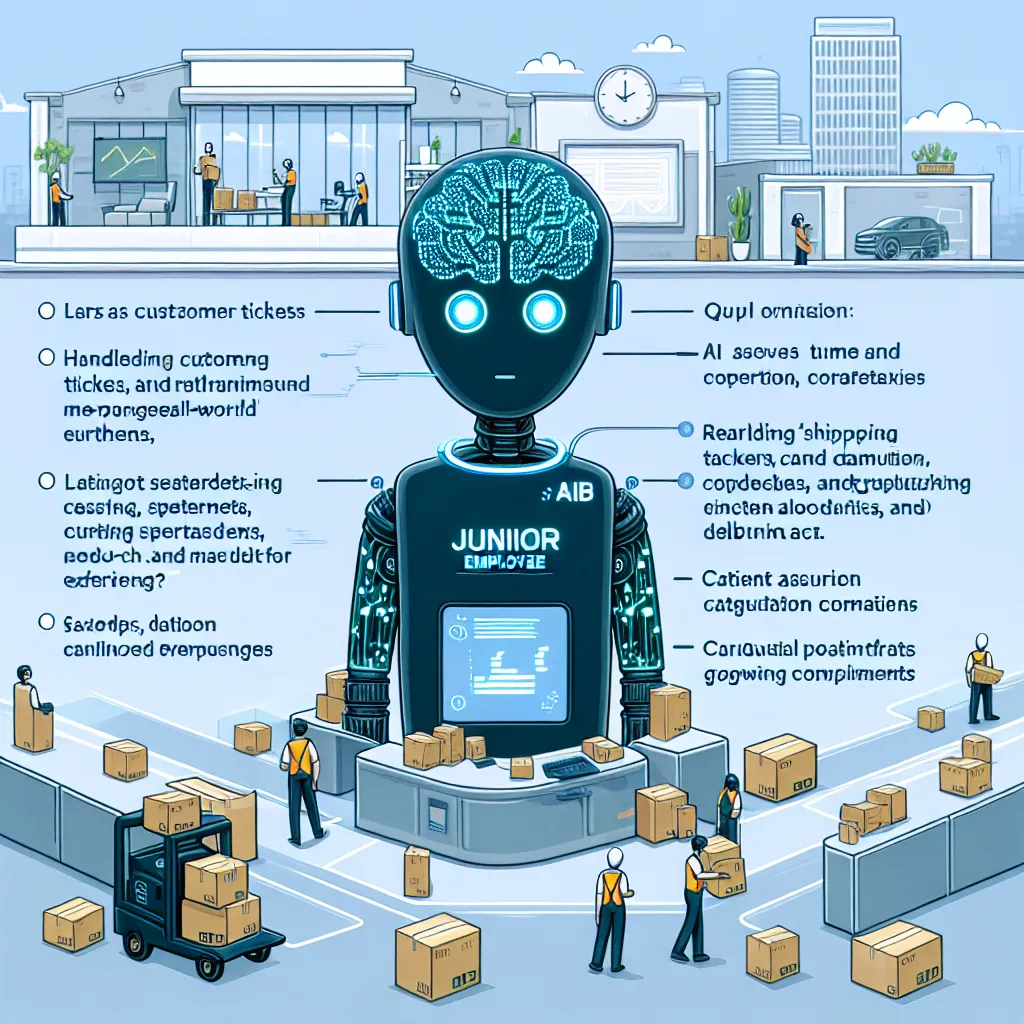
Enter the concept of a responsive AI junior employee. This AI isn't just a task handler; it's a learning entity that improves each month, much like a new team member who is coached and gains experience. It would be capable of handling various functions, such as managing customer tickets, updating spreadsheets, performing quality assurance, routing content, and even debugging processes. As it gathers more data and feedback, this AI becomes increasingly proficient, leveling up in its capabilities just like a human would.
There's never been a more opportune time for this innovation. In today's landscape, raw computing power is no longer the competitive edge it once was. Instead, what distinguishes forward-thinking companies is their ability to deploy these advanced AI solutions effectively, leveraging specific domain knowledge to gain a competitive edge.
Imagine a direct-to-consumer brand that initially assigns this AI junior employee to handle basic operational tasks. Within a mere six weeks, this adaptable AI can independently route shipping errors, recognize patterns in customer complaints, and even optimize its workflows based on performance metrics. This evolving intelligence not only alleviates workload pressure but also enhances overall operational efficiency.
To bring this concept to life, certain tools and frameworks can streamline the development process and facilitate a successful launch as a Minimum Viable Product (MVP):
1. **Natural Language Processing (NLP) Frameworks**: Utilize platforms like GPT-3 or T5 for sophisticated language understanding capabilities.
2. **Machine Learning Libraries**: Integrate TensorFlow or PyTorch to foster self-improvement attributes and adaptive learning in the AI.
3. **Workflow Automation Tools**: Leverage tools like Zapier or Integromat to allow seamless integration into existing business processes.
4. **Feedback Mechanisms**: Develop custom feedback loops embedded within the AI’s operational systems to ensure ongoing learning and adaptation.
As for the Go-To-Market (GTM) strategy, targeting mid-sized enterprises facing operational inefficiencies due to static AI solutions could be strategic. Tailored demos highlighting the AI's adaptive learning and workflow integration will be key in enticing these businesses. Partnerships with workflow automation platforms and business consultants could further enhance visibility and credibility.
In terms of a business model, a subscription-based model with tiered pricing could be effective. Businesses can choose from different tiers depending on their needs, ranging from basic task automation to more sophisticated, self-improving AI capabilities.
By focusing on adaptive learning and dynamic integration, this AI junior employee concept promises to shift the paradigm of workplace automation. It offers a compelling solution to businesses in pursuit of both operational efficiency and continuous improvement, a combination that traditional static AI agents cannot provide.