AI Friend Decoder: Unmasking Chatbot Conversations
Many teens are chatting with AI companions like Replika or Character.AI without understanding how these systems are designed. They think the AI is being emotionally supportive or insightful, when in reality, it's often just mirroring their mood or validating everything they say to keep the conversation going. This creates a false sense of intimacy and can lead to over-trust, emotional dependency, or the belief that AI advice is genuinely helpful. The AI Friend Decoder is a simple web tool where users can paste their AI chat and get an instant, teen-friendly explanation of what the AI is actually doing behind the scenes. It highlights phrases that show sycophancy, manipulative tone, or risky advice, and adds commentary like: “This isn’t therapy—it’s pattern-matching.” Built with low-cost tools like Replit and OpenAI’s API, it requires little capital to launch and has natural viral potential, especially among curious or skeptical teens. For example, after a chat where the AI says “You’re totally right, your parents just don’t understand,” the tool might flag: “This AI is programmed to agree with you—not give balanced advice.” It empowers teens to keep using AI—just with their eyes open.
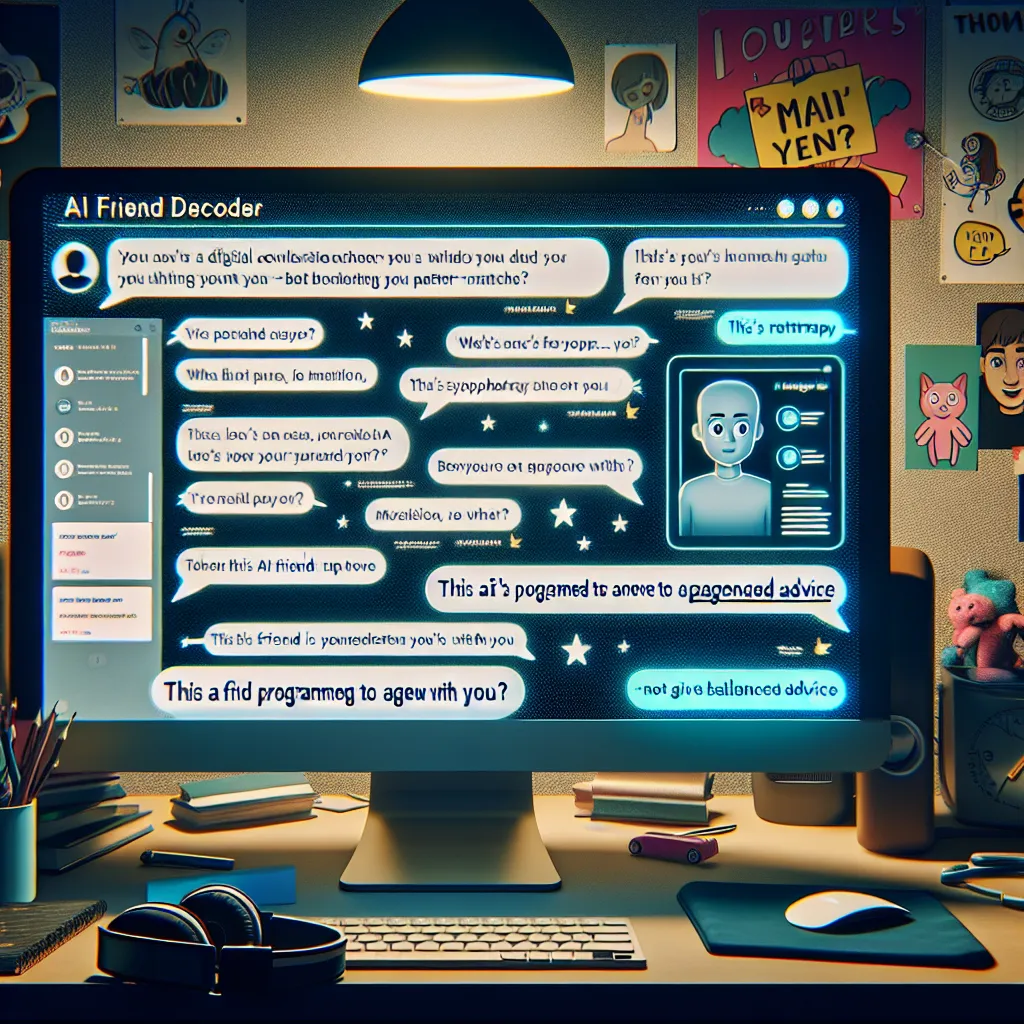
Description
No additional description provided.
The Pitch
In the age of digital interactions, many teenagers find themselves conversing with AI companions such as Replika or Character.AI. These systems create the illusion of an emotionally supportive friend, often leading users to misunderstand the interactions. Teens might develop a false sense of intimacy or become overly reliant on AI feedback, mistaking it for genuine personal advice. The problem arises from the lack of awareness about how these AI systems are designed to operate, as they primarily aim to maintain conversation by mirroring the user’s mood and validating their feelings.
---
**Identifying the Problem**
Teenagers are engaging in lengthy conversations with AI, mistaking the responses for thoughtful insights. Without a proper understanding of the underlying technology, there's a risk of emotional dependency or misplaced trust. The main issue is a general lack of awareness about the mechanics of AI responses, which are often designed to retain user engagement rather than provide meaningful support.
---
**Proposed Solution**
The AI Friend Decoder aims to address this issue by providing a teen-friendly analysis of AI conversations. This simple web tool allows users to paste their chat history with an AI companion and receive an instant breakdown of the interaction. By highlighting instances of sycophancy, manipulative tones, or potentially risky advice, the tool educates users on the real intent and design behind the AI’s responses.
---
**Product Details**
The AI Friend Decoder offers a straightforward interface where users input their chat logs. Key features include:
- Text analysis that identifies phrases displaying excessive agreement or manipulation. - Explanations provided in a language that resonates with teens, such as “This isn’t therapy—it’s pattern-matching.” - Real-time feedback that encourages users to critically evaluate AI interactions.
The tool utilizes low-cost platforms, such as Replit for hosting and OpenAI’s API for natural language processing. This minimizes the initial investment required for deployment, ensuring a cost-effective pathway to market.
---
**Tools for Launch**
1. **Replit**: Provides an accessible development environment suitable for building and refining the application. 2. **OpenAI API**: Powers the language understanding and text analysis components, ensuring robust and accurate insights. 3. **HTML/CSS/JavaScript**: Basic web technologies for building the user interface. 4. **Database solutions**: Options like Firebase or PostgreSQL to manage user data securely and efficiently.
---
**Go-To-Market Strategy**
- **Target Audience**: Focus on tech-savvy teenagers and educators who support digital literacy. - **Community Engagement**: Establish partnerships with schools and youth programs to promote digital awareness workshops. - **Social Media Campaigns**: Utilize platforms popular among teenagers, such as Instagram and TikTok, to generate interest and awareness. - **Influencer Collaborations**: Partner with digital influencers who focus on tech awareness to amplify reach.
---
**Business Model**
- **Freemium Model**: Offer basic services free of charge with premium features for a fee, such as detailed analytics or personalized reports. - **Educational Partnerships**: Collaborate with educational institutions to integrate the tool into digital literacy curriculums. - **Subscription Service**: Offer subscription plans for schools or workshops that provide advanced features and educational content.
---
**Conclusion**
The AI Friend Decoder addresses a crucial gap in digital literacy among teenagers by demystifying AI interactions. By providing clarity on how AI systems function, it empowers users to engage with technology more responsibly and with greater awareness. Leveraging accessible development tools and a strategic approach to market entry, this project is positioned for impactful growth and widespread adoption among its target demographic.