AI Fluency Training Through Domain-Specific Simulations
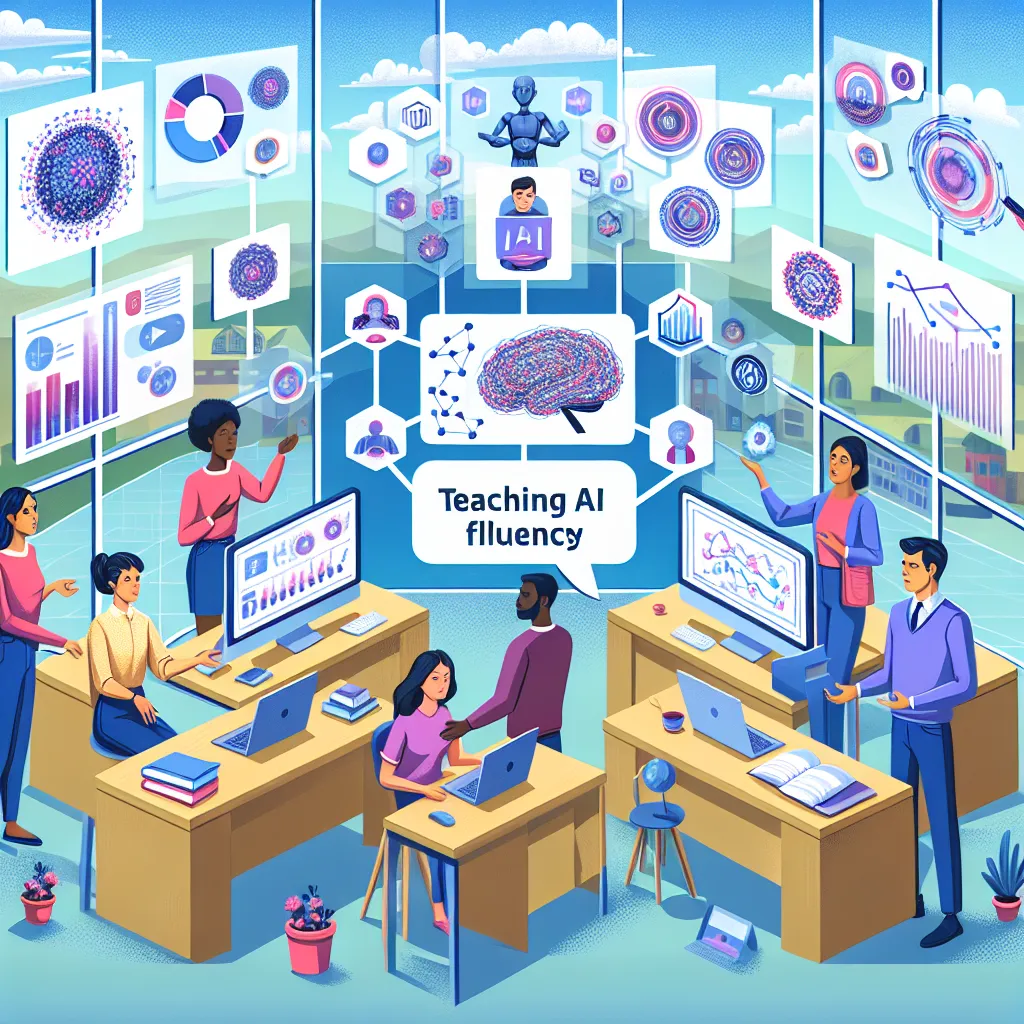
AI education today is either technical or superficial, leaving most professionals unable to reason with AI critically. This company teaches AI fluency as judgment, delegation, and interrogation skills using domain-specific simulations rather than coding. Now is the moment because AI is becoming a universal collaborator across fields. A journalism student would learn how to stress-test AI-generated narratives for bias, sourcing, and logical gaps.
Description
No additional description provided.
The Pitch
Artificial intelligence (AI) is rapidly becoming a cornerstone of various industries, yet a significant gap persists in how professionals from non-technical backgrounds comprehend and engage with it. This initiative seeks to bridge that gap by offering a unique educational approach that emphasizes AI fluency through practical skills such as judgment, delegation, and interrogation, tailored to specific domains.
Backstory
Despite the increasing prevalence of AI in the workplace, educational programs often fall into two extreme categories: highly technical courses intended for specialists, and overly simplified introductions that fail to impart meaningful understanding. Consequently, many professionals remain ill-equipped to apply AI thoughtfully and critically within their own fields. This disconnect presents both a challenge and an opportunity to reenvision AI education.
Problem
The main problem is the insufficient AI literacy among professionals, particularly those outside the tech sector. With AI becoming a ubiquitous tool, individuals lack the ability to engage with it beyond superficial levels. They struggle to critically evaluate AI output, making them reliant on technology they cannot fully understand, potentially leading to misuse or missed opportunities for innovation.
Solution
The solution lies in shifting the educational focus from coding and technical proficiencies to developing comprehensive AI fluency. This approach involves teaching professionals to effectively analyze and interact with AI outputs, fostering skills that allow them to question, delegate, and oversee AI processes within their specific domain. By doing so, individuals can harness AI as a collaborative tool rather than a black box.
Product Details
The core offering is a series of domain-specific simulations that simulate real-world scenarios. These simulations are designed to teach key skills:
1. Judgment: Evaluating AI outputs critically and making informed decisions. 2. Delegation: Appropriately assigning tasks to AI systems based on an understanding of their capabilities and limitations. 3. Interrogation: Probing AI inputs and outputs for bias, inaccuracies, and logical inconsistencies.
The program avoids technical jargon and focuses on practical application, making it accessible to a wide range of professionals. It leverages interactive modules and case studies tailored to industries like journalism, healthcare, finance, and more.
Tools for Building and Launching MVP
1. Simulation Software: Develop engaging, realistic simulations using platforms like Unity or Unreal Engine to create interactive scenarios that mimic workplace challenges. 2. Learning Management System (LMS): Use tools like Moodle or Teachable for course delivery and management. 3. Content Creation Tools: Employ software such as Articulate Storyline or Adobe Captivate to design multimedia-rich content. 4. Feedback Mechanism: Integrate tools like Typeform or Google Forms to gather user feedback and iteratively improve the product.
Go-to-Market (GTM) Strategy
1. Target Audience: Aim initially at industry professionals who regularly interact with AI in non-technical roles, including sectors such as journalism, marketing, and healthcare. 2. Strategic Partnerships: Collaborate with industry associations, universities, and companies to integrate the program into existing training curriculums. 3. Awareness Campaigns: Leverage social media, industry conferences, and webinars to increase visibility and demonstrate the program's value. 4. Pilot Programs: Offer free or discounted access to pilot programs to gather testimonials and refine offerings based on user feedback.
Business Model
Adopt a subscription-based model for individual and enterprise customers. Offer tiered pricing based on depth of content and industry-specific customization. Additionally, provide workshops and personalized training sessions as premium add-ons. Provide organizations with analytics and progress tracking features to assess workforce improvement, ensuring continued engagement and renewal.
Conclusion
By redefining AI education to emphasize fluency over technical skills, this initiative empowers professionals to confidently and competently integrate AI into their work. In doing so, it facilitates a more collaborative and innovative future across a spectrum of industries, aligning with the ever-growing role of AI in our daily professional lives.