AI-Enhanced Local Services Acquisition and Transformation
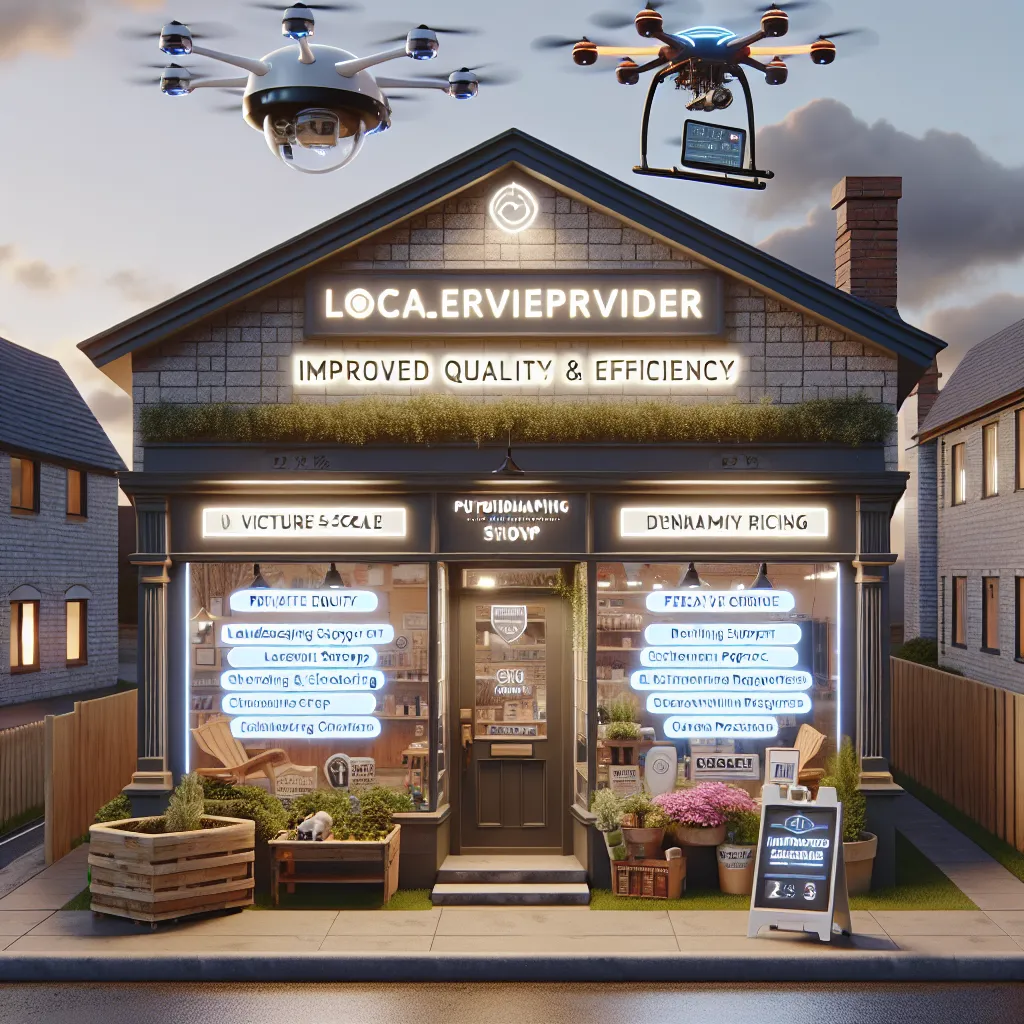
A firm could systematically acquire profitable, operationally simple local service businesses — like landscaping, pest control, plumbing, or veterinary clinics — and transform them using AI. Upon acquisition, each business would receive a full "modernization package" that includes AI-driven scheduling, customer support automation, drone property mapping, dynamic pricing, predictive maintenance alerts, and hyper-personalized marketing. Instead of traditional cost-cutting, the model focuses on improving service quality and expanding market share through efficiency, personalization, and speed. By layering technology onto proven service models, the firm would grow revenue, create defensibility through customer data and brand strength, and roll up dozens of service verticals under a single high-efficiency operating system — blending private equity returns with venture-scale growth.
Description
No additional description provided.
The Pitch
In the rapidly evolving landscape of business, local service industries such as landscaping, pest control, plumbing, and veterinary clinics stand at the cusp of transformation. These businesses are often operationally simple yet hold vast potential for growth and efficiency improvements. By systematically acquiring such businesses and infusing them with cutting-edge AI technologies, a firm can unlock unprecedented opportunities. This framework outlines the strategic approach to modernizing these businesses, addressing existing challenges, presenting a compelling solution, detailing the product offering, and outlining a viable path to market.
Backstory: Local service businesses form the backbone of communities, yet many operate using traditional methods that limit their growth potential. Despite providing reliable services, they often face challenges such as inefficient scheduling, high churn rates due to generic marketing, and operational unpredictability leading to inconsistent revenue streams. Many lack the technological infrastructure to harness customer data, automate processes, or personalize their services — hindrances that become even more significant in an increasingly digital world.
Problem: The primary issues plaguing local service businesses are inefficiency, poor customer engagement, and stagnation in growth. Scheduling is often a manual process, customer service lacks automation, and marketing efforts do not reach their full potential due to a lack of personalization. These businesses also face operational challenges such as unexpected maintenance that can disrupt service delivery. The absence of technology to streamline these processes and predict market trends leaves many businesses vulnerable to competition and unable to expand their market share effectively.
Solution: The solution is to establish a firm focused on acquiring and transforming local service businesses by integrating a comprehensive modernization package. This package includes AI-driven scheduling systems to optimize workforce and resource management, customer support automation for enhanced engagement, drone property mapping for accurate assessment and planning, dynamic pricing models tailored to market conditions, predictive maintenance alerts to prevent operational disruptions, and hyper-personalized marketing strategies that utilize customer data to increase retention and acquisition.
Product Details: 1. AI-Driven Scheduling: Implement smart scheduling systems that optimize the allocation of resources and personnel, resulting in increased efficiency and reduced operational costs. 2. Customer Support Automation: Introduce chatbots and automated response systems to improve customer interaction and satisfaction. 3. Drone Property Mapping: Use drone technology for accurate site assessments, leading to improved service delivery and planning. 4. Dynamic Pricing Models: Develop AI-powered pricing strategies that adjust based on market demand and customer trends. 5. Predictive Maintenance: Implement real-time alerts and diagnostics to anticipate and prevent service disruptions. 6. Hyper-Personalized Marketing: Utilize data analytics to create targeted marketing campaigns, enhancing customer loyalty and expanding reach.
Tools for MVP Launch: Launching this venture requires leveraging modern tech tools and platforms to create a Minimum Viable Product. These include: - AI and Machine Learning Platforms: Use tools like TensorFlow or PyTorch for AI implementation. - Customer Relationship Management (CRM) Software: Adopt platforms like Salesforce or HubSpot for effective customer interactions. - Geographic Information Systems (GIS) for Drone Mapping: Utilize platforms like DroneDeploy for precise property mapping. - Automated Marketing Tools: Implement systems like Mailchimp or Marketo for personalized marketing campaigns. - Predictive Analytics Software: Employ tools like IBM SPSS or RapidMiner for predictive maintenance alerts.
Go-To-Market Strategy: 1. Target Market Selection: Focus initially on one or two service industries to refine the modernization package. 2. Strategic Acquisitions: Identify and acquire operationally sound local businesses with a strong customer base. 3. Pilot Implementation: Demonstrate success through pilot programs with acquired businesses to showcase efficiency gains and increased customer satisfaction. 4. Data-Driven Marketing: Use successful case studies and testimonials to drive awareness and interest among potential acquisition targets. 5. Partnership Development: Build alliances with tech providers to ensure seamless integration of AI tools and support services.
Business Model: The business model focuses on generating revenue through both the operational improvements and growth of acquired businesses. Revenue channels include: - Service Fees: Enhanced service quality and operational efficiency result in increased pricing power and customer retention. - Subscription Model: Offering value-added services like advanced analytics, premium customer support, and personalized marketing as subscription packages. - Profit Sharing: Introduce profit-sharing schemes with business partners to align incentives and share the benefits of efficiency improvements. - Data Monetization: Explore opportunities in monetizing anonymized customer data for market insights and trend analysis.
Conclusion: Transforming local service businesses through AI modernization merges the reliability of traditional service models with the rapid growth potential of technology-driven innovation. By focusing on enhancing service quality, operational efficiency, and personalized customer experiences, the firm anticipates not only higher revenue and market share but also the creation of a scalable and defensible business model. Through strategic acquisitions, technological innovation, and customer-focused strategies, this vision aims to redefine local service industries and capture the benefits of both private equity returns and venture-scale growth.