AI-Driven Personalized Career Coaching Assistant
Career coaching breaks the moment advice becomes generic, and AI disruption is making generic advice useless faster than ever. Everyone knows they should “learn AI,” but no one knows which skills actually compound with automation rather than compete against it. A personal AI career strategist that continuously ingests labor market signals, company adoption patterns, and an individual’s real work output could guide people like a GPS instead of a motivational poster. This becomes viable now because AI can finally observe work itself, not just resumes. Imagine a mid-career marketer whose assistant notices which decisions they override AI on, identifies judgment as their edge, and nudges them toward strategy-heavy roles — while quietly assembling a portfolio that proves it.
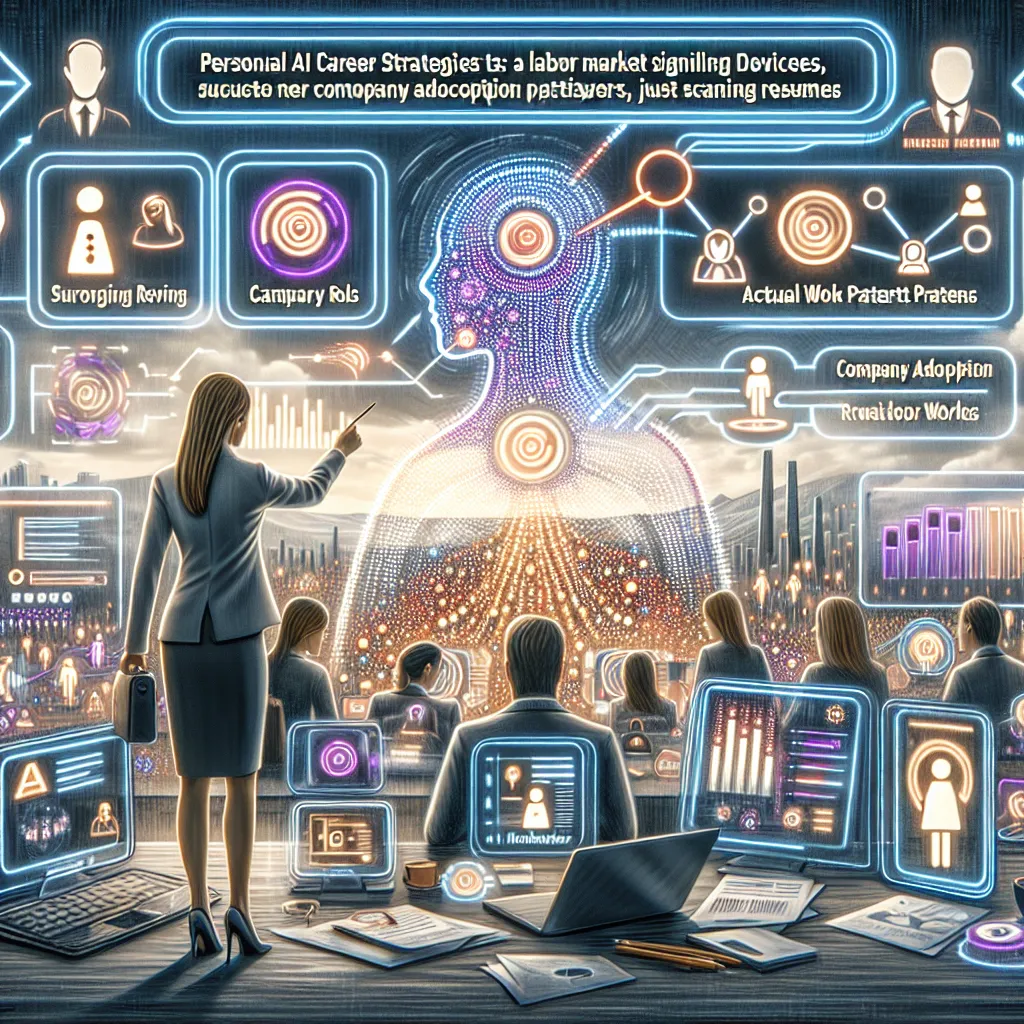
Description
No additional description provided.
The Pitch
In today's rapidly evolving job market, career coaching often falls short when it becomes too generalized. The rise of AI technologies is particularly disrupting this space by rendering generic advice obsolete at an unprecedented pace. It's common knowledge that professionals should learn AI, but there is little guidance on which specific skills integrate with and augment automation, as opposed to merely competing with it. This gap highlights the need for a personalized AI-driven career strategist.
Traditional career advice is often based on static insights like resumes and past job titles, failing to account for the dynamic and fluid nature of skills in the current labor market. However, with advancements in AI, we now have the technology to offer more precise and actionable career guidance. This means personalized advice that considers real-time market signals, company adoption patterns, and an individual’s specific work outputs becomes possible. Such an AI-driven system could act more like a GPS, providing tailored guidance rather than offering vague motivational slogans.
Consider a mid-career marketer as an example. An AI-driven career strategist could analyze which decisions this person consistently challenges AI automation on, identify areas where human judgment is a critical asset, and suggest career pathways that capitalize on these strengths, such as strategy-heavy roles. Simultaneously, this AI system could build a dynamic portfolio that showcases the marketer’s unique competencies and achievements, thereby enhancing their career trajectory.
The potential for an AI-powered career strategist is now viable because AI has the capability to learn from ongoing work activities, not just stagnant data. By understanding the nuances of a person's everyday work, AI can deliver insights that are both timely and personalized.
To bring this concept to life, the following outline provides key considerations, tools, and strategies for developing a minimum viable product (MVP), launching it, and establishing a sustainable business model:
1. **Backstory and Problem Identification** - Current career guidance is often outdated and lacks personalization. - Professionals are struggling to align their skills with the evolving job market due to generic advice. - AI has disrupted traditional managerial roles, creating a need for strategic reskilling.
2. **The Solution** - Develop an AI-powered personal career strategist that offers customized, real-time advice based on a variety of inputs. - Use AI to track and analyze an individual's work habits and outputs to provide tailored career recommendations. - Offer dynamic insights that evolve with the individual's career progress and changes in market demand.
3. **Product Details** - A user-friendly mobile or web application that integrates with workplace tools like Slack, Microsoft Teams, and project management software. - Advanced algorithms that analyze user interaction to offer instant feedback and long-term career strategies. - Constant updates and learning based on aggregated labor market data and company trends.
4. **Tools for MVP Development** - AI and machine learning platforms like TensorFlow or PyTorch for developing the core technology. - APIs from LinkedIn or other labor market platforms for data integration and real-time market insights. - Cloud computing platforms such as AWS or Google Cloud for scalable infrastructure. - Modern development frameworks like React or Angular for a smooth user interface.
5. **Go-To-Market (GTM) Strategy** - Identify and partner with professional networks and platforms for initial user acquisition. - Utilize digital marketing and social media platforms to reach tech-savvy professionals and industries most affected by AI disruption. - Offer free trials or tiered pricing models to encourage adoption and user feedback during initial phases.
6. **Business Model** - Subscription-based model offering different tiers, such as basic advice versus premium strategic consultations. - A freemium approach to attract users, with additional features available for paid subscribers. - Corporate partnerships with organizations seeking to reskill their workforce.
By employing these strategies and leveraging the latest in AI technology, a personalized AI career strategist can set a new standard for career coaching, offering precise, dynamic guidance that adapts as quickly as the market itself. This solution not only enhances individual career growth but also meets the needs of businesses seeking a competitive edge in workforce development.