AI-Driven Manufacturing Revolution: Bridging the Gaps
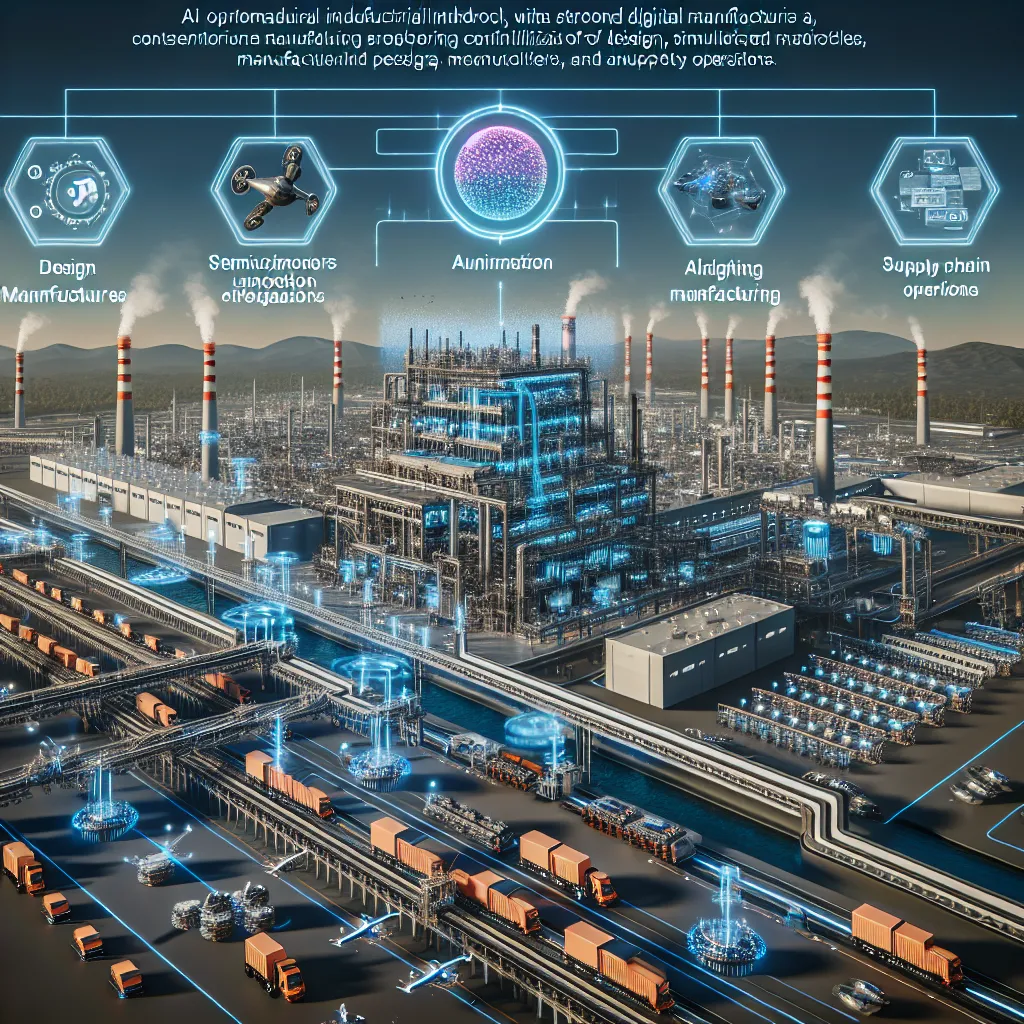
As the United States reindustrializes and rebuilds domestic manufacturing capacity, many factories still rely on outdated software systems and manual processes that limit efficiency and flexibility. Modern production increasingly requires coordination between design, simulation, manufacturing, and supply chain systems that were never built to operate together. An AI-powered manufacturing backbone could connect these layers, enabling autonomous planning, design iteration, and factory operations across industries such as defense, semiconductors, and energy. As AI improves at simulation and optimization, the ability to coordinate full-stack manufacturing becomes increasingly feasible. Imagine a factory where production plans, supply chain decisions, and quality control continuously optimize themselves through AI systems.
Description
No additional description provided.
The Pitch
As the United States moves toward reindustrialization and seeks to bolster its domestic manufacturing capabilities, a significant challenge emerges: many factories are still operating with outdated software systems and manual processes. These antiquated methods serve as bottlenecks, limiting the potential for improved efficiency and flexibility. In today's dynamic industrial landscape, the need for seamless integration across design, simulation, manufacturing, and supply chain systems has never been more critical. However, these systems were originally created as siloed entities, not designed to function cohesively.
Enter the concept of an AI-powered manufacturing backbone. This innovative solution envisions a system that can unify the disparate layers of manufacturing operations, enabling autonomous planning, design iteration, and operational management. By leveraging AI's advancements in simulation and optimization, this backbone can transform industries such as defense, semiconductors, and energy, by facilitating a new era of full-stack manufacturing coordination.
**Problem Statement:** The crux of the issue lies in fragmentation. With each segment of the manufacturing process often relying on different software or manual inputs, inefficiencies abound. The lack of integration means that production plans, supply chain logistics, and quality controls cannot dynamically adjust to changing conditions or improve over time based on data-driven insights.
**Proposed Solution:** An AI-powered manufacturing backbone promises to resolve these inefficiencies by serving as a central nervous system for factories. It would integrate existing systems and introduce AI-driven analytics and decision-making capabilities. This network would enable: - Real-time adjustments in production plans based on supply chain variations. - Automated design iterations to enhance product development cycles. - AI-powered quality controls that learn and evolve with manufacturing processes.
**Product Details:** The proposed backbone would be built as a modular platform, capable of integrating with legacy systems while offering new AI-enhanced features. Key functionalities would include: - A central dashboard for real-time monitoring and control. - AI algorithms for predictive analytics and decision-making. - APIs for seamless integration with existing tools and systems. - Customizable modules tailored to specific industry needs.
**Tools for Launching an MVP:** To bring this vision to life as a Minimum Viable Product (MVP), the following tools and technologies could be employed: - Cloud-based platforms like AWS or Microsoft Azure for scalable infrastructure. - Machine learning frameworks such as TensorFlow or PyTorch for developing AI algorithms. - Data integration tools like Apache Kafka or MuleSoft for connecting diverse systems. - UI frameworks such as React or Angular for creating intuitive user interfaces.
**Go-To-Market Strategy:** The strategy to introduce this product would involve: 1. Targeting key industries that would benefit the most from modernization, such as defense and semiconductors. 2. Building strategic partnerships with technology providers and manufacturing firms to validate and refine the MVP. 3. Launching pilot programs to demonstrate efficacy and secure early adopters. 4. Leveraging industry conferences and publications to build awareness and credibility.
**Business Model:** The business model would likely be based on a subscription or licensing fee, potentially combined with a customization service for specific industry needs. This model would ensure recurring revenue while allowing for scalability and the adaptation of features based on customer feedback.
In conclusion, by addressing the current disconnect between different manufacturing processes, the AI-powered manufacturing backbone is well-positioned to revolutionize modern manufacturing. As this solution grows and evolves, it holds the promise of enabling factories to not only meet today’s demands but also anticipate and adapt to the needs of the future.