AI Content Licensing Cooperative: Fair Revenue for Creators
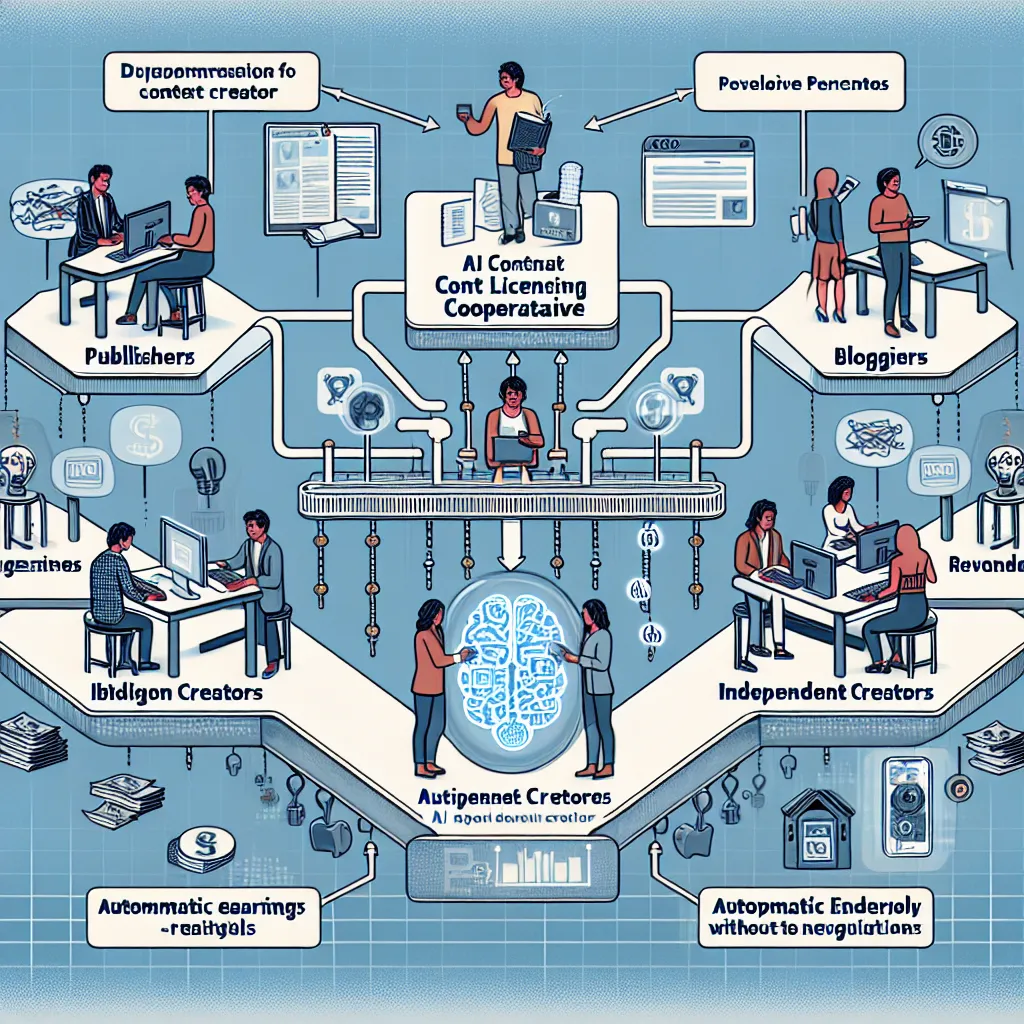
Today, AI companies strike individual, opaque licensing deals with major publishers, excluding smaller content creators from fair participation. This reinforces media power imbalances and leaves many creators uncompensated for AI training on their work. The solution is an AI Content Licensing Cooperative — a shared platform where publishers, bloggers, and independent creators collectively license content to AI companies. Revenue is distributed based on actual usage, tracked transparently. Why now? Legal battles are escalating, and AI companies need scalable, ethical access to high-quality content. A cooperative model provides a fair, structured solution while enabling smaller creators to monetize AI usage. Example: a Substack writer joins the cooperative, and when an AI chatbot surfaces their articles, they earn a micro-payment automatically — no private negotiations required.
Description
No additional description provided.
The Pitch
In the evolving landscape of artificial intelligence and content creation, a glaring issue has emerged that affects publishers, bloggers, and independent creators alike. As AI companies continue to develop and refine language models, they often strike individual licensing agreements with significant publishing houses. This approach sidelines smaller content creators, who find themselves excluded from beneficial arrangements and left uncompensated for the use of their work in AI training and deployment.
Problem:
The current model of content licensing for AI companies is inherently opaque and exclusive. Large publishers leverage their power to negotiate premium rates, while smaller creators have little to no representation. This dynamic not only perpetuates existing power imbalances within the media but also limits the diversity of content available for AI training. As a result, many content creators remain unheard, unable to reap the financial benefits of their contributions to AI advancements.
Solution:
The AI Content Licensing Cooperative represents a fundamental shift in how content can be accessed and monetized in the AI realm. The cooperative is a shared platform that allows publishers, bloggers, and independent creators to collectively license their content to AI companies. It ensures that revenue generated from content usage is distributed fairly, based on transparent tracking of actual content usage.
Product Details:
The cooperative platform functions as an accessible interface where content creators can register, upload, and license their work. Advanced tracking mechanisms will be in place to monitor the use of content by AI models, ensuring accurate allocation of revenue. The platform will feature:
1. A registration portal for creators to join and list their content. 2. An AI-powered tracking system to monitor content usage by AI applications. 3. A dashboard for creators to view their content's usage statistics and earnings. 4. Automated payment systems for seamless revenue distribution.
Tools for Easy Launch:
Building this platform as a Minimum Viable Product (MVP) could leverage existing technology stacks. Tools such as:
- WordPress or a similar content management system for building the platform's front end. - Blockchain technology for secure, transparent tracking of content usage and revenue distribution. - APIs to enable seamless integration with AI companies looking to license content. - Payment gateways like Stripe or PayPal for handling micro-payments to creators.
Go-To-Market Strategy:
The cooperative's go-to-market strategy would focus on building trust and gaining traction among content creators, initially targeting smaller publishers and independent writers through:
1. Partnerships with content creator networks and associations. 2. An advocacy campaign highlighting the benefits of fair compensation and ethical AI training. 3. Engaging early adopters through initiatives such as a referral program or limited-time free membership.
Business Model:
The cooperative would operate on a commission-based model. A small percentage of each licensing transaction would be retained as a platform fee, ensuring sustainability and covering operational costs. This model not only democratizes content licensing but also provides a scalable approach for the cooperative to grow alongside the AI industry's expanding content needs.
Conclusion:
The AI Content Licensing Cooperative is a timely and necessary response to the current challenges faced by content creators in the era of AI. By championing fairness, transparency, and inclusivity, the cooperative stands to redefine how content is valued and accessed, ensuring all creators have the opportunity to benefit from the tools they help empower.