AI-Certified Content Authentication Leveraging Blockchain
A tool that leverages blockchain to authenticate content (images, video, text) by allowing creators to “sign” their work with private keys. This would solve the issue of deepfake content and misinformation by enabling authenticity verification.
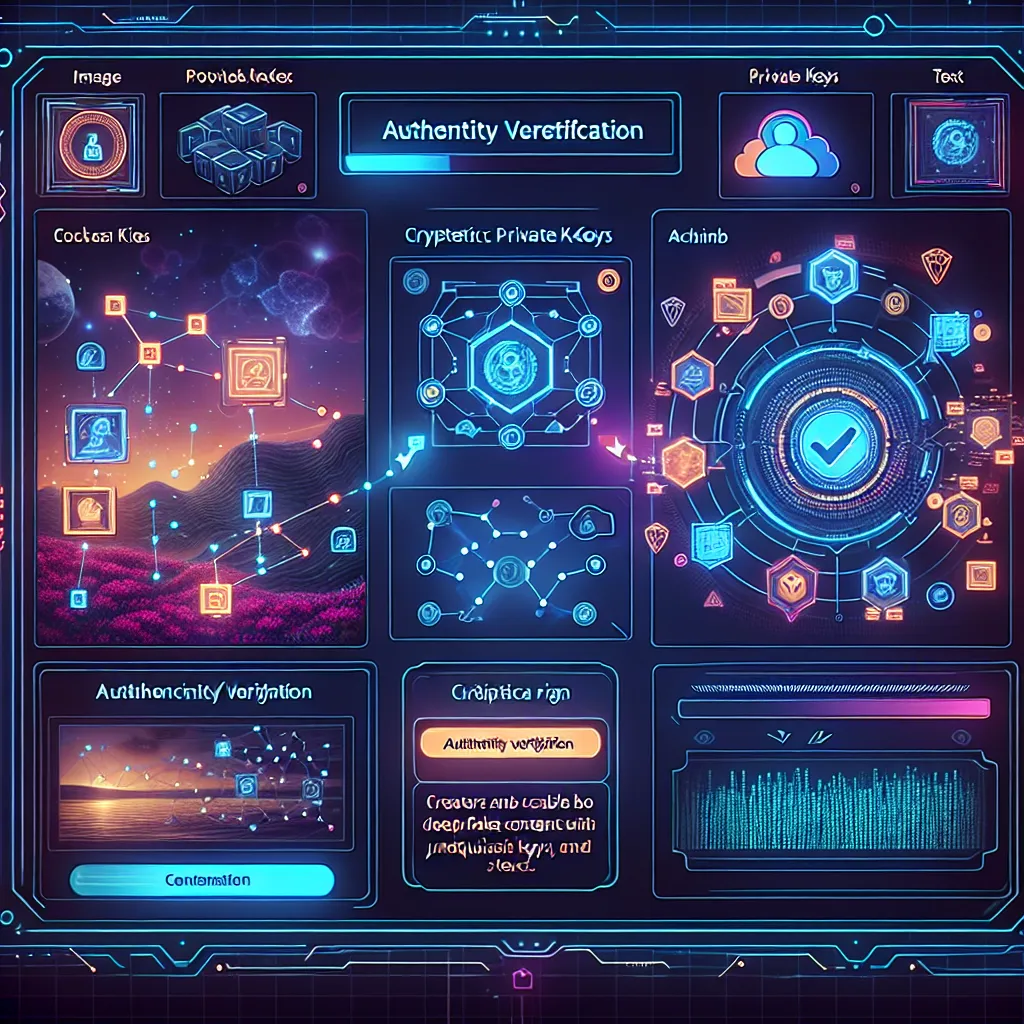
Description
No additional description provided.
The Pitch
As generative AI tools (like deepfakes, ChatGPT, and image synthesis models) become more powerful, distinguishing between real and AI-generated content has become increasingly difficult. From fake videos that influence elections to fabricated images used in scams or misinformation campaigns, the risk of deepfake content damaging trust in media is growing. The absence of a reliable way to verify authenticity puts public discourse, security, and media integrity at risk.
Solution: The AI-Certified Content Authentication Tool will leverage blockchain technology to create a transparent, decentralized, and secure verification system for digital content (images, videos, and text). Each piece of content can be cryptographically “signed” by the creator using a private key, making it traceable back to its source. Verified content will carry a visible certification mark, signaling its authenticity to viewers.
Backstory: As early as 2019, deepfakes and other AI-generated media were recognized as dangerous for spreading misinformation, especially in political and social contexts. With the rise of generative AI tools in the 2020s, society has been bombarded by waves of AI-generated images, videos, and audio clips, often designed to mislead. Social media platforms and news outlets have struggled to combat this trend. Blockchain’s immutability and transparency offer an ideal solution to authenticate content, ensuring that any creation claiming to be genuine can be verified against a cryptographic ledger.
The founders of this company—former cybersecurity engineers and blockchain specialists—recognized the potential to combat this problem using technology. They saw how smart contracts and private keys could build trust and designed a system to authenticate content across multiple industries.
Target Audience: Media Outlets: News agencies and media platforms that want to ensure the legitimacy of the content they publish or share. Authentic content could boost trust in their platforms, differentiating them from those rife with unverified material.
Social Media Platforms: Companies like Twitter (now X), Instagram, and YouTube could use the tool to reduce misinformation and create a healthier environment for their users by flagging verified content.
Government and Regulatory Bodies: These organizations could use the tool to authenticate official statements, announcements, and footage, especially in elections, conflict zones, and public safety.
Content Creators: Independent journalists, photographers, artists, and video creators who want to protect their intellectual property and build trust with their audiences can use the authentication tool to certify their original work.
Advertisers & Brands: Brands running digital ads, where authenticity and trust are critical to avoiding reputation-damaging fake campaigns.
Go-To-Market Strategy (GTM): Partnerships with Major Platforms: Begin by securing partnerships with large media outlets, social media platforms, and government agencies to integrate the authentication system. The tool can act as an API that platforms can plug into, providing seamless certification for uploaded content.
Launch an Open API for Developers: Allow developers and third-party platforms to integrate the verification tool into their existing apps and content creation workflows. This will make the system scalable across industries.
Early Adoption Campaigns: Target creators and influencers to adopt the tool early on, encouraging their followers to trust content with a certification badge. This can create a grassroots movement around the importance of verified media.
Education & Awareness: Run campaigns that demonstrate how easy it is for misinformation to spread through deepfakes and generative AI, and show how the tool solves that problem. Use webinars, workshops, and partnerships with cybersecurity thought leaders to promote the service.
Content Verification Partnerships: Develop relationships with fact-checking organizations (like Snopes or FactCheck.org) to integrate AI-Certified content into their verification systems, enhancing legitimacy.
Business Model: Freemium Model:
Free Tier: Content creators and small organizations can verify a limited number of content pieces per month for free. Premium Tier: Large-scale media outlets, government organizations, or brands can subscribe to premium tiers, offering unlimited content verification, enhanced security features, and detailed reporting tools. API Licensing: License the verification API to social media platforms and content creation tools (e.g., Photoshop, Canva), charging based on the volume of content authenticated.
Enterprise Solutions: Offer tailored solutions for government agencies, financial institutions, and legal firms requiring enhanced content verification for sensitive or high-value content (e.g., legal documents, contracts, election-related media).
Sponsored Verification Marks: Collaborate with advertisers and brands who want to use certified content for their ads, allowing them to sponsor verification badges, driving visibility for both the content and the verification service.
Technology: Blockchain Ledger: The core of the system will operate on a public or hybrid blockchain network, where each piece of content is hashed and timestamped, creating an immutable record of when and where it was created.
Private Keys for Authentication: Content creators will use cryptographic private keys to “sign” their media, ensuring it can be traced back to them. A unique public key can verify the authenticity of the content without exposing private information.
Decentralized Storage: Use IPFS (InterPlanetary File System) to store metadata and authentication proofs, ensuring the system is scalable and decentralized without over-reliance on centralized servers.
Content Verification Layer: Social media platforms and websites can use an integrated “Content Verification Layer” to display a visual badge or watermark on content that has been authenticated by the system. End users can click to view the verification details on a blockchain explorer.
Competitive Advantages: Trust & Transparency: Using blockchain to authenticate content adds an unmatched level of trust and transparency compared to existing, centralized solutions.
Immutable Record: Once content is authenticated, it cannot be tampered with, providing an ongoing reference point for future disputes or misinformation claims.
Scalability: Designed as an API, the system can be scaled across multiple platforms and industries, providing flexibility to meet various customer needs.
Early-Mover Advantage: There are few robust, blockchain-based solutions specifically tackling AI-generated content authentication, allowing the tool to capture a critical early-mover advantage.
Market Opportunities & Future Expansion: NFT Integration: As non-fungible tokens (NFTs) continue to grow, integrating with platforms that already use blockchain for content ownership could extend the tool's reach into the art and entertainment industries.
Regulatory Integration: With increasing calls for regulation on deepfakes and AI-generated content, the tool could become an industry standard as governments look to adopt technological solutions to combat misinformation.
AI-Generated Content Labeling: Partner with AI-generation tools to offer certification at the point of content creation, ensuring AI-generated content is immediately verified as non-human-generated, increasing trust.
Conclusion: The AI-Certified Content Authentication Tool positions itself as a foundational infrastructure in an era where authenticity is questioned at every level. By providing a blockchain-powered solution, it enables creators, platforms, and regulators to protect the integrity of digital content, ensuring that society can continue to trust the media they consume in a world where AI-generated manipulation is rampant.