AI Certification Layer for Safety Assurance
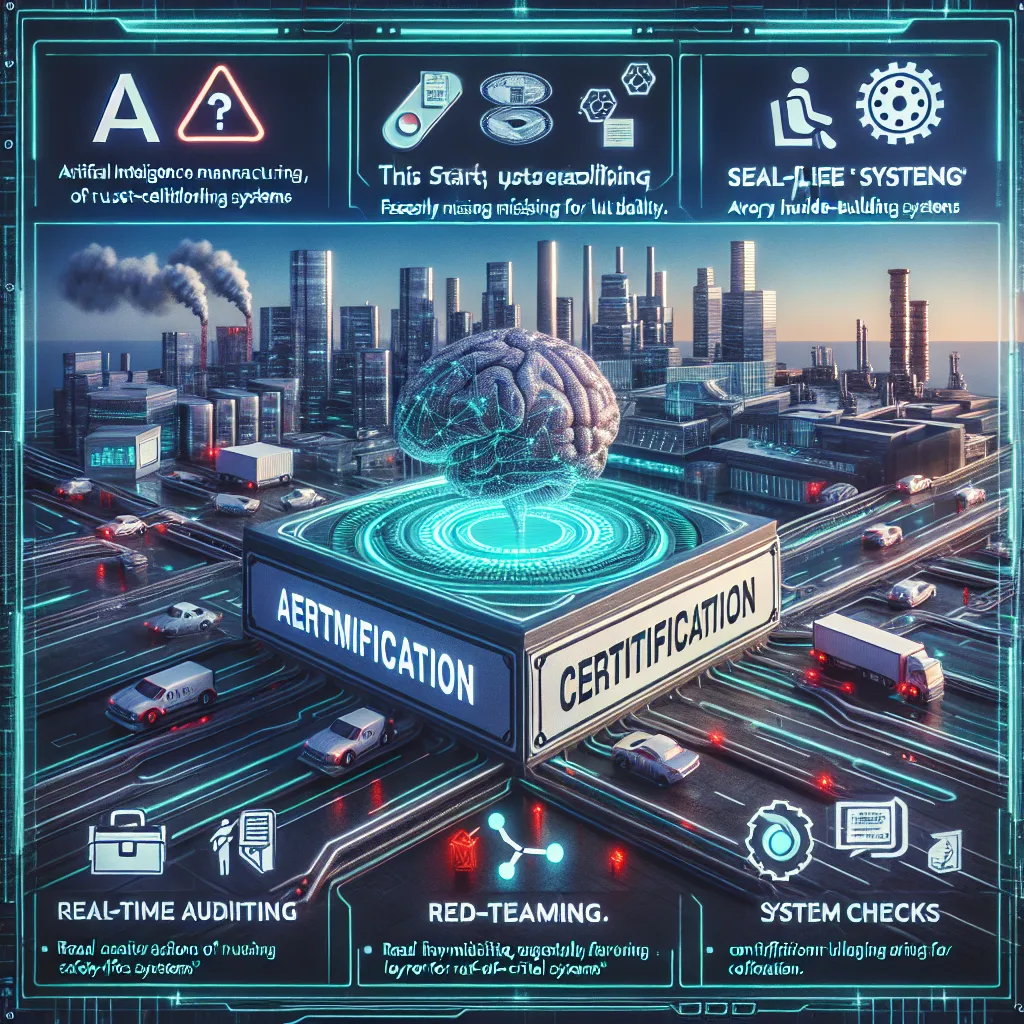
As AI enters transportation, manufacturing, and medicine, the missing infrastructure is a certification layer. Not regulation—verification. A startup could build real-time auditing, red-teaming, and correctness testing for safety-critical systems. Why now? Liability will kill adoption unless someone solves trust. Imagine a certification label that says: “This AI is validated for real-world use.” Every hardware and robotics company will need it.
Description
No additional description provided.
The Pitch
In the rapidly advancing fields of artificial intelligence and machine learning, applications are finding their way into critical sectors such as transportation, manufacturing, and medicine. As these technologies become integral to safety-critical systems, establishing trust and reliability becomes paramount. This document outlines the backstory, problem, proposed solution, product details, tools for an effective launch, go-to-market strategy, and business model for a new venture aimed at addressing this emerging need: an AI certification platform.
**Backstory**
The proliferation of AI in industries that directly impact human safety has generated a pressing need for reliable verification mechanisms. As companies integrate AI to drive innovation and efficiency, concerns over the safety and correctness of these systems have become more pronounced. High-profile incidents of AI failures in autonomous vehicles or diagnostic tools have underscored the potential risks. Consequently, while regulations are critical, a more immediate demand is emerging for a robust and dynamic certification process to verify AI systems' suitability for real-world deployment.
**Problem**
The principal challenge is the lack of a standardized, real-time verification process to ensure AI's readiness for deployment in safety-critical environments. Traditional regulatory frameworks can be slow and cumbersome, unable to keep pace with technological advancements. Without a trusted method to audit and validate AI systems, companies face heightened risks of liability, resulting in slowed adoption and innovation.
**Solution**
To address this challenge, we propose a startup focused on providing real-time auditing, red-teaming, and correctness testing services for AI systems used in safety-critical applications. This initiative would emphasize building trust and ensuring compliance with performance and safety standards, ultimately facilitating broader AI adoption.
**Product Details**
The proposed platform will offer:
- **Real-Time Auditing**: Continuous monitoring and assessment of AI system performance against established safety metrics. - **Red-Teaming Services**: Simulated attacks and stress tests to identify vulnerabilities in AI systems. - **Correctness Testing**: Evaluation of AI outputs to ensure they adhere to predefined standards and guidelines. - **Certification Label**: An identifiable mark indicating an AI system's validation for real-world use, serving as a trust symbol for stakeholders.
**Tools for Easy MVP Launch**
Creating a Minimum Viable Product involves leveraging existing tools and technologies to streamline development. Key tools include:
- **Cloud-Based Platforms**: Use AWS or Google Cloud for scalable computing resources. - **AI Testing Frameworks**: Employ open-source libraries like TensorFlow Testing and PyTorch for building test cases. - **CI/CD Pipelines**: Integrate with Jenkins or GitHub Actions to automate testing and deployment processes. - **Collaborative Tools**: Utilize Slack or Microsoft Teams for seamless team communication and collaboration.
**Go-To-Market Strategy (GTM)**
1. **Identify Early Adopters**: Focus on industries with high safety demands, such as automotive and healthcare, to pilot the certification platform. 2. **Partnerships**: Collaborate with AI developers and established companies in target sectors to build credibility and refine the service. 3. **Thought Leadership**: Publish white papers and attend industry conferences to showcase expertise and elevate brand awareness. 4. **Trial Programs**: Offer free trials or discounted rates to generate interest and gain valuable feedback.
**Business Model**
The business model can be structured around a subscription-based approach, where companies pay for access to continuous auditing and certification services. Additional revenue can be generated through:
- **Consulting Services**: Providing tailored advice and support to companies implementing AI in safety-critical systems. - **Premium Features**: Offering enhanced testing and simulation modules for complex AI applications. - **Certification Workshops**: Conducting training sessions to help companies understand and meet certification standards.
**Conclusion**
By establishing a real-time AI certification platform, the opportunity exists to instill trust and reliability in AI systems used in safety-critical environments. Through a focus on real-time verification and certification, this venture can play a pivotal role in ensuring AI's safe and widespread adoption across industries.