AI Agents Transform Surveys into Passive Income
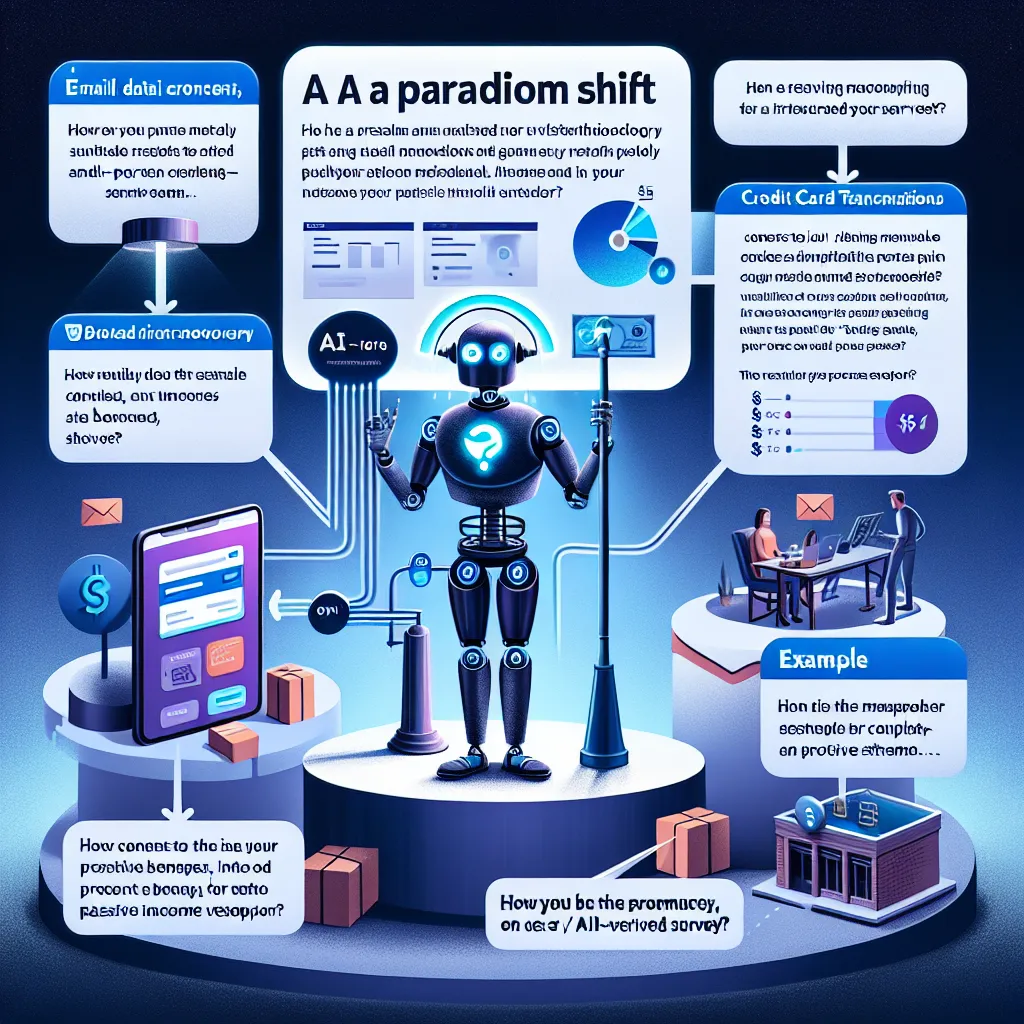
Today, people fill out surveys manually for tiny incentives, providing rushed or inaccurate answers. This idea flips the model: individuals license their personal AI agents to answer surveys on their behalf, based on actual personal data. By integrating tools like AI email readers, credit card logs, and browsing behavior (opt-in, of course), the agent can respond to surveys truthfully and efficiently—without human intervention. Consumers earn micro-payments per response, creating a passive income stream. For instance, a user opts into a marketplace where brands pay $5–$10 per completed agent-verified survey. It’s cleaner, faster, and far more accurate than traditional survey methods—turning "being the product" into an income stream.
Description
No additional description provided.
The Pitch
In today's digital landscape, traditional survey models face significant drawbacks. Participants often provide hurried or inaccurate responses for minimal incentives. This has led to data quality issues, making it difficult for companies to obtain reliable consumer insights. The proposed solution is a paradigm shift: leveraging personal AI agents to complete surveys on behalf of individuals, using real personal data to respond accurately and efficiently.
Backstory: With the increasing reliance on data-driven decision-making, the demand for authentic consumer insights is at an all-time high. However, the current survey methods are failing both companies seeking data and users participating for low rewards. Individuals often rush through surveys for minor incentives, leading to questionable data quality. Simultaneously, consumers are becoming more aware of how companies monetize their personal data without fair compensation. This environment paves the way for a more innovative, mutually beneficial approach.
Problem: 1. Low data accuracy: Survey responses are often rushed, leading to unreliable insights. 2. Low incentives: Participants receive minimal rewards, reducing motivation for providing genuine input. 3. Privacy concerns: Users are increasingly cautious about how their personal data is used, fearing misuse and lack of transparency.
Solution: The solution is to revolutionize this model by employing personal AI agents that answer surveys autonomously. These agents use complete personal data sets, such as AI email readers, credit card logs, and browsing behavior, ensuring responses are both accurate and private. This model also allows users to opt-in, maintaining strict privacy controls and personal data security.
Product Details: - AI-Driven Agents: Personal AI agents process and analyze user data to ensure precise survey responses. - Data Integration: The system securely integrates with the user's email, financial, and browsing data to deliver informed answers. All data usage is optional and consent-based. - User Dashboard: Users manage their AI agent's permissions and track their earned income from survey participation. - Marketplace Platform: A marketplace where brands offer $5–$10 per completed survey, verified by AI agents. This incentivizes accurate responses, benefiting both users and brands.
Tools for Easy MVP Launch: 1. AI Platform: Use existing AI technologies like GPT for natural language processing. 2. Secure Data Integration Tools: Implement secure APIs for data access, like Plaid for financial data. 3. Survey Marketplace Software: Build on platforms akin to Upwork or Fiverr for a user-friendly marketplace interface.
Go-To-Market Strategy: 1. Target Early Adopters: Start with tech-savvy users interested in passive incomes and privacy-focused innovations. 2. Partner with Brands: Collaborate with companies seeking high-quality consumer insights to seed initial marketplace participation. 3. Advertise Transparency: Highlight the privacy-focused model, attracting users concerned about data misuse. 4. Leverage Social Proof: Showcase early success stories and testimonials to drive adoption.
Business Model: The business will operate on a commission-based model, taking a percentage of each completed survey transaction. Additionally, premium features and analytics services can be offered to brands seeking advanced insights, providing multiple revenue streams.
Conclusion: This innovative approach to surveys addresses numerous pain points present in the current model. By deploying personal AI agents to accurately answer surveys using real data, we eliminate rushed responses and ensure privacy, resulting in more precise consumer insights. Users benefit from an easy passive income stream, while companies gain valuable data, redefining the traditional business-consumer relationship for a digital age.