AI Agent Authority Transfer for M&A
Companies are starting to give AI agents real authority: access customer data, approve work, change systems, spend money and initiate transactions. That creates a new problem when the company gets acquired. At 11:59 the seller controls those agents. At 12:01 the buyer owns the business, but the credentials, permissions and delegated authority may still reflect the old organization. Build the system of record for transferring machine authority during M&A. Start with a change-of-control audit that inventories every material agent, what it can access, who authorized it and what it can do, then tells the buyer what must be revoked, rotated, transferred, suspended or reauthorized at closing. Over time, the audit becomes a persistent ledger of which machines are allowed to act for the company and why.
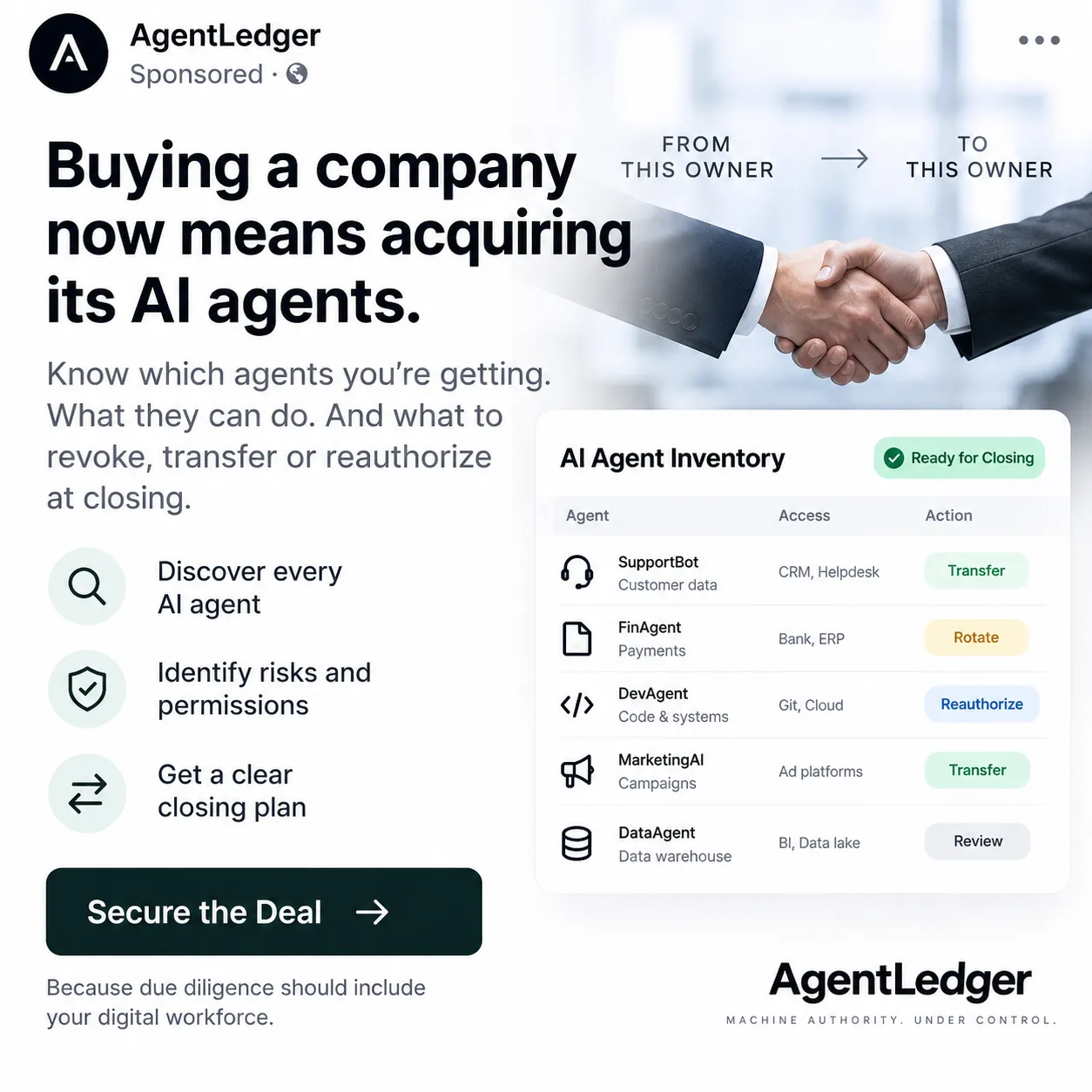
Description
No additional description provided.
The Pitch
Machine authority is becoming an asset-class problem before most companies have a language for it. In traditional M&A, lawyers know how to transfer bank accounts, contracts, IP, employment obligations and signing authority. But an AI agent with access to production systems, customer records and payment workflows is a strange hybrid of employee, software, vendor, credential and officer. If no one can say exactly what it is allowed to do, no one can confidently say the business has actually changed hands.
The urgency is highest because closing is a moment of legal precision colliding with operational messiness. Human authority can be cut over with board resolutions, employment agreements and signature cards. Machine authority lives in API keys, workflow automations, service accounts, model permissions, cloud roles, SaaS integrations and half-forgotten scripts. The buyer may inherit not only the seller’s systems, but the seller’s invisible decisions about which machines can act, spend, approve and disclose. That makes the problem less like cybersecurity in the abstract and more like title insurance for operational control.
A business here works because the pain is concentrated among parties who already pay for certainty. Acquirers, insurers, lenders, boards and counsel do not need to be convinced that unknown authority is dangerous; they need something concrete enough to rely on. The valuable product is not another dashboard of risks, but a record that can survive a closing call: this agent existed, this person or policy authorized it, this was its scope, this changed at closing, and this is who owns the decision now.
The deeper opportunity is that M&A is only the forcing function. Once a company builds a trustworthy record of machine authority for a transaction, it becomes hard to go back to a world where authority is scattered across tools and remembered by engineers. The acquisition exposes the missing control plane, but the need persists through reorganizations, audits, executive turnover, vendor changes and regulatory review. Machines acting on behalf of companies will need provenance in the same way financial entries need provenance.
The most interesting version of this company would not be perceived as an AI tool at all. It would become part of the corporate record: a neutral place where delegated machine power is documented, challenged, transferred and revoked. As companies automate more consequential work, the question “who authorized this machine to do that?” will become as basic as “who signed the contract?” and the businesses that can answer it will feel materially better governed than those that cannot.