Agent-Driven Dynamic Pricing for E-commerce Revolution
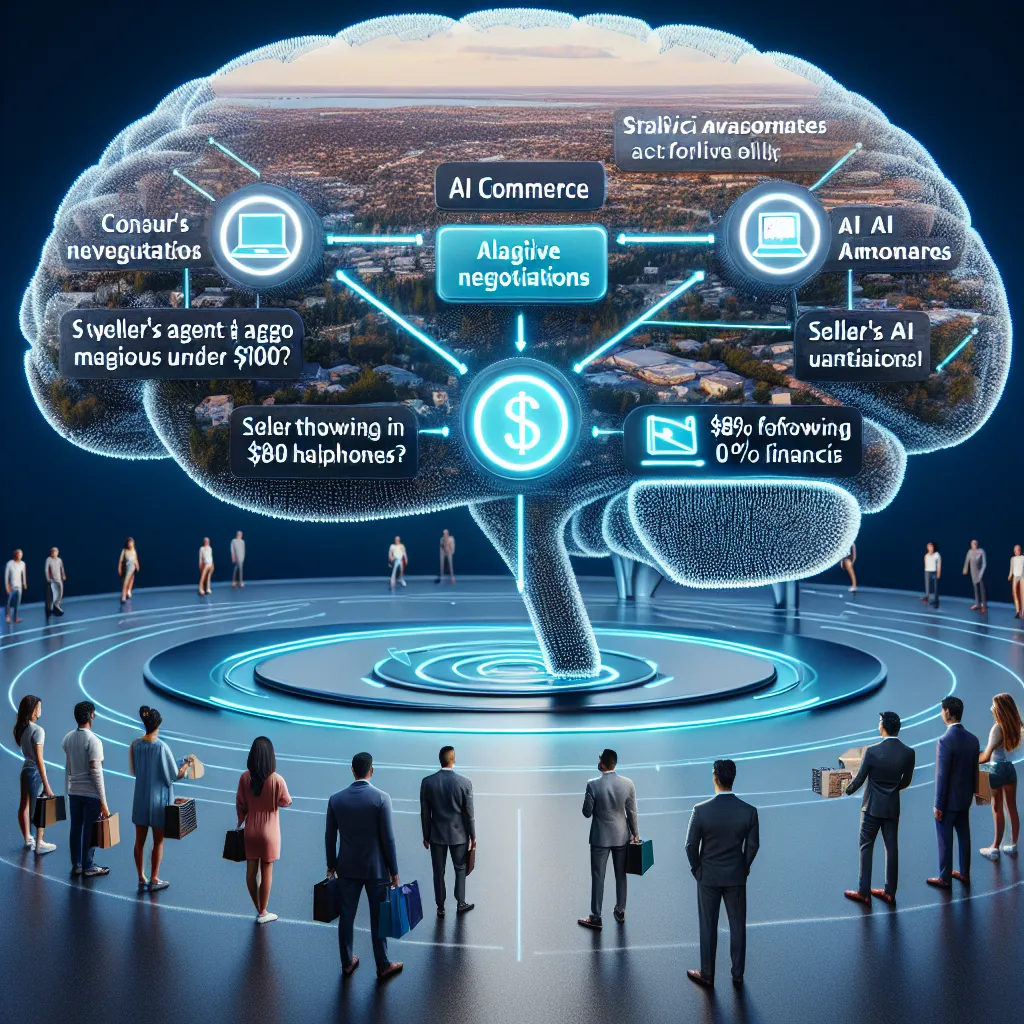
Right now, when you buy something, you accept the price a merchant sets. But in an agentic commerce world, both sides have “agents.” What if instead of static prices, every transaction became a live negotiation between buyer agents and seller agents? That’s the problem: the web has been locked in one-way pricing power for decades, leaving consumers overpaying and merchants stuck with static margins. The solution is an Agent-to-Agent Negotiation Protocol where your shopping agent can automatically bargain on your behalf while the merchant’s agent defends margins, adjusts for supply, and offers dynamic perks (like free shipping, bundles, or future discounts). Why now? Because for the first time, we have conversational AI agents with the ability to act, argue, and settle on agreements in real time — and ACP provides the rails for execution. Example: you ask your agent to find you a new laptop under $1,000. It opens a negotiation session with three merchants’ agents; one offers a $950 base price, another adds $80 headphones for free, the third offers 0% financing. You pick the deal, but the haggling is invisible — your agent handled it. This could completely flip commerce from “search and accept” to “delegate and negotiate,” creating trillion-dollar efficiencies and rewiring how markets set prices.
Description
No additional description provided.
The Pitch
In today's commerce landscape, buying a product typically involves accepting the price set by the merchant. This static pricing model has been the norm for decades, resulting in a market dynamic where consumers often end up overpaying, and merchants struggle to optimize their margins. The traditional one-way pricing mechanism fails to account for the nuances of individual customer preferences, fluctuating market conditions, and the potential for personalized deals.
Imagine a world where every commercial transaction becomes a live negotiation, tailored to the needs, preferences, and capabilities of both buyers and sellers. Enter the concept of Agent-to-Agent Negotiation Protocols — a transformative approach that utilizes advanced AI-powered agents to negotiate prices and terms on behalf of consumers and merchants alike.
The challenge at hand is simple: the web has been confined by rigid pricing mechanisms that ignore the potential for dynamic pricing models. However, with advancements in conversational AI, it is now possible for intelligent agents to act and negotiate in real time, creating a more fluid and responsive commerce environment.
The solution is rooted in deploying an Agent-to-Agent Negotiation Protocol that enables automated bargaining between consumer agents and merchant agents. This protocol empowers shoppers to enjoy more personalized, competitive pricing, while merchants can dynamically adjust their strategies to enhance sales and customer satisfaction. For instance, when you’re on the hunt for a new laptop under $1,000, your personal shopping agent can initiate a negotiation with various merchants’ agents. One merchant may offer a base price of $950, while another sweetens the deal by including complimentary headphones. A third merchant might propose 0% financing. You'll select the best deal without getting involved in the negotiation process directly, as your agent seamlessly handles the bargaining on your behalf.
This innovative approach could revolutionize how consumers and merchants interact, shifting from the traditional search and accept model to a more engaging delegate and negotiate system. The potential impacts are substantial, with efficiencies that could represent a trillion-dollar opportunity, fundamentally altering market pricing dynamics.
For those interested in developing this platform as a Minimum Viable Product (MVP), the essential components would involve leveraging AI technologies capable of natural language processing and real-time decision-making. Building a robust API infrastructure to facilitate communication between buyer and seller agents is also crucial. Specific tools that can aid in the expedited development of such a platform include:
1. AI Development Frameworks: Utilize libraries like TensorFlow or PyTorch to build the underlying AI models capable of negotiation and decision-making. 2. Natural Language Processing Tools: Implement solutions like Google’s Dialogflow or OpenAI’s API for understanding and generating human-like dialogue. 3. Cloud Infrastructure: Platforms like AWS or Google Cloud provide scalable resources to manage data processing and storage demands.
The go-to-market (GTM) strategy should focus on partnerships with major e-commerce platforms and retailers, allowing integration of the negotiation protocol into existing online shopping environments. A phased launch could start with a pilot program, highlighting success stories to drive adoption among both consumers and merchants.
Regarding the business model, revenue can be generated through transaction fees, subscription models for premium features, or by offering negotiation analytics and insights as a service to merchants who wish to optimize their sales strategies. Additionally, providing white-label solutions for large retailers looking to implement bespoke negotiation systems could be another lucrative avenue.
Bringing to market an Agent-to-Agent Negotiation Protocol platform creates not just an app or a service, but the potential to redefine the very foundations of global commerce. By shifting the paradigm from static pricing to dynamic, personalized negotiation, this venture promises to deliver unprecedented value to both buyers and sellers, unlocking a new era of agentic commerce.