Agent-Aware Hosting: Future-Ready Web Infrastructure
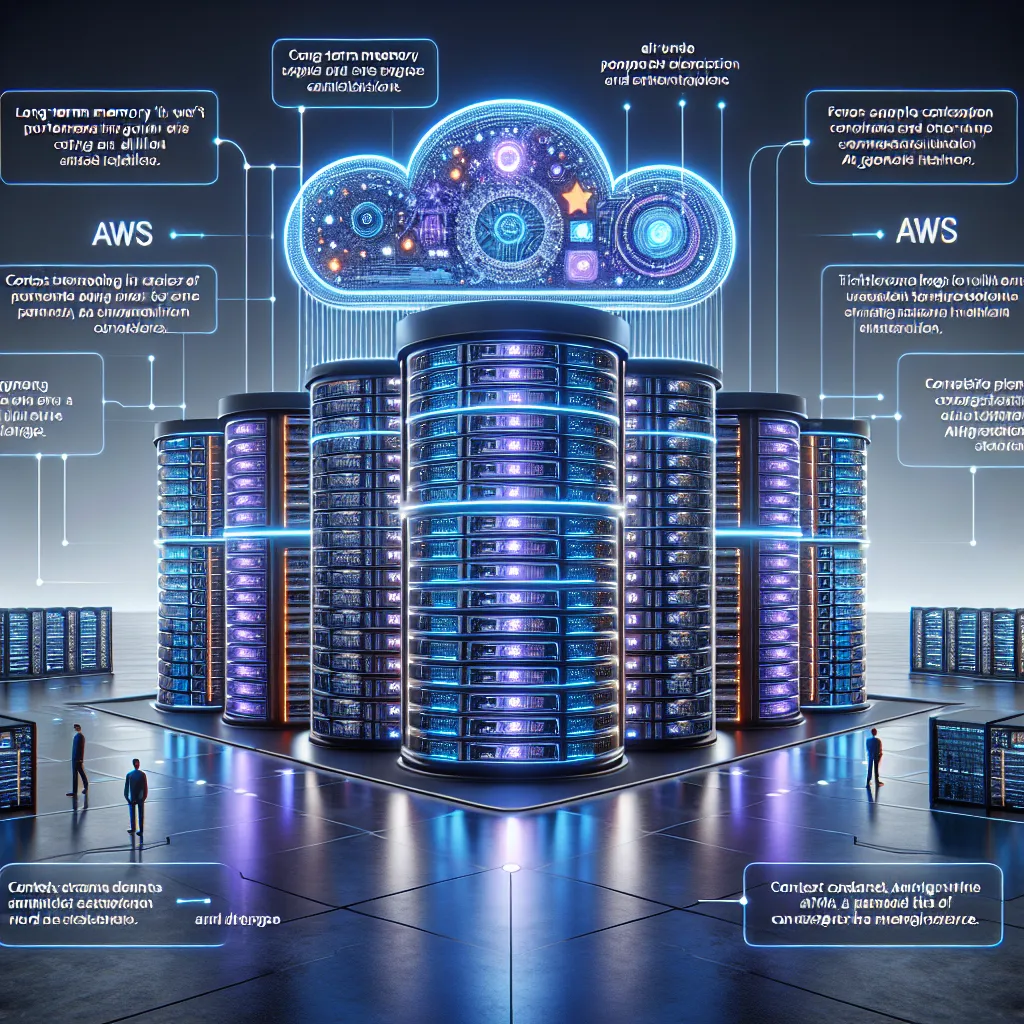
Web hosting hasn’t changed much since the 2000s: store files, serve requests, bill monthly. But websites are about to become persistent agents that remember, reason, and act. Agent-Aware Hosting provides the infrastructure for that shift — servers built to store long-term memory, stream context, and keep conversations alive across sessions. It’s like AWS re-imagined for intelligent interfaces. Why now? Because every major website is about to get an AI layer, and the current hosting stack can’t support context persistence or real-time state updates. Agent-Aware Hosting is the foundation for the next internet.
Description
No additional description provided.
The Pitch
Web hosting, as we know it, has remained relatively unchanged since the early 2000s. Traditionally, web hosting has involved storing files, handling requests, and billing on a monthly basis. However, the nature of websites is on the brink of a revolutionary transformation. As we look towards the future, websites are evolving into persistent agents—intelligent, context-aware entities capable of remembering, reasoning, and acting. The need for infrastructure that supports this shift is paramount. This is where Agent-Aware Hosting comes into play. It is a groundbreaking approach to web hosting that enables websites to become intelligent interfaces with continuous interactions and memory retention over time.
**Background and Problem**
The current hosting landscape is ill-equipped for the impending wave of AI-integrated websites. As every substantial web presence integrates AI layers, there arises a need for hosting solutions that go beyond merely responding to requests. These websites require ongoing context persistence and real-time state updates—capabilities that are not supported by the traditional hosting stack. The challenge lies in developing server infrastructure that can accommodate these needs, making websites more dynamic, intelligent, and engaged in continuous conversation with users.
**Solution: Agent-Aware Hosting**
Agent-Aware Hosting is built to address these demands. It offers servers specifically designed for storing long-term memory, streaming contextual information, and maintaining ongoing conversations across multiple user sessions. This innovation allows for websites that not only respond but also learn and adapt over time. It essentially transforms traditional hosting into a platform more akin to AWS, but reimagined to support the advanced functionalities required by the next generation of intelligent web interfaces.
**Product Details and Tools for MVP**
An MVP (Minimum Viable Product) for Agent-Aware Hosting would include several core components:
1. **Persistent Memory Storage**: A scalable solution that allows websites to retain and access historical data efficiently.
2. **Contextual Streaming**: Real-time data processing capabilities to stream user contexts and update state information dynamically.
3. **Conversation Continuity**: Mechanisms to ensure seamless transition and memory retention across user sessions.
To develop this MVP, tools and frameworks such as AWS Lambda for serverless computing, Redis or MongoDB for memory storage, and WebSockets for real-time data transfer could be employed. These tools provide a robust foundation for building an initial version that demonstrates the potential and functionality of Agent-Aware Hosting.
**Go-to-Market Strategy**
The GTM strategy would involve targeting developers, AI companies, and enterprises eager to integrate AI capabilities into their web presence. Initiatives could include:
- **Developer Outreach**: Engaging with developer communities through webinars, tutorials, and hackathons to demonstrate the platform's capabilities. - **Strategic Partnerships**: Collaborating with AI and tech firms to integrate Agent-Aware Hosting as part of their service offerings. - **Freemium and Tiered Pricing**: Offering a freemium model to encourage adoption, with tiered pricing options as users scale their operations.
**Business Model**
Agent-Aware Hosting would adopt a subscription-based business model, possibly coupled with pay-as-you-go options for specific high-demand features. This model ensures a sustainable revenue stream while allowing customers the flexibility to pay according to usage and scale. Additionally, value-added services such as enhanced support and advanced analytics could be offered as premium add-ons.
In conclusion, as we usher in the era of intelligent, AI-driven web interfaces, the demand for a hosting solution that evolves alongside this transformation becomes immediate. Agent-Aware Hosting provides the necessary infrastructure, poised to become the backbone for the next internet revolution.