Affordable Microgrid Solutions for Community Energy Independence
Residential neighborhoods are struggling with rising utility costs and grid instability — but most lack the technical or financial capacity to build independent energy systems. This startup offers “microgrid-as-a-service” to homeowners associations and building developers: plug-and-play solar, battery, and control systems that connect small communities into localized energy markets. The service handles zoning, grid negotiation, installation, and ongoing load balancing — with billing automatically split by unit. Residents get lower, cleaner, and more predictable power; HOAs get turnkey infrastructure with financing baked in. Imagine a 42-unit townhouse block in Arizona that installs this service and goes from 90% grid-reliant to 15% in one year — all with no upfront cost.
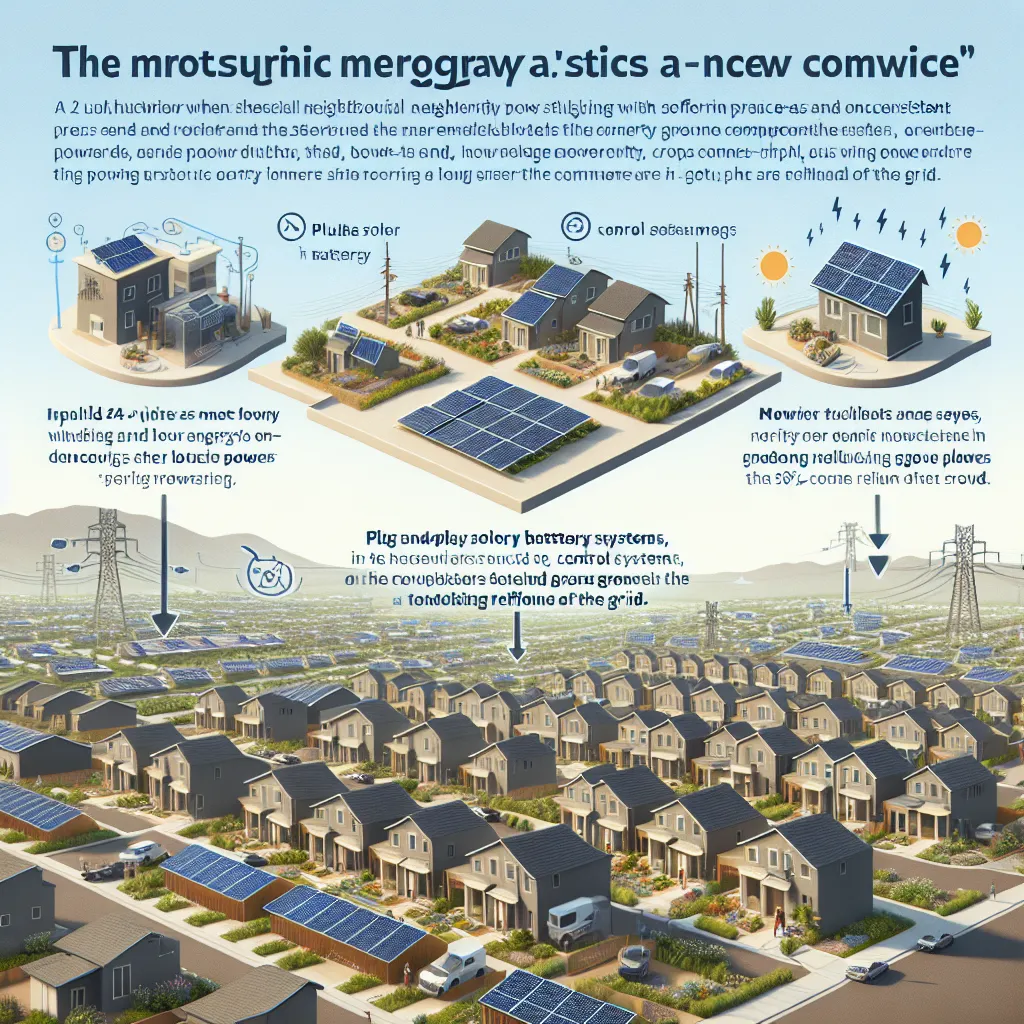
Description
No additional description provided.
The Pitch
Across the globe, residential neighborhoods are grappling with mounting utility costs and the persistent challenge of grid instability. The technical and financial hurdles involved in developing independent energy systems often deter communities from pursuing more sustainable and cost-effective solutions. Recognizing this gap, there is an emerging opportunity to transform how neighborhoods manage their energy consumption through a microgrid-as-a-service (MaaS) model. This solution is tailored for homeowners associations (HOAs) and building developers, offering them a straightforward path to energy resilience and sustainability.
Backstory:
Traditional energy systems have long relied on centralized grids, which are increasingly strained by growing demand and vulnerable to outages. In contrast, microgrids provide localized energy generation and management, enhancing stability and reducing reliance on distant power sources. However, the complexity of designing, installing, and managing microgrid systems has historically been a barrier, especially for residential communities lacking technical expertise and financial resources.
Problem:
Many neighborhoods want to transition away from traditional energy sources to save on costs and reduce their carbon footprint. Yet, they often face several challenges:
1. High upfront costs for renewable energy infrastructure. 2. Lack of technical expertise to manage energy systems. 3. Complicated processes around zoning, grid negotiation, and regulatory compliance. 4. Inability to effectively split costs and manage billing among multiple units.
Solution:
The MaaS startup provides a comprehensive suite of services that address these obstacles, empowering communities to harness the benefits of renewable energy without having to become energy experts or take on significant financial risk. This includes:
1. Plug-and-play solar, battery, and control systems that facilitate seamless integration into existing community infrastructures. 2. End-to-end service handling zoning, grid negotiation, installation, and ongoing load balancing. 3. An innovative billing solution that automatically divides costs by unit, simplifying financial management for residents.
Product Details:
The microgrid-as-a-service offers a modular and scalable solution tailored to the unique needs of each community:
1. Solar Panels: High-efficiency panels designed for maximum energy capture. 2. Battery Systems: State-of-the-art, reliable storage solutions to ensure power availability during off-peak times. 3. Control Systems: Intelligent energy management software that optimizes power distribution and load balancing. 4. Installation and Maintenance: Professional support for system setup and ongoing technical assistance.
Tools for Easy Launch as an MVP:
To ease the transition for communities and expedite market entry, the following tools and resources will prove invaluable:
1. An online platform for easy configuration and customization of microgrid solutions to match different community needs. 2. Partnership with manufacturers for rapid deployment of equipment and technology. 3. Financing partnerships to offer flexible payment solutions, minimizing upfront costs for communities. 4. Comprehensive educational materials and workshops for stakeholders to understand and maximize the system's potential.
GTM Strategy:
To effectively introduce the MaaS to the market, the following strategies will be employed:
1. Direct Engagement: Partner with leading HOAs and building developers to pilot projects that showcase the benefits and reliability of the service. 2. Strategic Partnerships: Collaborate with local governments and environmental organizations to bolster credibility and outreach. 3. Community Events: Host informational sessions and webinars to demystify the technology and address community concerns. 4. Digital Marketing: Utilize social media, content marketing, and targeted advertising to generate awareness and drive inquiries.
Business Model:
Operating on a subscription-based model, the MaaS will offer communities various payment plans, including no upfront costs with monthly payments adjusted based on energy savings. This ensures accessibility to all communities, irrespective of their financial capabilities. The company will also generate revenue through partnerships with utility companies eager to integrate decentralized resources into their grid operations.
Conclusion:
By providing an end-to-end microgrid solution that simplifies the transition to renewable energy, the MaaS startup is poised to revolutionize how residential neighborhoods manage their power needs. With the right technology, partnerships, and strategy, the path to affordable, sustainable, and reliable power is within reach—reshaping communities into self-sufficient, environmentally friendly entities.