Affordable Luxuries: Pioneering Cost-Effective Alternatives to Premium Market Leaders for Major Retailers
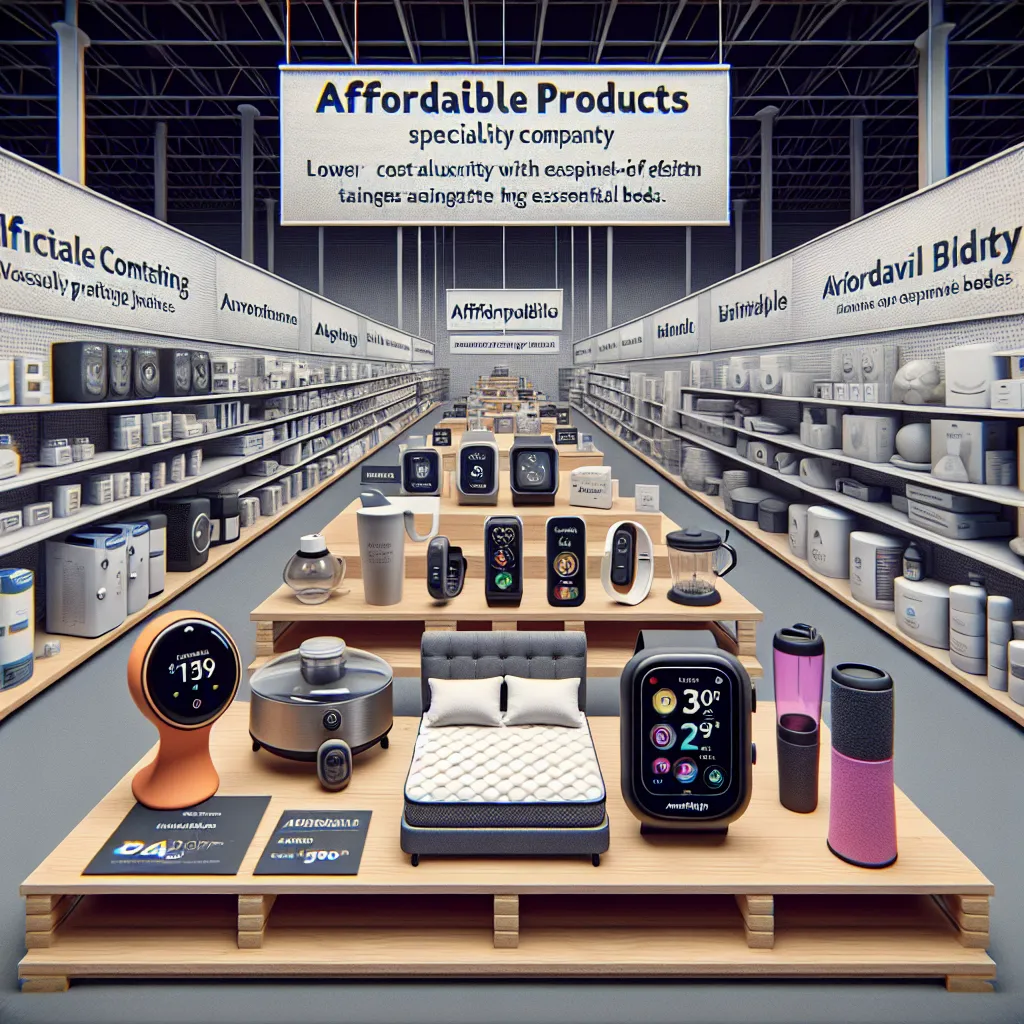
Description
A company specializing in creating affordable alternatives to premium products for big retailers like Walmart, Costco, and Target could focus on replicating the core features of high-end items while optimizing costs. For example, they could develop a budget-friendly smart thermostat similar to the Nest, a fitness tracker offering basic features akin to the Apple Watch, or a memory foam mattress that rivals Tempur-Pedic in comfort but at a fraction of the cost. Other potential products include a durable blender that mimics the Vitamix, a lower-priced version of the Oura Ring for health tracking, or noise-canceling headphones with the sound quality of Bose. By targeting gaps in the market where premium products have established demand but are not widely available in big-box stores, this company could provide high-quality, accessible alternatives that appeal to budget-conscious consumers.
The Pitch
While premium products such as the Nest thermostat, Apple Watch, and Tempur-Pedic mattresses offer advanced features and high-quality performance, their price points remain prohibitively high for a large segment of consumers. This financial barrier leaves a significant gap in the market for affordable, quality alternatives that can fulfill the needs of budget-conscious buyers looking for products with similar functionalities at a lower cost.
Solution Overview: Our company proposes to bridge this market gap by developing and offering a range of products that mirror the core functionalities of high-end products, while optimizing production and operational costs. By leveraging technology, strategic partnerships, and innovative manufacturing processes, we aim to create cost-effective versions of popular goods such as smart thermostats, fitness trackers, luxury mattresses, high-performance blenders, health tracking rings, and noise-canceling headphones.
Target Audience: The primary target audience includes middle-income consumers who are interested in modern, tech-savvy products but are deterred by the high costs of premium brands. This includes young adult professionals, families, and technology enthusiasts shopping at large retail chains like Walmart, Costco, and Target who desire lifestyle-enhancing products without the hefty price tag.
Value Proposition: Our company offers high-quality and reliable alternatives to premium products at a significantly reduced cost, thus providing great value for money. We commit to maintaining high standards in design and functionality by replicating the essential features of high-end products consumers desire, making luxury accessible for all.
Market Analysis: The global smart home market, wearables industry, and luxury mattress segments are witnessing rapid growth; however, high prices limit their penetration among cost-sensitive consumers. By focusing on large retailers known for value deals, such as Walmart, Costco, and Target, we can tap into an existing customer base looking for affordable alternatives. Competitive analysis shows that while some budget alternatives exist, they often compromise significantly on quality or brand trust, a gap our offerings will bridge.
Implementation Plan: 1. Product Development: Collaborate with engineers and design experts to develop prototypes that maintain functional integrity at reduced costs. Focus initially on one flagship product, the smart thermostat. 2. Partnerships: Forge relationships with manufacturers who can offer cost-effective production solutions and retailers for distribution. 3. Branding and Marketing: Create compelling brand narratives that align with value for money and quality, supported by robust digital marketing campaigns targeting value-conscious consumers. 4. Distribution: Launch in selected stores with strong footfalls from our target demographic, supplemented by an online presence to broaden reach. 5. Feedback and Iteration: Employ customer feedback loops to refine products and expand the range based on consumer demand and satisfaction metrics.
Monetization Strategy: Revenue will primarily be generated through direct sales. A competitive pricing strategy will be adopted, positioned just below mid-range products but well below premium brands, achieving a balance between affordability and perceived quality. Additionally, partnerships and exclusive deals with big retailers will enhance product visibility and further drive sales while maintaining manageable production and marketing costs.
Impact Assessment: The introduction of affordable alternatives to high-end products will democratize access to the latest technology and quality home products, thereby enhancing the standard of living for our target consumers. Economically, this can invigorate market competition, potentially driving down prices in the premium segment and boosting innovation. Environmentally, our focus will also be on sustainable manufacturing practices to appeal to the growing segment of eco-conscious buyers, thus fostering responsible consumption.
This strategic approach not only fills a significant market need but also contributes to a broader economic and social impact by making high-end lifestyles more accessible, stimulating market equilibrium, and promoting sustainability.