Adaptive Night-Vision Contact Lenses for Safer Vision
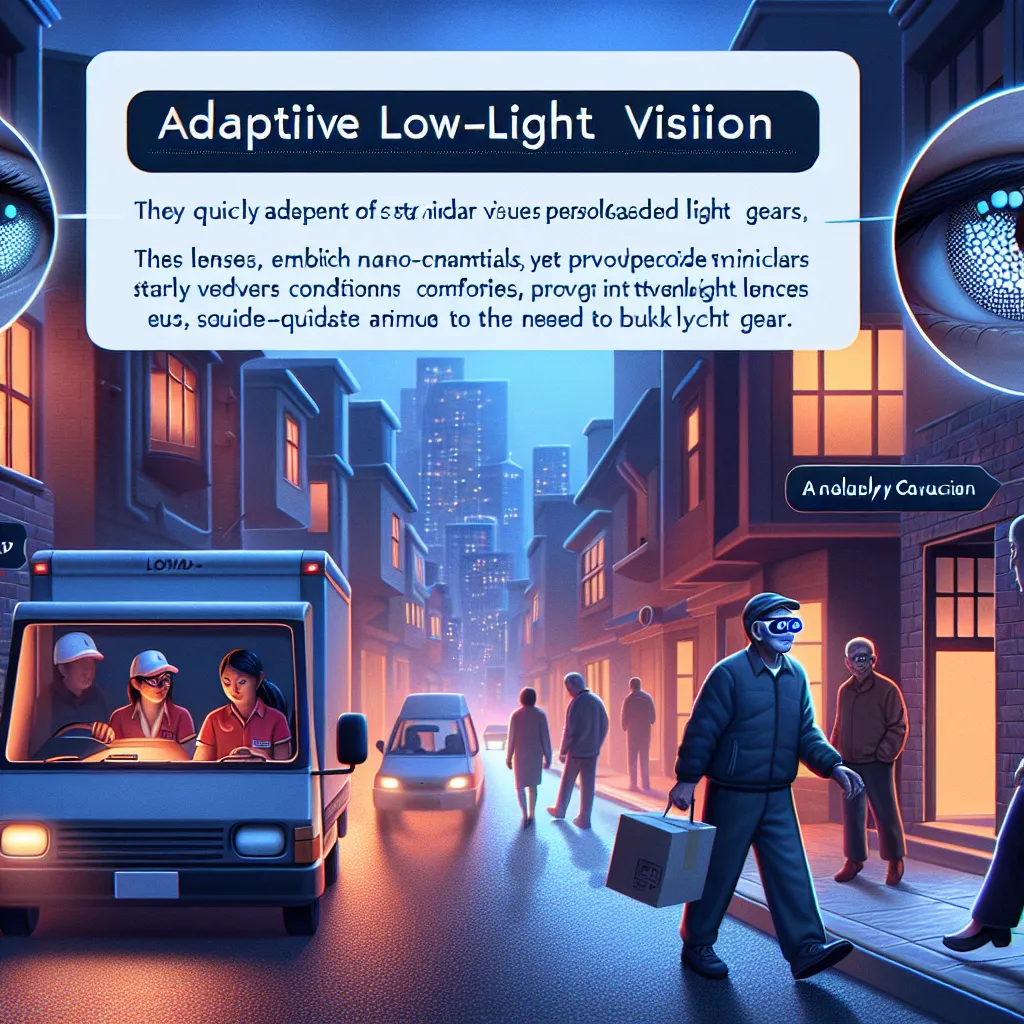
Poor visibility at night makes daily activities like driving, walking, and working dangerous, but night-vision solutions today are bulky, expensive, and inaccessible. Adaptive low-light vision contact lenses would embed nano-materials to enhance vision automatically as light decreases, offering the convenience of normal lenses with built-in night vision. Recent advances in graphene-based materials and miniaturized infrared tech make this possible now, unlocking a wearable solution that’s invisible and convenient. Imagine a delivery driver navigating dark neighborhoods or an elderly person walking at dusk — these lenses adjust in real-time to give sharper, safer vision without bulky gear. No company has yet brought this to the consumer market.
Description
No additional description provided.
The Pitch
In many scenarios, poor visibility at night can pose significant risks. Whether it's driving on dimly lit roads, walking through poorly illuminated areas, or working in low-light conditions, inadequate vision can lead to accidents and discomfort. Traditional night-vision solutions, such as goggles and bulky headsets, are often cumbersome, prohibitively expensive, and not practical for everyday use.
Problem:
Current night-vision technologies are primarily designed for military or specialized applications, limiting their accessibility for regular users. This not only restricts their usability but also poses a barrier for individuals who face daily low-light challenges yet seek a seamless and affordable solution. There's a distinct lack of user-friendly, accessible products that cater to the average person's need for improved vision in the dark.
Innovative Solution:
Imagine an everyday contact lens that adapts to low-light conditions, similar to transitional eyeglasses but far more advanced. This innovative product would leverage cutting-edge advancements in graphene-based materials and miniaturized infrared technologies, resulting in adaptive low-light vision contact lenses. These lenses would automatically enhance the wearer's vision as ambient light decreases, offering the convenience of ordinary contact lenses with the added capability of night vision.
Product Details:
The adaptive low-light vision contact lenses integrate ultra-thin layers of nano-materials that enhance light sensitivity. They feature embedded infrared sensors that activate when lighting conditions drop below a certain threshold. The composite materials are designed to be lightweight, breathable, and suitable for extended daily wear, providing the wearer with comfort along with enhanced functionality. These lenses are designed to adjust in real-time, offering sharper and safer vision without the need for additional equipment.
Tools for Launching an MVP:
1. Graphene Manufacturing Equipment: Set up a small-scale facility to produce and test the graphene-based composite materials. 2. Fabrication Technology: Use precision fabrication techniques to produce the lens prototypes, testing durability and performance. 3. Infrared Sensor Integration: Incorporate miniaturized IR sensors that respond dynamically to changes in light conditions. 4. User Testing and Feedback: Develop initial prototypes for testing with focus groups to gather feedback and optimize performance.
Go-to-Market Strategy (GTM):
1. Initial Target Market: Focus on specific demographics such as delivery drivers, security personnel, and elderly individuals who face daily low-light challenges. 2. Partnerships: Collaborate with optometrists and eye care professionals to build credibility and facilitate initial distribution through specialized clinics. 3. Awareness Campaign: Launch an educational marketing campaign that emphasizes the safety and convenience benefits of the lenses, utilizing online platforms and social media. 4. Pilot Programs: Conduct pilot programs in urban areas with significant low-light activity to gather insights and refine the product before a broader launch.
Business Model:
1. Direct-to-Consumer Sales: Establish an online platform for direct sales, providing customers with a convenient purchasing experience. 2. Subscription Model: Offer a subscription service for regular lens replacements and updates, ensuring customer retention and recurring revenue. 3. Strategic Alliances: Form partnerships with eyewear retailers to expand distribution channels and enhance brand visibility. 4. Licensing Agreements: Consider licensing the technology to established eyewear companies to penetrate the market more swiftly.
In conclusion, the adaptive low-light vision contact lenses represent a transformative opportunity in the vision correction market. By addressing the limitations of current night-vision systems and offering a user-friendly, high-tech solution, this innovation stands to redefine how individuals navigate low-light environments in everyday life.