Adaptive Digital Wellness Assistant for Children's Screens
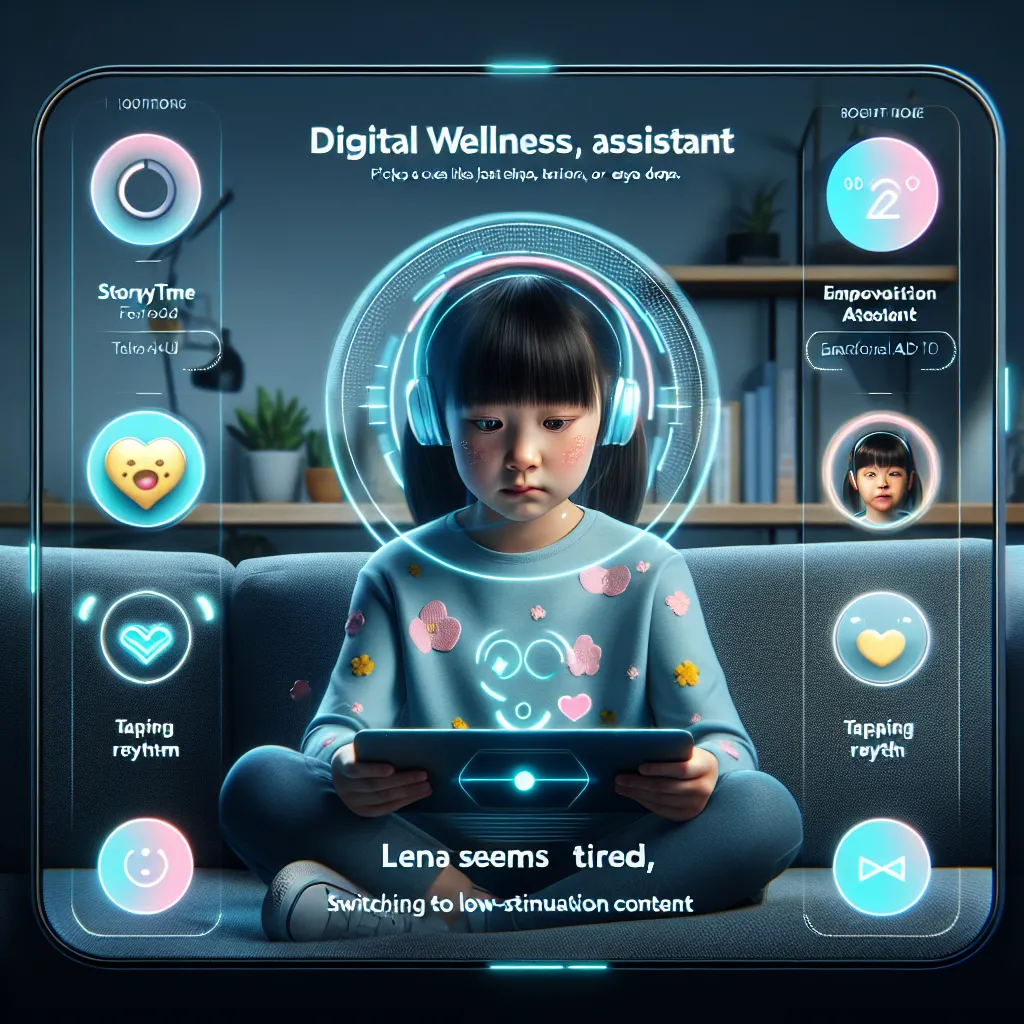
Parents can set screen time limits, but they can’t see what really matters — when their child is overstimulated, frustrated, or zoning out. Today’s parental control tools treat time as the problem, not the child’s state. An adaptive digital wellness assistant would quietly track cues like voice tone, facial expression, tapping rhythm, or eye strain to detect fatigue and emotional shifts. When needed, it could suggest breaks, shift to calming content, or dim the screen before meltdown mode hits. Emotional-AI is advancing rapidly, moving from high-end research into affordable APIs that can run locally on devices. As screens become more immersive, context-aware moderation becomes critical. Imagine a 9-year-old watching YouTube when their focus drops — the app softly fades into “storytime mode” and texts the parent: “Lena seems tired, switching to low-stimulation content.”
Description
No additional description provided.
The Pitch
In today’s digital age, screens are an integral part of children’s lives, offering endless avenues for learning and entertainment. However, this increased screen time has raised concerns among parents regarding the impact on their children's well-being. Traditional parental control tools focus primarily on limiting screen time but fail to address the more nuanced aspect of a child's engagement and emotional state.
#### Problem
The current generation of parental control applications is primarily time-centric. They restrict access to devices once a predetermined time limit is reached, but overlook the key aspect — the child's emotional and cognitive state. Parents often remain unaware when their child is overstimulated, frustrated, or zoning out. This can lead to scenarios where a child is either deprived of beneficial content or exposed to potentially overwhelming stimuli without parental guidance. The absence of contextual awareness in digital monitoring tools poses a critical challenge in ensuring a balanced digital upbringing.
#### Solution
An adaptive digital wellness assistant, equipped with emotional AI, can revolutionize how we supervise and engage with children's digital interactions. This intelligent assistant would utilize cues like voice tone, facial expressions, tapping rhythm, or eye strain to assess a child's state of mind. By continuously monitoring these signals, the tool can detect fatigue or emotional shifts and, when necessary, suggest appropriate interventions. Whether it's recommending a break, transitioning to calming content, or dimming the screen, this solution focuses on adaptive moderation rather than rigid control.
#### Product Details
The proposed digital wellness assistant would integrate seamlessly with existing devices and platforms. Using advanced emotional AI, the assistant would:
- Monitor non-intrusive indicators such as voice intonation, facial expressions, and interaction patterns. - Provide real-time assessments of a child's emotional and cognitive state. - Automatically adjust digital content to match the child’s current needs and emotional state. - Notify parents with timely insights, such as suggesting a necessary break or a switch to less stimulating content.
This approach emphasizes seamless integration and minimal disruption to the child's experience, aligning with the growing trends in emotional AI, now accessible through affordable APIs capable of running locally on devices.
#### Tools for MVP Launch
To create a Minimal Viable Product (MVP), the following tools and technologies could be considered:
- **Emotion Detection APIs:** Integrate APIs capable of analyzing voice, facial expressions, and interaction patterns to infer emotional states. - **Behavioral Analytics:** Utilize machine learning models to continuously improve the accuracy of emotional assessments and interventions. - **User Interface Design Tools:** Focus on intuitive interfaces for both children and parents to ensure ease of use and engagement. - **Local AI Processing:** Incorporate on-device processing capabilities to ensure privacy and real-time functionality without latency issues associated with cloud processing.
#### GTM Strategy
- **Partnerships with Educational Platforms:** Collaborate with e-learning companies to integrate the assistant as a beneficial tool for enhancing focus and learning experiences. - **Pilot Programs:** Launch pilot programs in collaboration with schools and parenting organizations to showcase the product's value in real-world settings. - **Community Building:** Develop a community around digital wellness through forums, webinars, and workshops to educate parents and gain feedback. - **Influencer Marketing:** Engage with parenting bloggers and influencers to reach digitally-savvy parents and build trust in the solution.
#### Business Model
- **Freemium Model:** Offer a basic version of the assistant with essential features for free, while advanced capabilities are available through a subscription model. - **B2B Partnerships:** Provide schools and educational institutions with customized solutions to address digital well-being within academic settings. - **Data Insights Subscription:** Offer insights and analytics as a premium service for parents interested in understanding deeper patterns related to their child's digital interactions.
By focusing on the state of the child rather than just screen time, this adaptive digital wellness assistant can set a new standard in parental control tools, ensuring a balanced and emotionally-aware digital experience for children.