Adaptive Color-Changing Cars Inspired by Nature
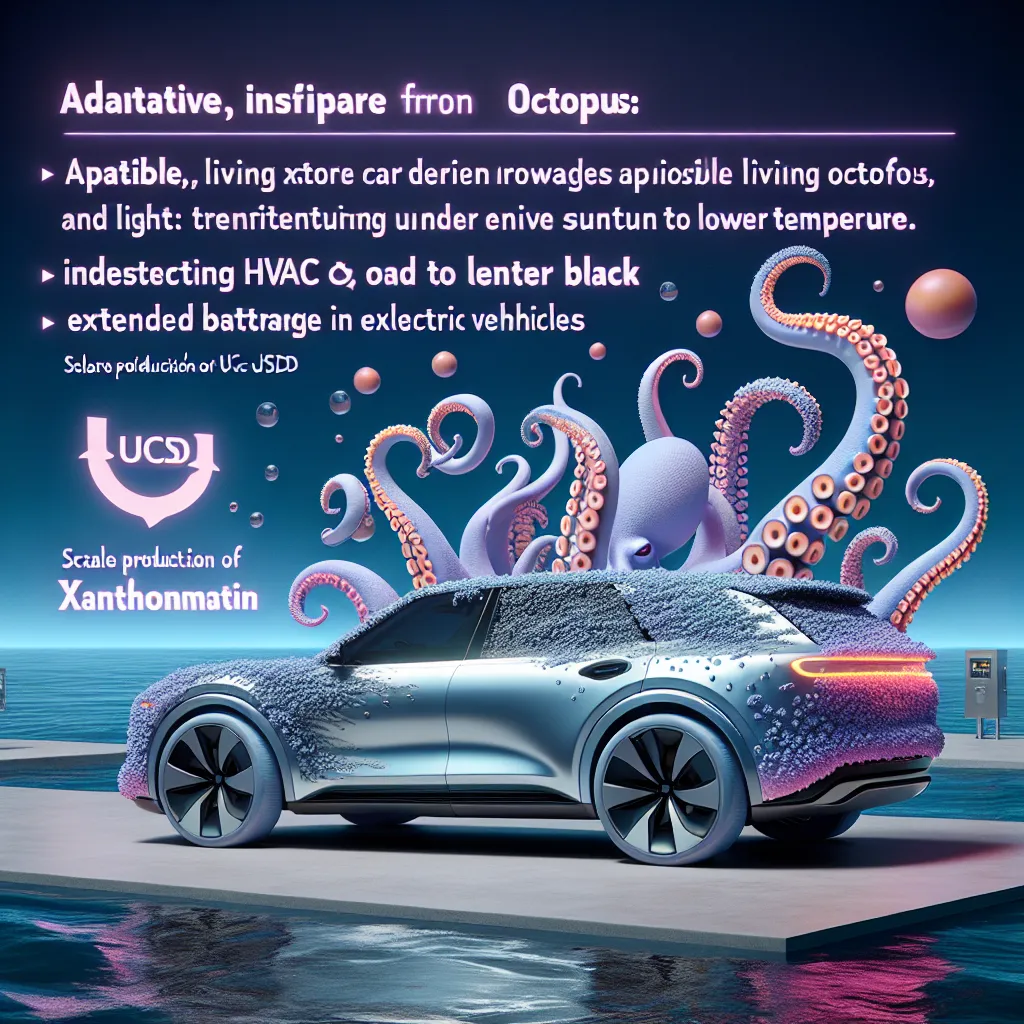
Cars are designed like statues: one color forever, one texture for life. Paint scratches, fades, and can’t evolve with the environment. But nature’s design—the octopus—already solved this. With UCSD’s scalable production of xanthommatin, vehicles could have living exteriors that react to heat, light, and context. Imagine a car that turns reflective silver in blazing sun to stay cool, then switches to deep matte black on cold mornings. Beyond aesthetics, this could reduce HVAC load and extend battery range in EVs. Why now: for the first time, biomanufactured pigments are cheap and abundant enough to coat large surfaces. Auto design becomes software—update your color over the air.
Description
No additional description provided.
The Pitch
Imagine a world where your car isn’t just a static object but a dynamic entity that adapts to its environment. Traditionally, vehicles have been designed for permanence in appearance, with a single color and texture that does not change over time. Similar to statues, once painted, they remain the same, enduring scratches and the deterioration of their aesthetic due to environmental factors. However, nature, with all its ingenuity, presents us with a solution to this static design paradigm.
The octopus, an organism renowned for its remarkable ability to change color and texture instantaneously, has inspired a revolutionary idea in automotive design. This idea hinges on the use of xanthommatin, a naturally occurring pigment successfully produced at scale by researchers at the University of California, San Diego (UCSD).
The problem we aim to address is the static nature of vehicle exteriors, which do not adapt to environmental changes. This not only limits aesthetic flexibility but also impacts the vehicle’s energy consumption, particularly in maintaining internal temperatures. Imagine driving under the blazing sun; the heat absorbed by the car increases the load on the air conditioning system, thus increasing energy consumption. Conversely, during colder conditions, a darker exterior could help to retain heat and reduce the need for extensive heating.
The solution involves using biomanufactured pigments to create a living exterior for vehicles. This living exterior can dynamically change in response to environmental conditions such as temperature and light. Picture a car that becomes reflective silver under the intense midday sun to minimize heat absorption, and transitions to a deep matte black on colder mornings to retain warmth. This adaptability not only enhances the vehicle’s aesthetics but also offers functional benefits by potentially reducing the load on the HVAC system and extending the battery range for electric vehicles.
Product Details: - The core of this innovation is a bioengineered coating made from xanthommatin. - This coating can be applied to the surface of vehicles and can be programmed to change its color and reflectivity. - The technology integrates with automotive software to enable color updates and adaptations via over-the-air updates, akin to modifying software.
Tools for MVP Launch: - Partnership with biomanufacturing labs to produce xanthommatin at scale. - Collaboration with automotive manufacturers for integration with existing vehicle models. - Development of an app that allows users to control and customize the exterior appearance of their vehicle. - Initial testing and iteration through a pilot program with select consumers or auto manufacturers.
Go-to-Market Strategy: - Focus on partnerships with luxury and electric vehicle manufacturers who are more likely to adopt innovative technologies. - Market through automotive shows and tech expos to generate buzz and attract early adopters. - Online campaigns showcasing real-world demonstrations of the technology’s adaptability and benefits. - Develop strategic alliances with companies focused on sustainability and energy efficiency.
Business Model: - Revenue through licensing agreements with automotive manufacturers. - Subscription services for customization features and ongoing updates to the vehicle's exterior appearance. - Expansion into aftermarket kits for retrofitting existing vehicles with this technology.
By transforming car exteriors from static to dynamic, we not only redefine vehicle aesthetics but significantly impact the automobile’s interaction with its environment. This innovation opens new frontiers in automotive design, where the exterior of a car is not limited to one state but can continuously evolve and adapt, akin to living organisms.