Accelerating Material Discovery with AI-Powered Innovation
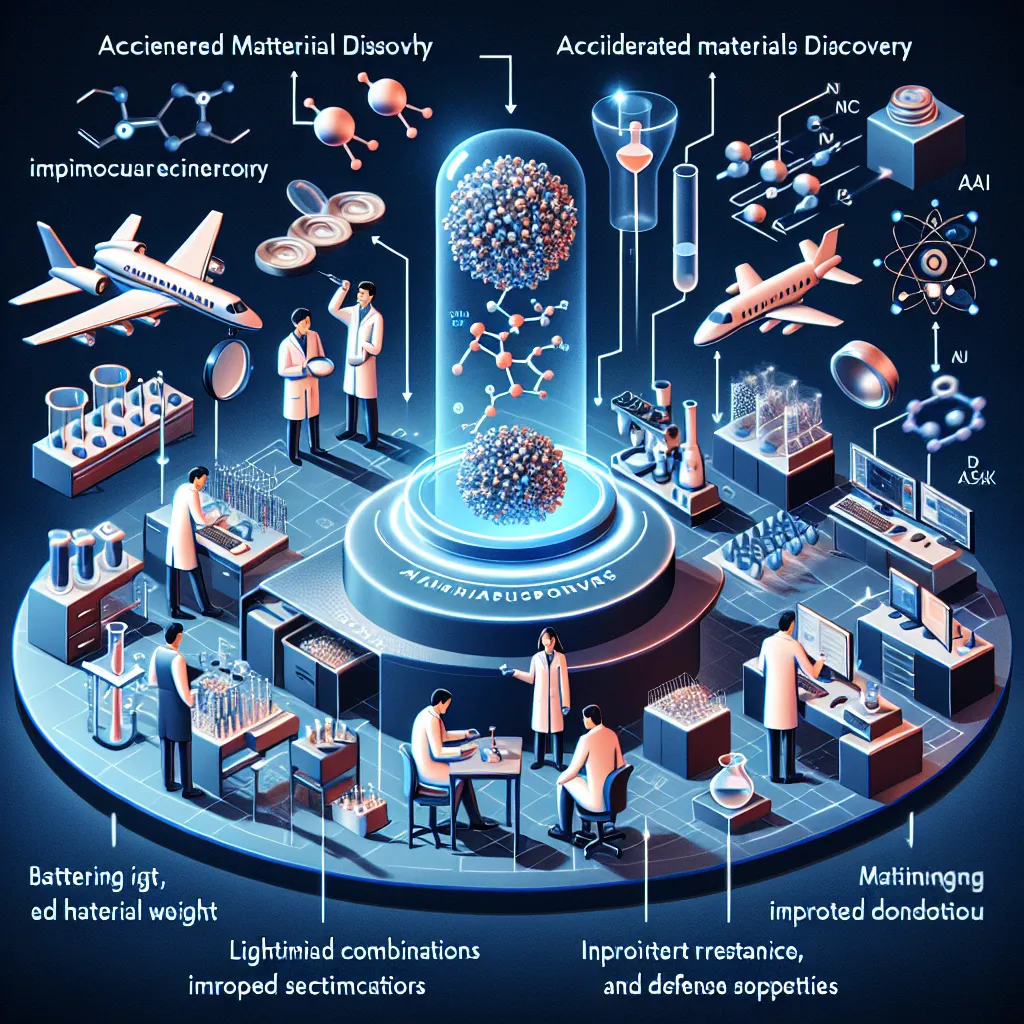
Modern engineering still relies heavily on slow experimentation when developing new materials for batteries, aircraft, semiconductors, and defense systems. Scientists test thousands of combinations in labs, often taking years to discover breakthroughs. With AI models now capable of simulating molecular behavior and material properties, there’s an opportunity to dramatically accelerate discovery. A startup could build a platform where companies input desired properties—lighter weight, higher heat resistance, better conductivity—and the system generates potential materials and manufacturing methods. Instead of waiting a decade for new alloys or polymers to emerge, engineers could iterate in weeks. In a world where hardware innovation is becoming strategically important again, faster materials discovery could unlock entire new industri
Description
No additional description provided.
The Pitch
In recent years, the field of engineering has faced significant challenges due to the slow pace of developing new materials for advanced applications. Whether for batteries, aircraft, semiconductors, or defense systems, the traditional approach often involves laborious experimentation that can span years. Scientists meticulously test thousands of combinations in laboratories, hoping to discover materials that meet the required specifications. This time-consuming process delays breakthroughs and impedes innovation.
The advent of AI models capable of simulating molecular behavior and material properties introduces a potential game-changer. These models have the ability to rapidly analyze and predict how different materials will perform under various conditions, cutting down the time needed for experimental iterations. By leveraging this technology, there's a unique opportunity to revolutionize the way new materials are discovered and implemented.
Imagine a platform where engineers and companies can specify desired material properties—such as lighter weight, higher heat resistance, or better conductivity. The system, powered by AI, would then generate a list of viable materials and suggested manufacturing methods that align with those specifications. This process could shrink the timeline for materials discovery from years down to mere weeks, offering a significant competitive advantage in industries where rapid innovation is crucial.
As economies increasingly value hardware innovation, faster materials discovery could lead to the emergence of entirely new industries and technological capabilities. Building such a platform involves several components:
1. **Solution Development**: The core of this solution is an AI-driven platform that incorporates databases of existing material properties, machine learning algorithms for simulating molecular dynamics, and user-friendly interfaces for input and output.
2. **Product Details**: The platform would offer a suite of tools allowing users to input desired material characteristics and receive potential solutions. It would include simulation features for testing material behaviors virtually, a library of manufacturing techniques, and analysis tools to compare generated materials against industry benchmarks.
3. **Tools for MVP Launch**: To create a Minimum Viable Product (MVP), one could employ open-source machine learning frameworks such as TensorFlow or PyTorch to develop initial simulation models. Cloud platforms like AWS or Google Cloud can provide scalable computing power. For the user interface, React or Angular can be used to build intuitive web applications.
4. **GTM Strategy**: The go-to-market strategy can focus on industries with high demand for new materials, such as aerospace, electronics, and renewable energy. Establishing partnerships with research institutions and material science companies could bolster credibility. Demonstrations at industry conferences and webinars could showcase the platform’s capabilities.
5. **Business Model**: A subscription-based model could be effective, where users pay a regular fee to access the platform's full suite of tools. Alternatively, a tiered pricing structure with basic simulation access for free and advanced features as part of premium packages could attract a broader user base.
In summary, such a platform has the potential to transform material science, drastically reducing the time required for discovery and enabling quicker adaptation to market needs. By employing AI to simulate and predict material properties, innovation is accelerated, paving the way for groundbreaking advancements across various sectors.