A Blockchain Marketplace for Trading Music Rights and Royalties
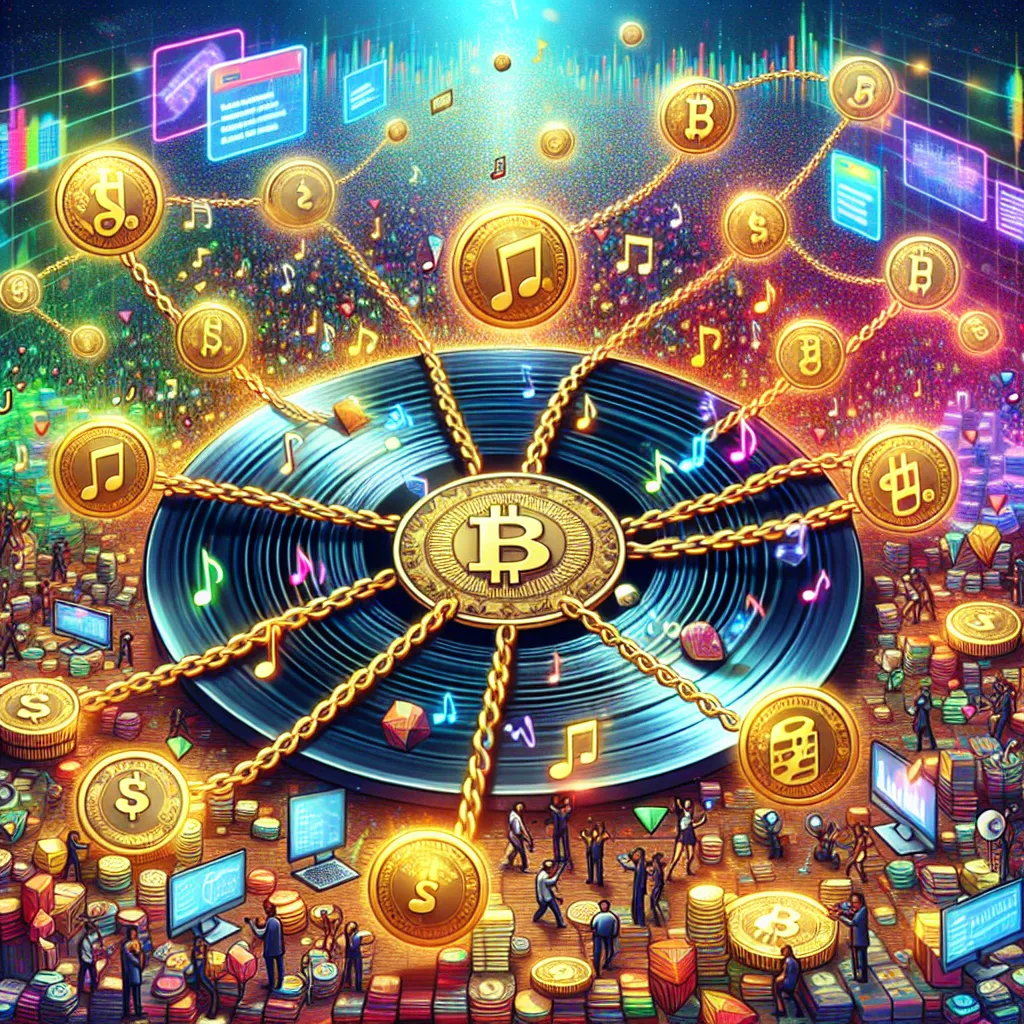
Description
Blockchain-Based Music Ownership Exchange: Description: A decentralized marketplace where artists and investors can buy, sell, and trade music rights and royalties using blockchain technology for transparency and security.
Features: Smart contracts, real-time royalty tracking, fractional ownership, secure transactions, and a secondary market for trading.
The Pitch
In the current music industry, managing and transacting music rights and royalties is complex, opaque, and inefficient. Artists often struggle with delayed royalty payments, lack of ownership control, and limited access to global markets. For investors and buyers, the process is fraught with risks due to unclear asset valuations and a lack of transparency in ownership rights and revenue flows.
Solution Overview: Our blockchain-based music ownership exchange revolutionizes how music rights and royalties are bought, sold, and managed. By leveraging blockchain technology, the platform ensures transparency, security, and efficiency. It integrates smart contracts to automate the transfer and recording of rights, real-time royalty tracking to provide instantaneous financial updates, fractional ownership to lower the entry barriers for investors, and a secure, secondary market for trading these rights globally.
Target Audience: The platform targets two main groups: 1. Music creators including songwriters, composers, and producers seeking more control over their work and fair, timely compensation. 2. Investors and music enthusiasts interested in owning music rights as a form of investment or passion. This includes both individual and institutional investors looking to diversify their portfolios.
Value Proposition: For artists, the platform offers greater control over their work, faster and more reliable royalty payments, and access to a global market of investors. For investors, it provides a clear, vetted opportunity to own music rights, complete with real-time data on royalty earnings and market performance, thereby reducing investment risks and enhancing potential returns.
Market Analysis: The global music rights market is a multi-billion-dollar sector poised for disruption. Current digital music revenue growth, coupled with increasing interest in alternative investments and collectibles, creates an ideal environment for our platform. With digital streaming revenues expected to grow further, the potential for monetizing music rights is significant. Furthermore, trends toward digitalization and transparency in financial transactions underline the market’s readiness for a blockchain solution.
Implementation Plan: Phase 1: Develop the blockchain infrastructure and secure partnerships with music industry stakeholders. Phase 2: Launch a beta version to onboard early users and gather feedback. Phase 3: Full launch with integrated smart contract capabilities and secondary trading features. Phase 4: Scale up market reach through direct marketing, collaborations with music labels, and expanding into different regional markets. Phase 5: Continual platform enhancement including adding AI-driven analytics for asset valuation and market trends.
Monetization Strategy: Revenue will be generated through transaction fees on sales and trades of music rights, subscription fees for premium analytical services, and licensing of our technology to larger institutions or integration into existing digital music services. Additionally, strategic partnerships with music industry entities will open channels for B2B revenue through data and service provisioning.
Impact Assessment: The introduction of a blockchain-based marketplace will democratize the music industry by decentralizing the control from big music labels to individual artists and small-scale investors. Economic impacts include increased liquidity in the music rights market and better capitalization for artists. Social impacts involve empowering artists globally, especially in regions with lesser financial infrastructures. Environmental impacts are minimal, but the digital nature of the blockchain reduces the need for physical transfers and storage, marginally decreasing the carbon footprint associated with traditional music rights trading.
In conclusion, adopting blockchain for music rights management injects transparency, efficiency, and accessibility into an industry ripe for innovation, benefiting artists and investors alike by rebalancing power and profit distribution within the global music economy.